

:format(webp))
So Nissan has done it. After months of teasers, spy shots, and that slightly awkward silence a brand goes quiet with when it knows people are watching — the Tekton is officially out, priced from ₹10.49 lakh ex-showroom. And honestly, that starting figure is doing a lot of the talking right now, because Nissan isn’t just launching a car here, it’s walking straight into the ring with the Hyundai Creta and Kia Seltos. That’s not a segment you enter half-heartedly. The Grand Vitara, Hyryder, Taigun, Kushaq, and the Duster are all sitting right there too, waiting.
It’s been a while since Nissan had something worth getting excited about in India. The Kicks quietly disappeared a few years back and left a gap that never really got filled, so the Tekton is kind of a big deal — it’s Nissan saying, we’re still here, and we still want a piece of this.
About that Duster thing everyone’s going to bring up
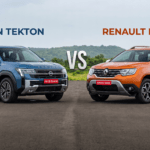
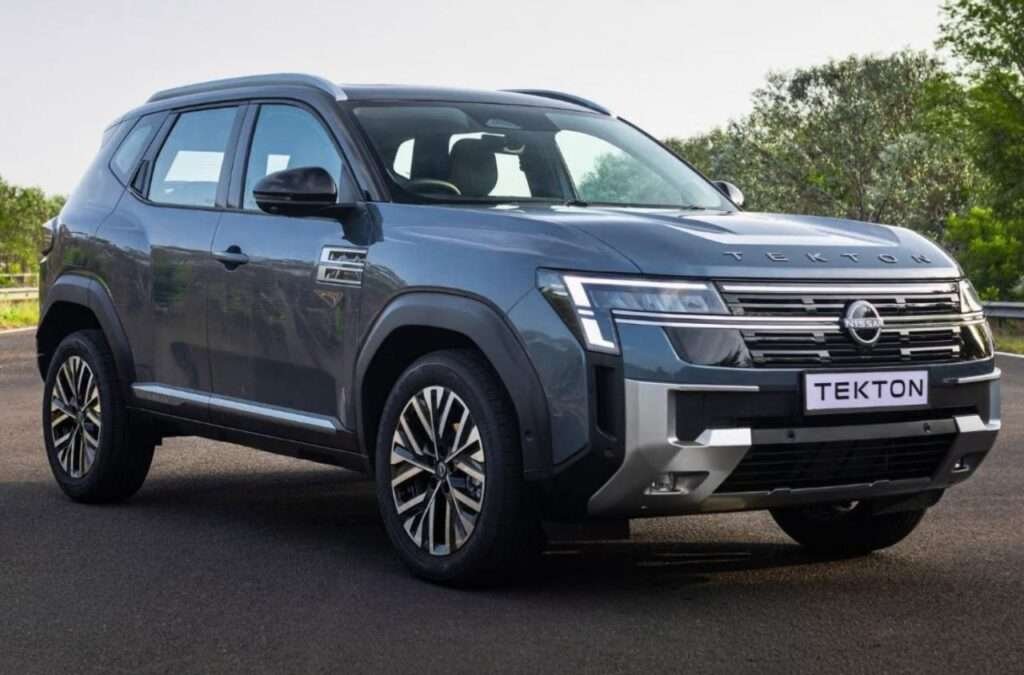
Might as well address it early. Yes, the Tekton rides on the same platform as the new Renault Duster. Nissan isn’t hiding from that, nor should it — plenty of brands share bones under the skin and it rarely matters much to the person actually buying the car. What’s genuinely interesting though is how little the Tekton looks like its cousin once you actually see it in person.
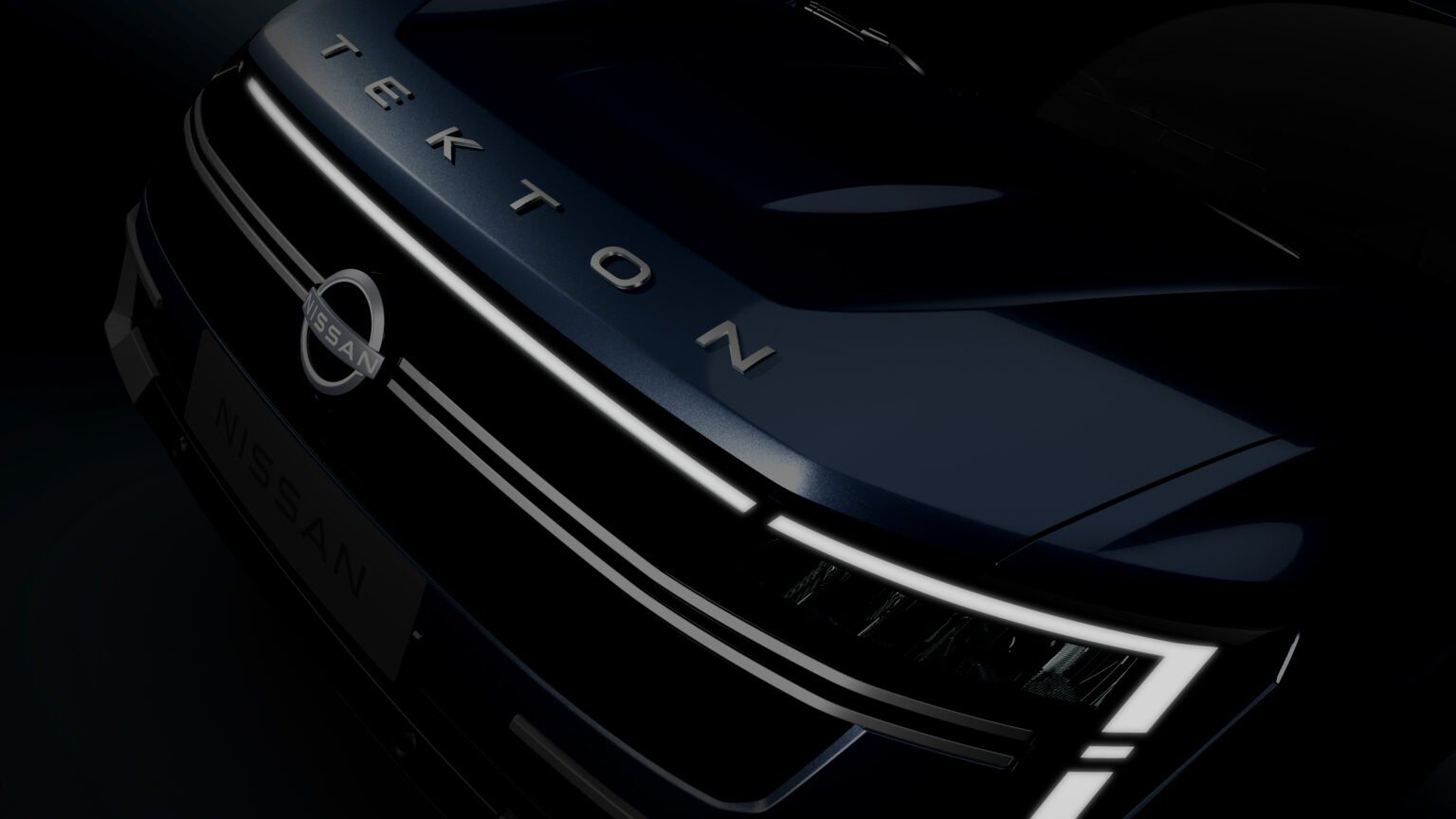
Nissan clearly went digging through its own back catalogue for design cues, and landed on the Patrol — yes, that big brute of an SUV it sells in the Middle East. You can see it the moment you look at the front: an upright grille, chrome slats, a light bar connecting L-shaped LED DRLs, and a thin red line slashed across the black grille. It’s boxier than the Duster, squarer, a bit more “don’t mess with me.” Even the name has a bit of a story to it apparently — Tekton is meant to reference the tectonic plates under the Himalayas, so somebody in Nissan’s naming committee was clearly going for that whole rugged-mountain thing.
Walk around it and the theme keeps going — 18-inch dual-tone alloys, flared wheel arches, blacked-out roof rails and mirrors, a silver strip running along the front doors. Round back, the tail lamps do the same C-shaped light bar business as the front, and there’s a small spoiler sitting above the tailgate. It’s about 4.3 metres long, and ground clearance sits at 212mm, which is genuinely decent — you’re not going to be white-knuckling it over every speed breaker like you might in some sedans-pretending-to-be-SUVs out there.
The cabin — and this is where it gets good
I’ll be honest, this is the part that actually surprised me a little. Nissan hasn’t held back on the interior. There’s a dual-screen setup — a 10.25-inch digital cluster paired with a 10.1-inch touchscreen running Google’s infotainment stack, and it comes with wireless Android Auto and Apple CarPlay, so no more digging around for a cable every time you get in.
You also get a panoramic sunroof, ventilated front seats that are power-adjustable six ways, dual-zone climate control, wireless charging, a six-speaker system tuned by Arkamys, ambient lighting, vents for the rear seat passengers, and a powered tailgate with keyless entry and push-button start. There’s even an air purifier tucked in there, which sounds like a small, forgettable feature right up until you’re stuck in Bengaluru or Delhi traffic wondering what you’re actually breathing.
Boot space comes in at 700 litres, and folds out to almost 1,789 litres with the rear seats down — solid numbers if you’re someone who packs way more luggage than the number of people you’re traveling with (we all know someone like that).
:format(webp))
Under the hood: no hybrid, but two decent turbo-petrols
There’s no hybrid option here, at least not for now. The word going around is that Nissan’s deliberately keeping the Duster’s strong-hybrid engine off the table, just to make sure the two cars don’t end up competing with each other too directly. What you do get instead are two turbo-petrol engines, both lifted straight from the Duster.
The smaller one is a 1.0-litre three-cylinder unit making around 100hp and 166Nm, and it’s manual-only — no automatic here, so if you want a clutch-free life you’ll need to look at the bigger engine. That one’s a 1.3-litre turbo-petrol putting out roughly 160hp and 280Nm, and you can have it with either a six-speed manual or a six-speed DCT automatic.
Nissan’s own numbers put the 1.0-litre at around 12.46 seconds for the 0-100kph run, with claimed mileage of about 19.4kpl. The 1.3-litre is noticeably quicker — somewhere around 9.5 seconds with the manual and just under 10 with the DCT — and mileage sits between 17.8 and 18.5kpl depending on which gearbox you go with.
Safety — and Nissan really wants this to land
If there’s one thing Nissan keeps hammering home in how it’s talking about this car, it’s safety. The Tekton has already picked up a 5-star Bharat NCAP rating, and it backs that up with up to six airbags, electronic stability control, a 360-degree camera, front and rear parking sensors, an electronic parking brake, and ADAS on the higher-end variants. It doesn’t feel like a box-ticking move either — more like Nissan actually wants this to be the thing people remember about the car, especially since some rivals in this segment have historically saved the good safety kit for their pricier trims.
:format(webp))
Okay, let’s talk trims and money
There are six core trims to pick from — Visia, Visia+, Acenta, N-Connecta, Tekna, and Tekna+ — but once you throw the two engines and gearbox choices into the mix, the actual number of variants you can walk into a showroom and configure is a lot bigger than six.
Roughly speaking, the 1.0-litre manual cars run from ₹10.49 lakh up to about ₹16.49 lakh, and the 1.3-litre versions — manual or DCT — start closer to ₹14.99 lakh and go all the way up to ₹18.59 lakh for the fully loaded Tekna+ DCT. That top trim is clearly aimed squarely at people cross-shopping the best-equipped Creta, Seltos, or Taigun, not just anyone browsing entry-level SUVs.
Colour-wise, you get six single-tone shades and five dual-tone combos, and Nissan says there are more than 50 accessories available if you want to make yours look a little less like everyone else’s.
Bookings are live, and deliveries start soon
You can book one right now for ₹21,000, and if all goes to plan, the first deliveries will start rolling out from July 20. Nissan’s sweetening things for the early crowd too — the first 10,000 buyers get a 5-Year Nissan Care package, which bundles a 3+2-year warranty with five years of maintenance thrown in. Makes sense, really — asking people to trust a brand-new nameplate is easier when there’s a safety net attached.
So does any of this actually matter?
In a lot of ways, this feels like Nissan’s most important India launch since the Magnite showed up and quietly shook up the sub-compact SUV space a few years ago. The pricing is aggressive, the features list holds up well against — and in a few places beats — what the established names offer, and nobody’s going to argue with a 5-star safety rating.
Whether that’s enough to actually pull buyers away from the Creta or Seltos, though? That’s genuinely hard to call right now. Brand loyalty runs deep in this segment, and Nissan’s had a rough few years of relevance in India. But as debuts go, this one’s a lot more serious — and a lot more thought-through — than anything the company’s put out here in a while. Worth keeping an eye on the sales numbers over the next couple of months.