




The Tata Tigor never quite made the impact the manufacturer hoped for in the compact sedan segment. Now, Tata has reworked it and given it a new identity as the Aeris, with a fresh design, a more upmarket cabin and a longer list of features. That alone makes the Aeris an interesting proposition, but there is another reason its arrival is well timed.
Tata has a CNG option in a market where demand for the fuel is growing rapidly, with CNG cars accounting for nearly 22 percent of passenger vehicle sales in FY2026, up from around 12-13 percent three years ago in FY2023. That gives the manufacturer an interesting opportunity, but the bigger question is whether the Aeris itself has enough going for it this time around.
Tata Aeris iCNG exterior design and engineering –
Looks more modern than the Tigor, but the Tiago influence is hard to miss
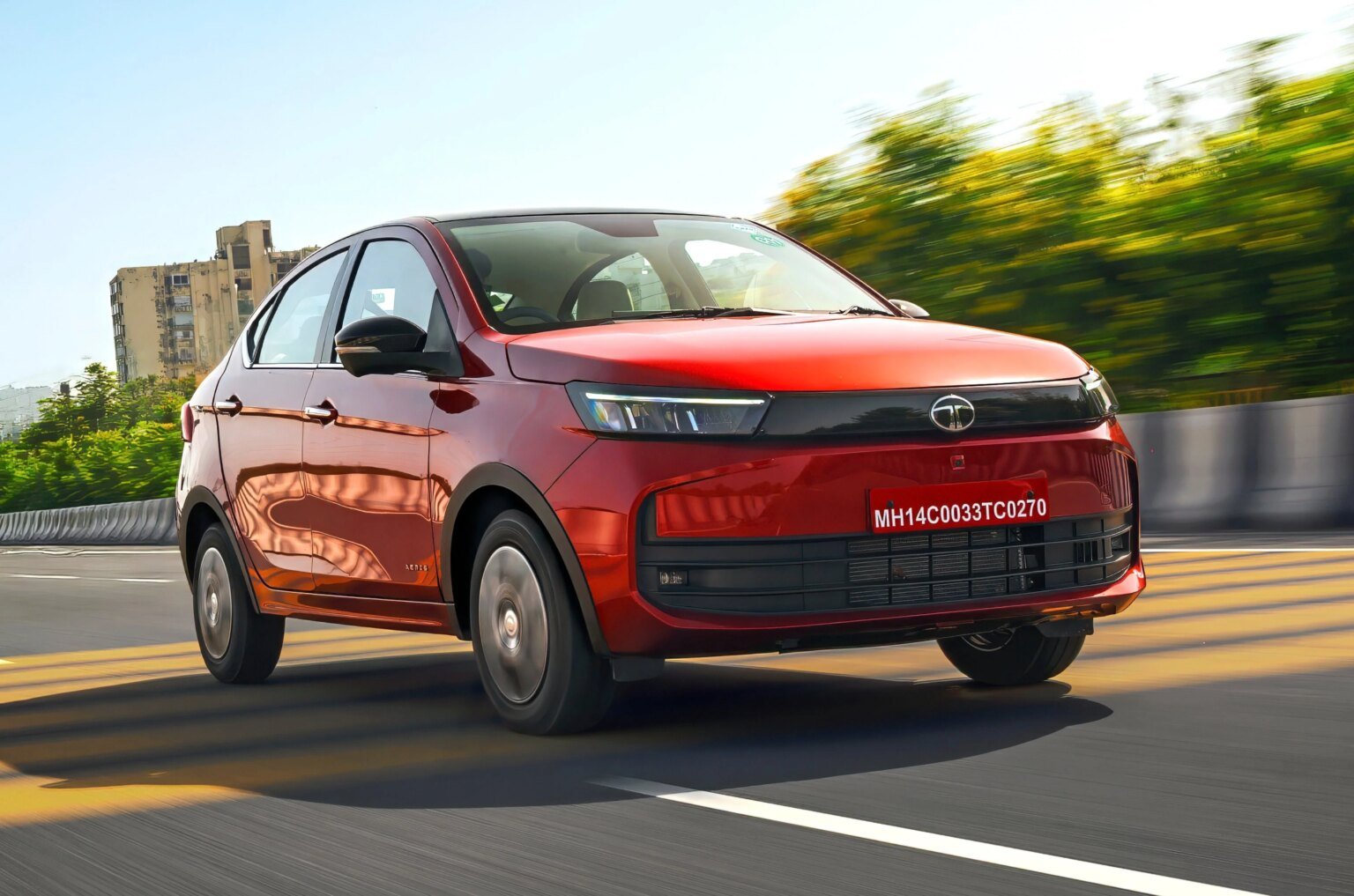
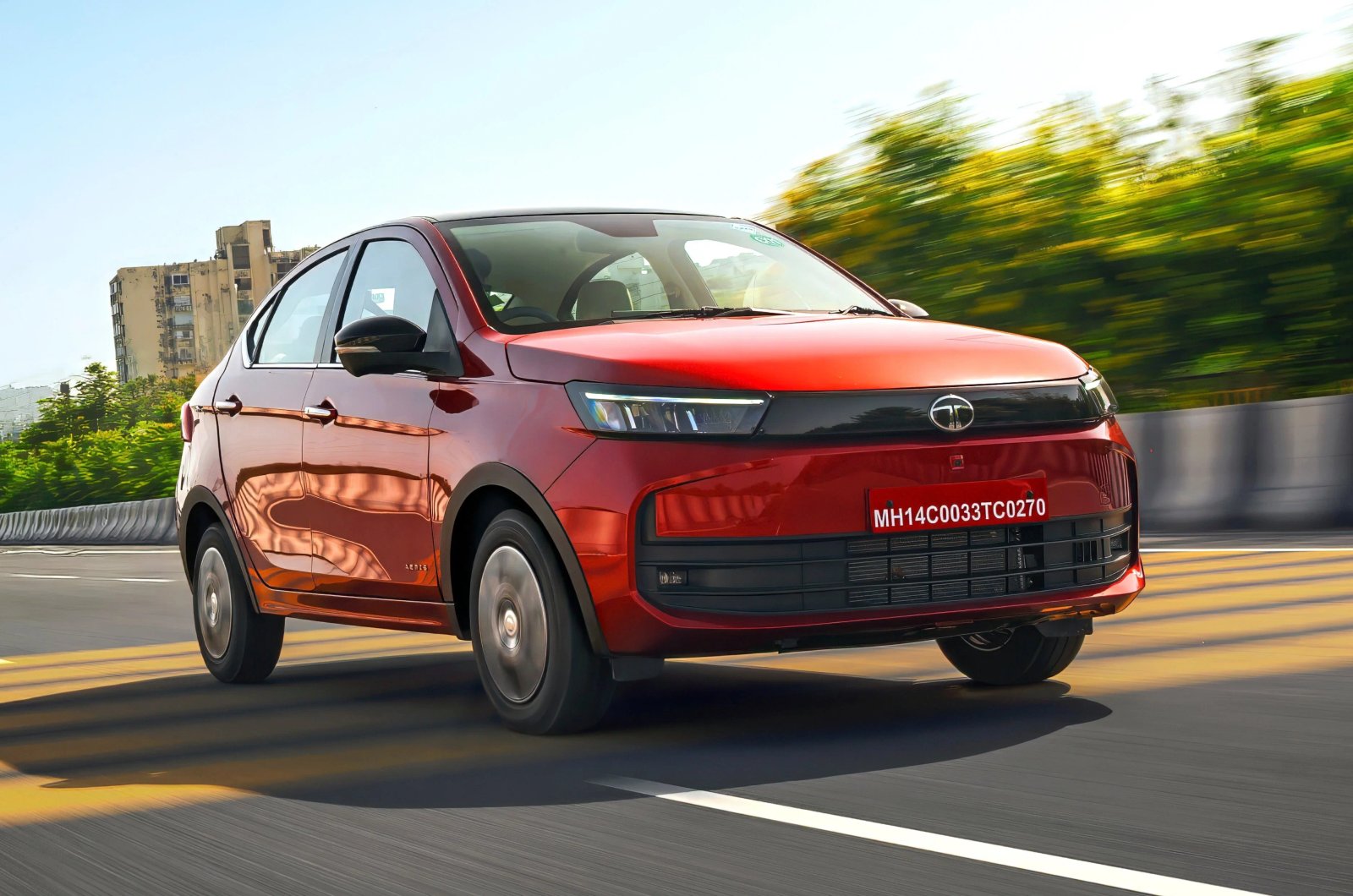
The Tata Aeris looks more modern and sleeker than the older Tigor, but there’s a strong sense of familiarity to its exterior design. It borrows several elements from the Tiago, giving the two cars a similar visual identity, but that also means the Aeris does not look particularly distinctive.
At the front, it gets slim LED headlights with integrated LED DRLs, joined by a gloss black trim, a design treatment that is very similar to the Tiago. What’s new is the front bumper with wider air inlets. It also features fog lamps that get an LED upgrade from the Tigor’s halogens. The Aeris also gets a new clamshell bonnet.
In profile, the iCNG gets the 14-inch stylised steel wheels which look undersized, particularly against the prominent wheel-arch cladding. The cladding is made from recycled materials and features a speckled texture. The use of chrome on the door handles and the window line further gives some contrast to the Aeris’ otherwise clean profile.
The Aeris retains the Tigor’s distinct coupe-like roof that flows into the tail. The rear features segmented LED taillights joined by red plastic trim, and new Aeris lettering on the centre of the tailgate. The rear bumper features a reverse light and has an overall clean design.
The Aeris is 3,995mm long, 1,684mm wide and stands 1,532mm tall. It has a wheelbase of 2,450mm. These dimensions are similar to the older Tigor. While Tata has not quoted an official ground clearance figure, we found it adequate for broken roads and large speed breakers. All of this is expected to appeal to most buyers.
Tata Aeris iCNG interior space and comfort –
Lighter theme makes the cabin feel airy, and revised cushioning improves seat comfort
The Tata Aeris’ interior layout is the same as the Tiago and looks neat. The lighter beige theme makes the cabin feel airy. However, this same thing might make it difficult to keep the interior spick and span. The dashboard has a clean look, featuring two free-standing displays and a revised 2-spoke steering wheel.
The manual variants feature a new, more premium-looking gear stalk, while the AMT variants get a cleaner-looking rotary drive selector with N (neutral), D (drive) and R (reverse) modes. The rotary dial does not feel finicky, and the modes switch seamlessly. One complaint, however, is that the drive modes (N, D and R) are not illuminated, which means you rely on the instrument cluster to know which mode is selected.
The centre console has also been thoroughly redesigned for a cleaner look and a more practical application. It features two rubberised pads to keep phones, one of which gets wireless charging capability in the top-spec Accomplished trim. The centre console also features two cupholders and a leatherette-wrapped centre armrest which integrates a decent cubby space. The doors have floating-style handles integrated with the armrest, which feel sturdy.
The seats feature revised cushions and bolsters that have increased the overall comfort and are wrapped in a part leatherette upholstery that feels premium. The rear seats are comfortable as well and offer good legroom and kneeroom. The headroom, however, could be an issue for passengers over 6 feet tall. The rear passengers benefit from dedicated air vents and a 65-watt Type-C charger. These seats get fixed headrests.
The Aeris iCNG gets a dual-cylinder tank setup inside the boot, unlike its rivals that use a single CNG tank and are left with very little usable boot space. Despite the additional tank, the Aeris has enough room for a couple of backpacks and a small luggage bag. Tata also offers a 13-inch underbody-mounted spare wheel, which is more useful than a puncture repair kit.
Tata Aeris iCNG features and safety –
Gets a lot of modern-day features, some of which could have better integration
Like other Tata cars, the Aeris is filled with features to the brim. It debuts a front seat ventilation function for the compact sedan segment, which is offered with the Aeris’ top Accomplished trim. During our drive, the seat ventilation was very effective in cooling the cabin in Faridabad’s near 40deg ambient temperature. However, there’s no confirmation on the infotainment system or the driver’s display when the feature is engaged or the ventilation level is changed.
A 10.25-inch infotainment touchscreen is the same as before, which remains slick to use and has no lag even when browsing through multiple menus. The user interface (UI) is also easy to get used to. The Aeris continues with a 360-degree camera setup that is also lag-free and works well even in low-light conditions. Tata has added a new DVR feature, which allows the surround-view cameras to double up as a dashcam and record the surroundings of the car. These recordings can be stored and accessed either on the infotainment touchscreen or a USB drive, and can also be seen on a phone via a QR code.
The instrument cluster has a retro theme and displays all the important driving data, but the steering wheel’s tilt angle and the driver’s seating position sometimes obscure certain details. The steering wheel lacks the leatherette wrap offered with the Tigor, but feels nice to hold nevertheless. The wheel is now free of the Tigor’s scratch-prone gloss black trim and thankfully retains physical controls. It also gets cruise control, but only with the manual variants.
The 4-speaker, 2-tweeter audio system is a step down from the Tigor’s 4-speaker, 4-tweeter setup, although sound quality is still good enough for the price. Certain features also could have been integrated better. The wireless charging pad can also heat up phones, particularly during extended use. Cooling vents near the pad could have fixed the issue. The infotainment system switches to the blind-spot monitor every time the indicators are used, which can be annoying when following navigation. The rear seats also lack pressure sensors, so the seatbelt warning continues to chime until the belts are fastened.
Standard safety features include 6 airbags, ISOFIX child seat anchorages on the rear seats, rear parking sensors and 3-point seatbelts with reminders on all seats. Higher variants equip the Aeris with a 360-degree camera, a day/night inside rearview mirror (IRVM), rain-sensing wipers, rear defogger, a tyre pressure monitoring system (TPMS) and ESP with traction control. The pre-facelift Tigor received a four-star rating from Global NCAP in 2020, but the Aeris has yet to be tested by Bharat NCAP.
Tata Aeris iCNG performance and refinement –
Performance in the city is adequate, but it feels out of breath if pushed hard
The Tata Aeris continues with the Tigor’s 1.2-litre, three-cylinder naturally aspirated engine, producing 76hp and 97Nm in CNG guise. It is offered with a five-speed manual and a five-speed AMT, and we drove the latter.
At city speeds, the engine has enough performance to keep up with traffic, but the CNG-AMT combination is not particularly responsive. There is a noticeable pause between pressing the accelerator and the powertrain responding, which becomes more evident when you need to accelerate quickly.
The AMT also makes starts from standstill quite jerky, which can get tiresome in stop-and-go traffic. Once up to speed, however, the Aeris settles into a relaxed rhythm and is comfortable enough when driven at a steady pace. The AMT also gets paddle shifters for manual gear changes, which are useful when you want more control over the gearbox, particularly during overtakes.
On the highway, the lack of response is more noticeable, particularly when overtaking. The Aeris can maintain triple-digit speeds, but building speed takes time, and overtaking requires some planning. The rotary gear selector itself, however, as mentioned above, is neat and easy to use.
Refinement is another weak point. Refinement is another weak point. The engine feels generally smooth when driven gently, but above 2,500rpm, engine noise and vibrations become quite pronounced. Wind and road noise insulation isn’t particularly strong either, so the cabin gets fairly noisy at higher speeds.
Tata Aeris iCNG ride comfort and handling –
Has a commendable ride quality for a sedan on both rough roads and highways
The Aeris is particularly impressive over poor roads. The suspension does a good job of absorbing broken surfaces and larger bumps without unsettling the car, while the ground clearance is adequate for tackling rough roads and large speed breakers. Despite being a sedan, it does not feel particularly vulnerable to bad roads.
Out on the highway, the Aeris is equally composed. It stays planted at triple-digit speeds and does not feel floaty or nervous when driven quickly. The steering is also nice to hold and offers decent feedback, although there is some vagueness around the centre that takes away a little from the confidence.
Tata Aeris iCNG mileage and efficiency
We expect it to offer a real-world mileage in the 25-30km/kg range
While we haven’t put the Aeris iCNG through our full test yet, its CNG powertrain should make it considerably more economical to run than the petrol version. Tata is yet to reveal an official efficiency figure, but we expect real-world mileage to be in the 25-30km/kg range. We’ll bring you our tested mileage figures once we put the Aeris iCNG through our standardised test procedures.
Tata Aeris iCNG value for money –
CNG buyers don’t have to compromise on features, but the AMT isn’t ideal
The Aeris, priced from Rs 5.70 lakh to Rs 9.10 lakh (ex-showroom), is a more convincing compact sedan than the Tigor ever was. Its modern design, well-equipped cabin, comfortable ride and, most importantly, useful boot space despite the CNG setup give it plenty going for it. The fact that Tata offers the CNG powertrain with higher-spec variants also means buyers don’t have to sacrifice features for lower running costs.
The CNG-AMT powertrain, however, takes some shine off the package. The slow responses, jerky starts and excessive NVH at higher revs make it better suited to relaxed city driving than frequent highway use. Even so, for buyers looking for a practical and well-equipped CNG sedan, the Aeris does make a stronger case than its predecessor and even against its rivals.