



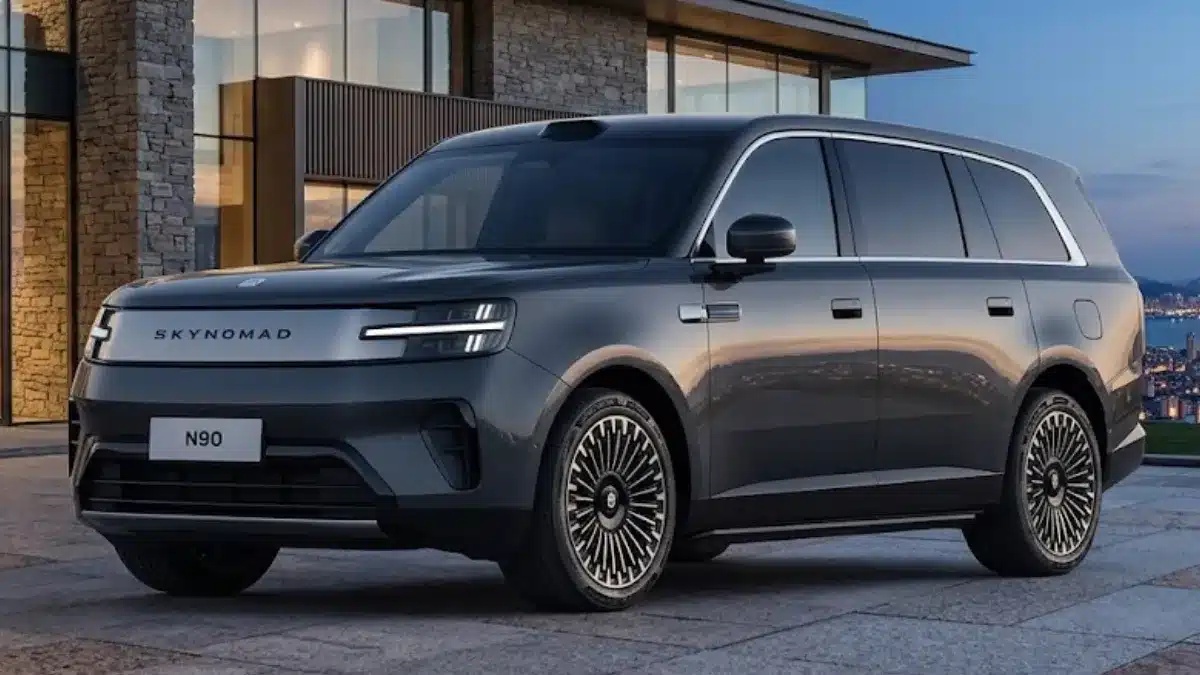
Xiaomi just did the thing nobody really expected from a company that’s spent the last two years convincing everyone it’s an EV purist. Its newest reveal, the Xiaomi SkyNomad N90 Hybrid, runs on a gas engine — sort of. It’s a range-extender, meaning the engine never actually turns the wheels; it just sits there generating electricity for the battery. And it’s wrapped around what might be the most flexible cabin Xiaomi has ever put into a car.
If you’ve been following Xiaomi’s automotive push, you’ll know the SU7 sedan and YU7 SUV were both built to feel sporty and driver-focused. The N90 throws that brief out entirely. This one’s for families, road trips, and — genuinely — camping.
Wait, SkyNomad? Not a New Xiaomi Sub-Brand?
Sort of, but not quite the way early rumours suggested. There was speculation that SkyNomad would be spun off as its own standalone marque, but Xiaomi has confirmed it’s actually a second product line sitting alongside the SU and YU series, rather than a separate company. Its Chinese name, Pengcheng (澎程), was made official on July 8, with the N90 following just two days later as the line’s debut model.
CEO Lei Jun has been fairly blunt about the positioning: the SU7 and YU7 are “driver’s cars,” while SkyNomad is built to be a “living space” — his words, not mine — for long drives and outdoor trips.
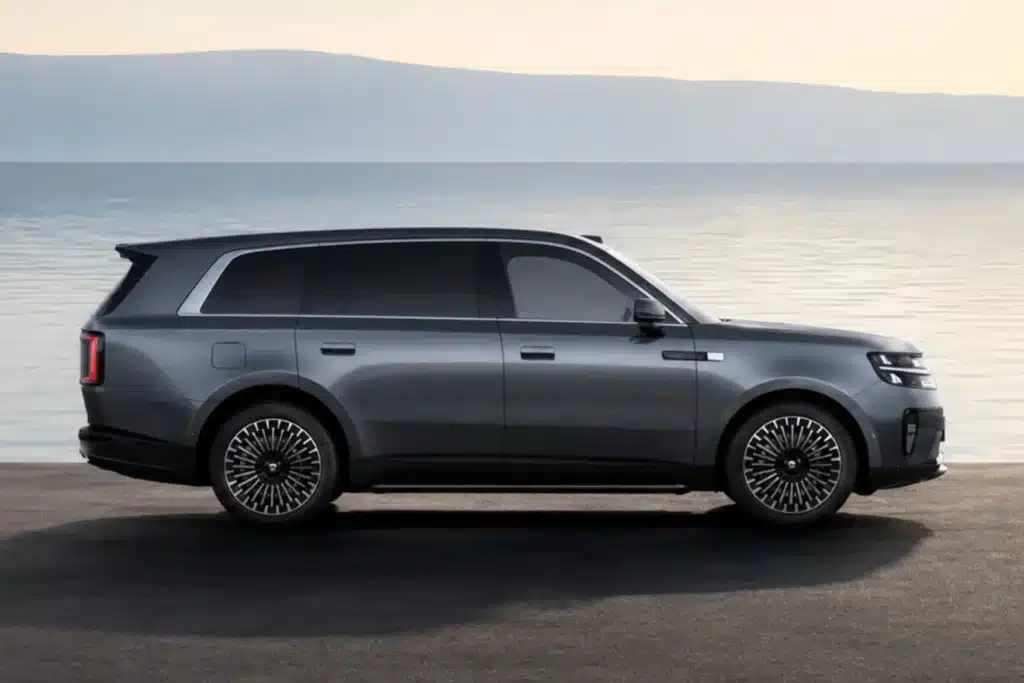
It’s Big. Like, Really Big
Numbers from a regulatory filing with China’s Ministry of Industry and Information Technology (MIIT) put the range-topping N90 Max at 5,285mm long, 1,998mm wide and 1,825mm tall, riding on a 3,080mm wheelbase. For context, that makes it noticeably longer than a Kia EV9, and it lines up more with rivals like the Li Auto L9, the Huawei-backed AITO M9, and the Nio ES8 than with anything Xiaomi has built before.
Weight is substantial too — reports peg the kerb weight anywhere from 2,800kg to as much as 3,361kg depending on configuration, which isn’t surprising once you factor in the battery pack, three rows of seating, and all the extra hardware packed in.
The Design Ditches Xiaomi’s Usual Sleekness
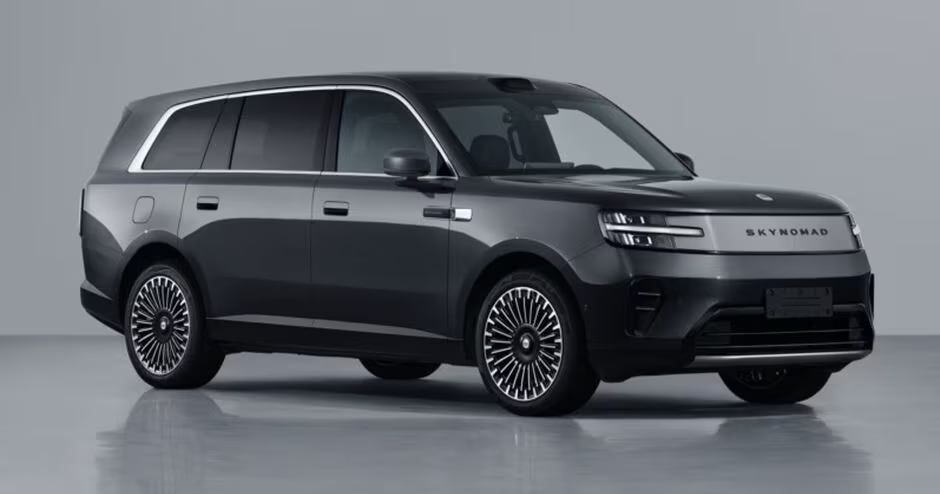
The SU7 and YU7 both leaned into a swoopy, low-slung look. The N90 doesn’t. It’s boxy, upright, and clearly built around interior space rather than aerodynamics or drama. Up front there’s a full-width light bar with Xiaomi’s now-familiar signature LED treatment, a chunky trapezoidal air intake, and a roof-mounted LiDAR unit for its driver-assist systems. Around back, a circular or wraparound tail-light design (reports differ slightly on the exact shape) carries the SkyNomad badge.
A few outlets have pointed out that the styling feels a little safe compared to Xiaomi’s earlier cars — one review even called the surfacing “nonchalant” — but for a family SUV built around cabin space, that’s arguably the right trade-off to make.




The Cabin Is Genuinely the Interesting Part
This is where the N90 tries to stand out. Xiaomi is pitching the interior as something that can shape-shift depending on what you’re doing with it — the company’s own language describes it as capable of becoming “a studio for one, a café for two, a living room for three, or a playground for the whole family.”
The party trick is a pair of front seats that rotate a full 180 degrees to face the second row, similar in concept to what Zeekr has done on its MIX MPV. Combine that with reclining, powered second-row captain’s seats (complete with leg rests) in the seven-seat layout, and a detachable table option in the five-seat version, and you get a cabin that’s clearly designed for parking up rather than just driving through.
Other bits worth knowing: a dual-pane sunroof, a second-row entertainment screen, and — in typical Xiaomi fashion — a nearly button-free dashboard built around one large freestanding touchscreen.
There’s also a dedicated N90 Max Camping Edition, which China’s MIIT filing classifies separately as a “cultural life service vehicle” rather than a standard passenger car. It adds a pop-up roof, a rooftop sleeping platform, side storage cabinets, an awning connection point, and even an optional built-in projector — though the pop-up roof is only approved for use when the vehicle is parked off public roads.
Powertrain: Xiaomi’s First Range-Extender
This is the genuinely new bit for Xiaomi. The N90 runs a series-hybrid setup — a 1.5-litre turbocharged engine that never drives the wheels directly and exists purely to spin a generator and keep the battery topped up. The engine itself comes from Harbin Dongan (a Changan subsidiary that also supplies range extenders to Li Auto and Leapmotor), and it’s rated at 112kW of net output.
On the electric side, the top-spec Max variant pairs a roughly 70–80kWh battery with dual motors, with combined output cited anywhere between 400 and 421hp depending on the source, and a claimed top speed of around 190kph. All-electric range is claimed at 400–500km on China’s CLTC cycle, and combined range — battery plus generator — is claimed to stretch past 1,500km, or roughly 930 miles.
Because the combustion engine only ever acts as a generator and never touches the drivetrain, it can run at a narrow, efficient rev range regardless of how the car is actually being driven — Xiaomi claims a thermal efficiency north of 44%, which would edge out the 41% figure claimed for AITO’s M9, which uses a range extender from the same supplier.
Why Xiaomi Is Doing This Now
It’s a pointed move. China’s extended-range EV segment has actually been shrinking — sales reportedly fell somewhere around 25–28% year-on-year in May 2026 — and market leader Li Auto has been struggling too, with deliveries down sharply in the first four months of the year. Xiaomi appears to be timing its entry to grab share right when an established rival is wobbling.
Pricing rumours out of China put the SkyNomad lineup starting from around 200,000 yuan (roughly $29,000), which would undercut both the Li Auto L9 and the AITO M9 — two of the segment’s dominant players — by a meaningful margin. Nothing’s official yet, but if that holds, it’s a genuinely aggressive opening price for a vehicle this size.
Reservations reportedly opened on July 9, with a full launch expected later in the third quarter of 2026.
Is It Actually a Good Idea for Xiaomi?
Xiaomi built its automotive reputation on going all-in on EVs, so a range-extender feels like a bit of a detour — and it’s worth asking why. Part of the answer is probably just market reality: EREVs solve the range-anxiety problem for buyers who do long family road trips or live somewhere charging infrastructure is patchy, even in a country as EV-friendly as China. It also gives Xiaomi a second, meaningfully different product line without cannibalising the SU7 and YU7’s driver-focused identity.
Whether it works is a separate question. The segment Xiaomi’s stepping into is both crowded and currently contracting, and the N90 will be judged against genuinely strong incumbents. But Xiaomi pulled off exactly this kind of “late but well-executed” entry with the SU7 against Tesla, so betting against it feels premature.
For now, this is the reveal — full pricing, the complete features list, and confirmed performance numbers are still to come closer to launch.