



So Toyota been on this whole “not every off-road truck is the same” kick for a while now. If you’ve looked at a 4Runner or Tacoma lately, you already know what I mean — there’s the TRD Pro for people who want to send it across the desert at highway speeds, and then there’s Trailhunter, which is more about slow, steady, load-the-truck-up-and-disappear-into-the-woods-for-a-week overlanding. Two totally different missions, two totally different trucks, basically.
For a while, the big Tundra didn’t get any of that. It just kind of sat there with its TRD Off-Road package and that was that. But now the Trailhunter treatment has finally made its way to the full-size truck for 2027… except it didn’t show up quite the way a lot of people expected.
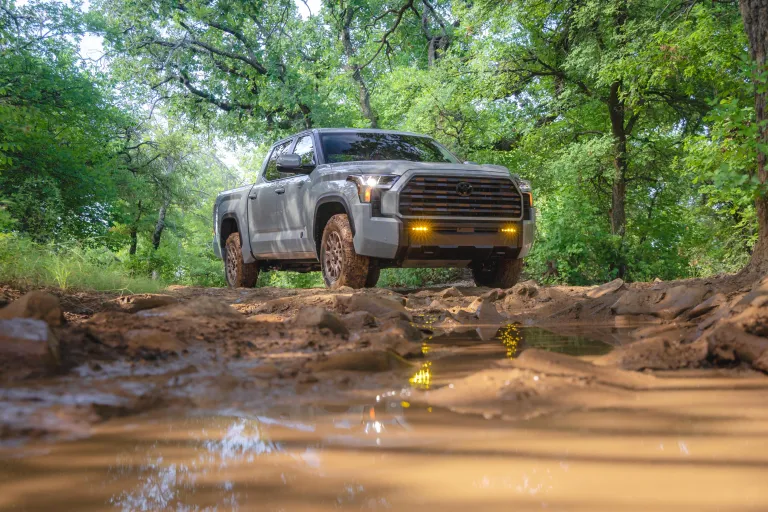
Okay, So It’s Not Actually Its Own Trim
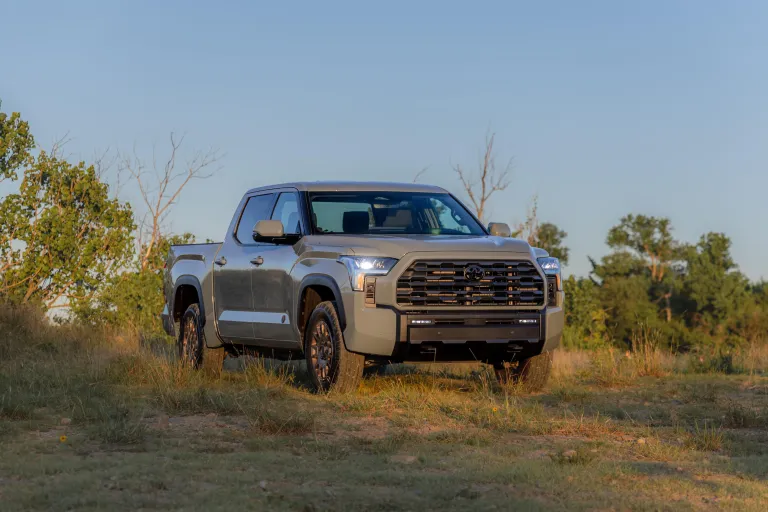
Here’s the first curveball. On the 4Runner and Tacoma, Trailhunter is its own trim — you pick it the same way you’d pick Limited or Platinum. On the Tundra, though, it’s not a trim at all. It’s a package. Specifically, it’s bolted onto the SR5, which is one of the more affordable trims in the lineup, not some flagship version.
Honestly, that’s a pretty different approach, and I think it’s the right call, but we’ll get into why in a second.
Because it’s riding on the SR5 instead of getting its own dedicated trim, there’s one thing missing that Trailhunter fans might notice right away — the tall intake housing. You know, that chunky snorkel-looking thing that gives the 4Runner and Tacoma Trailhunters their whole “I’m ready for anything” look. The Tundra doesn’t have it. At all.
But before anyone panics about that — it’s really not as big of a deal as it sounds. Toyota’s actually gone out of its way to point out that the intake on the 4Runner and Tacoma isn’t even a real snorkel to begin with. It’s not sealed, it’s not waterproof, it won’t help you ford a river. All it really does is pull air in from a bit higher up so you’re not sucking dust into the engine on a dry trail. It also happens to make the turbo sound kind of awesome, which, sure, that’s a fun bonus, but it’s not some critical off-road survival tool. So losing it on the Tundra is really more of a styling thing than a capability thing.
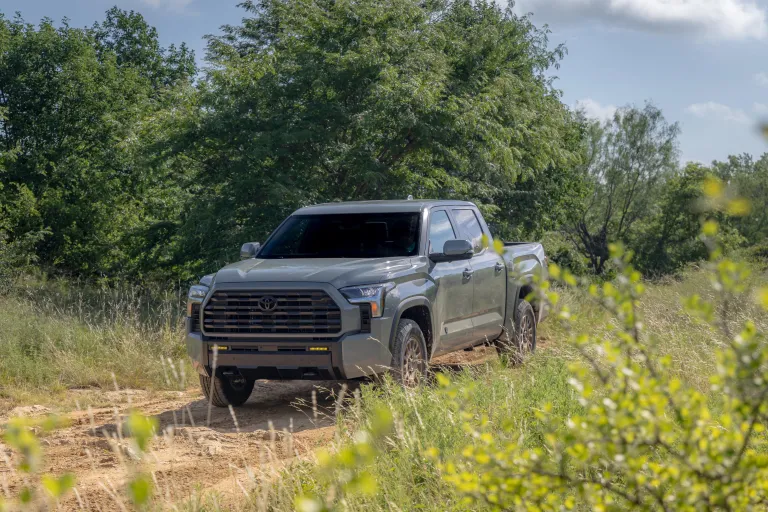
What You Actually Get With the Package
Now here’s where it gets good, because Toyota didn’t skimp on the stuff that actually matters out on the trail. The SR5 Trailhunter package includes:
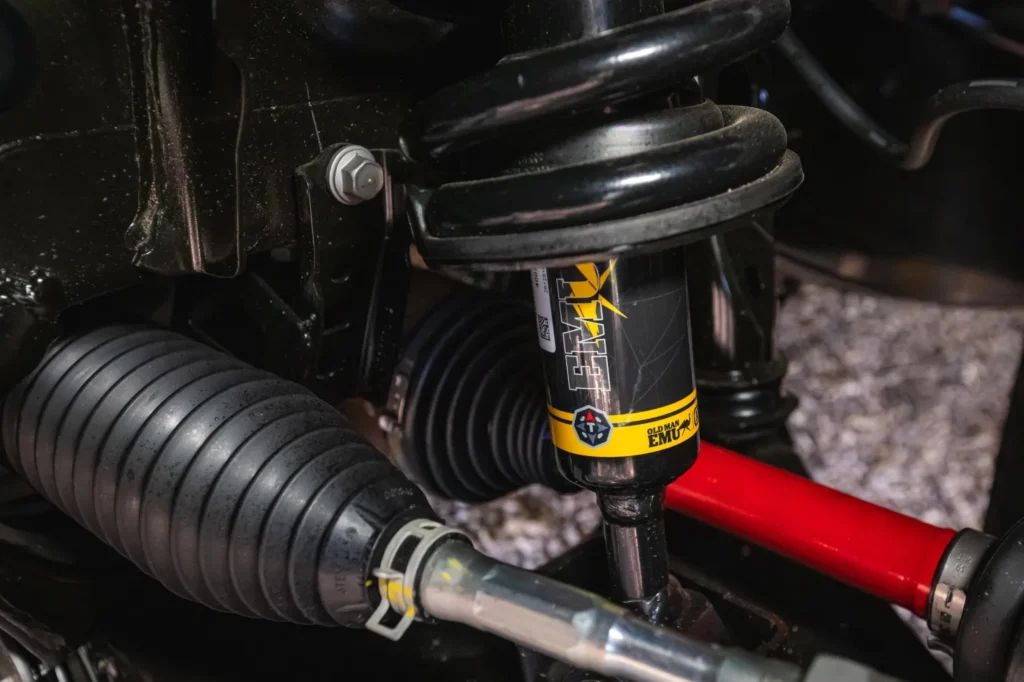
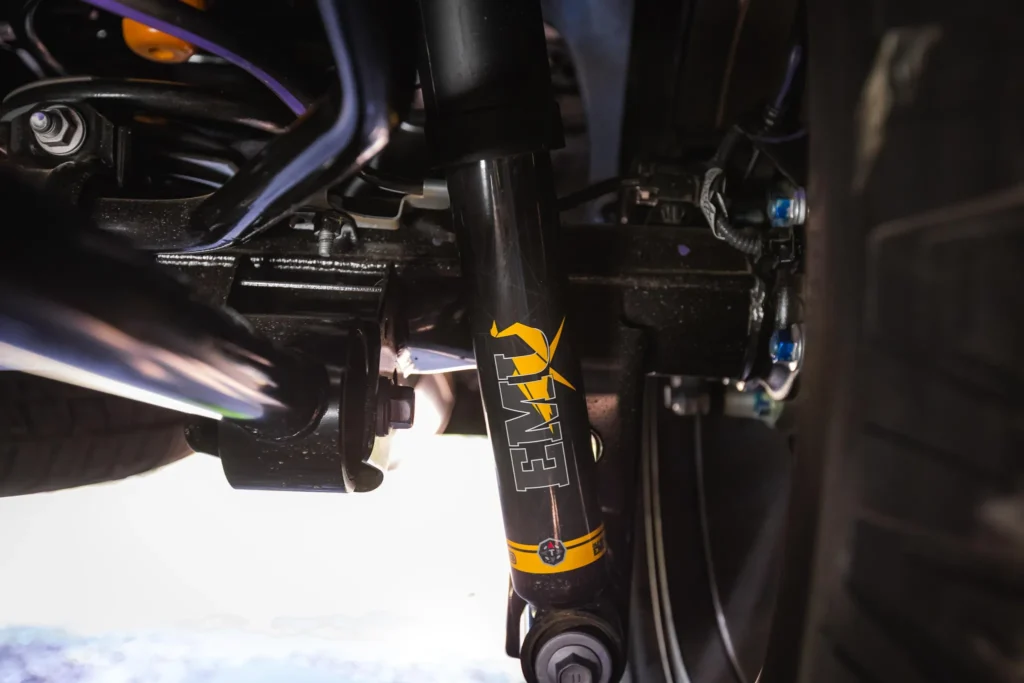
- Old Man Emu suspension tuning
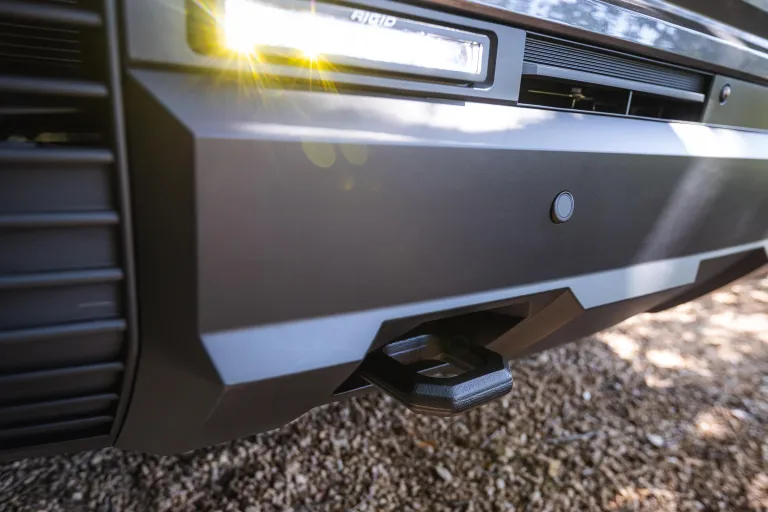
- Front recovery hooks (the kind you’ll actually want if you ever get stuck)
- Skid plates underneath to protect the important bits
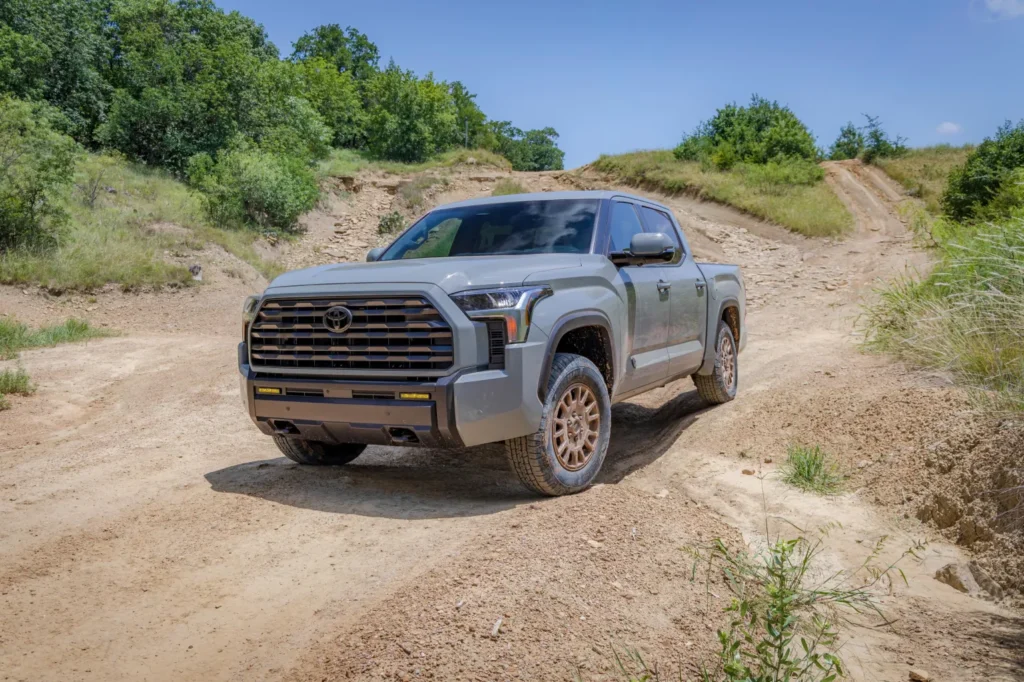
- 265/70 Michelin LTX Trail tires — those work out to about 31.6 inches tall — wrapped around 18-inch wheels
- Crawl Control
- Multi-Terrain Select
- An electronically locking rear differential
That’s a legit off-road setup. Nothing about that list feels like a watered-down “off-road-ish” package meant to look tough in a parking lot. If you compare it to the existing TRD Off-Road package, it’s actually pretty similar in terms of capability — the main difference is that TRD Off-Road uses Bilstein shocks and Falken Wildpeak tires instead of the Old Man Emu suspension and Michelins you get with Trailhunter.


As for how you’d actually spot one of these trucks in a parking lot? Bronze wheels and some Trailhunter-specific badges. Small details, but they do the job of setting it apart from the roughly one million other Tundra trims Toyota currently offers (okay, slight exaggeration, but you get it).
About That Engine…
Here’s the one place where the Tundra genuinely splits from its smaller siblings, and it’s not a styling thing this time — it’s the actual powertrain.
Both the 4Runner and Tacoma Trailhunter come standard with a hybrid setup, built around a 2.4-liter turbo-four. The Tundra SR5 Trailhunter doesn’t offer that at all. Instead, you’re stuck with — well, “stuck with” isn’t really fair, because it’s a genuinely strong engine — a gas-only, twin-turbo 3.4-liter V6 making 389 horsepower and 479 lb-ft of torque. That’s plenty for towing, hauling gear, or just getting up a rocky incline without drama.
If you really want the hybrid version, with its beefier 437 horsepower and 583 lb-ft of torque, you’ll have to skip past the SR5 entirely and step up to a higher Tundra trim. So it’s not that Toyota doesn’t offer a hybrid Trailhunter-ish truck — it’s just that this particular version of it isn’t hybrid, full stop.
So… Is the Milder Trailhunter Actually a Good Thing?
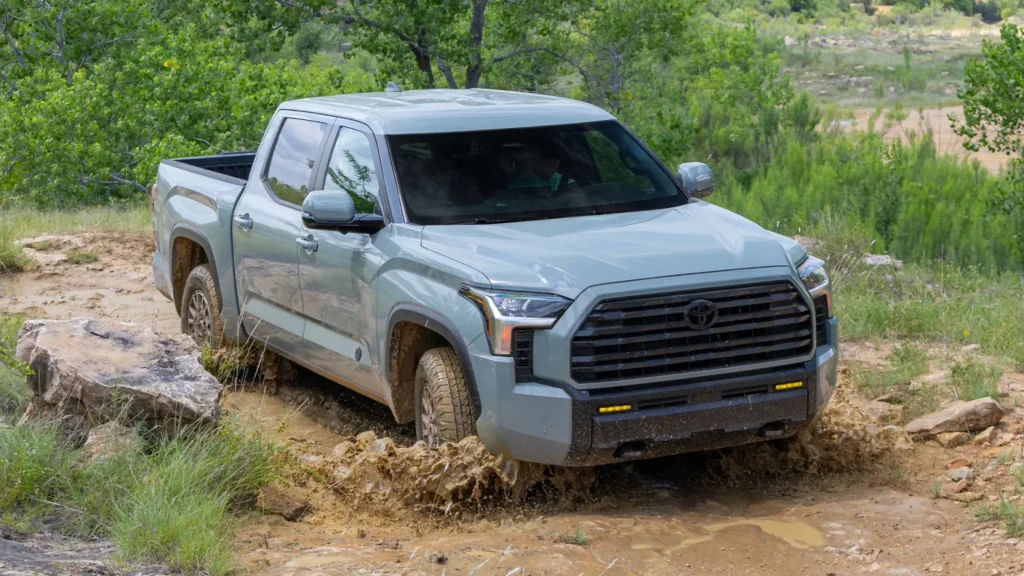
I think so, yeah. Look, nobody’s claiming the Tundra Trailhunter is going to out-crawl a TRD Pro, and it’s really not trying to. The TRD Pro is still the truck for people who want the most extreme, most capable version Toyota builds — and that comes with a price tag to match, easily $75,000 or more once you’re done configuring one.
But most people shopping for an off-road-capable truck don’t actually need that. What a lot of buyers want is the real hardware — the suspension, the locking diff, the skid plates, the terrain modes — without also paying for a bunch of leather-trimmed luxury stuff they’ll never use once they’re three miles down a fire road. That’s exactly what this package delivers. You get the meaningful, functional upgrades bolted onto a mid-level trim, and you skip the stuff that just drives the price up without doing anything for you on the trail.
Sure, some buyers are still going to go straight for the TRD Pro anyway, just because it’s the top dog and that matters to some people. Nothing wrong with that. But for everyone else — the ones who’d rather spend their money on gear and trips instead of options they’ll never touch — Toyota finally built something that makes a lot of sense. A Trailhunter that doesn’t ask you to pay flagship money just to get the parts that actually matter.