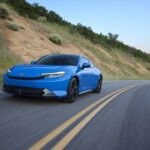




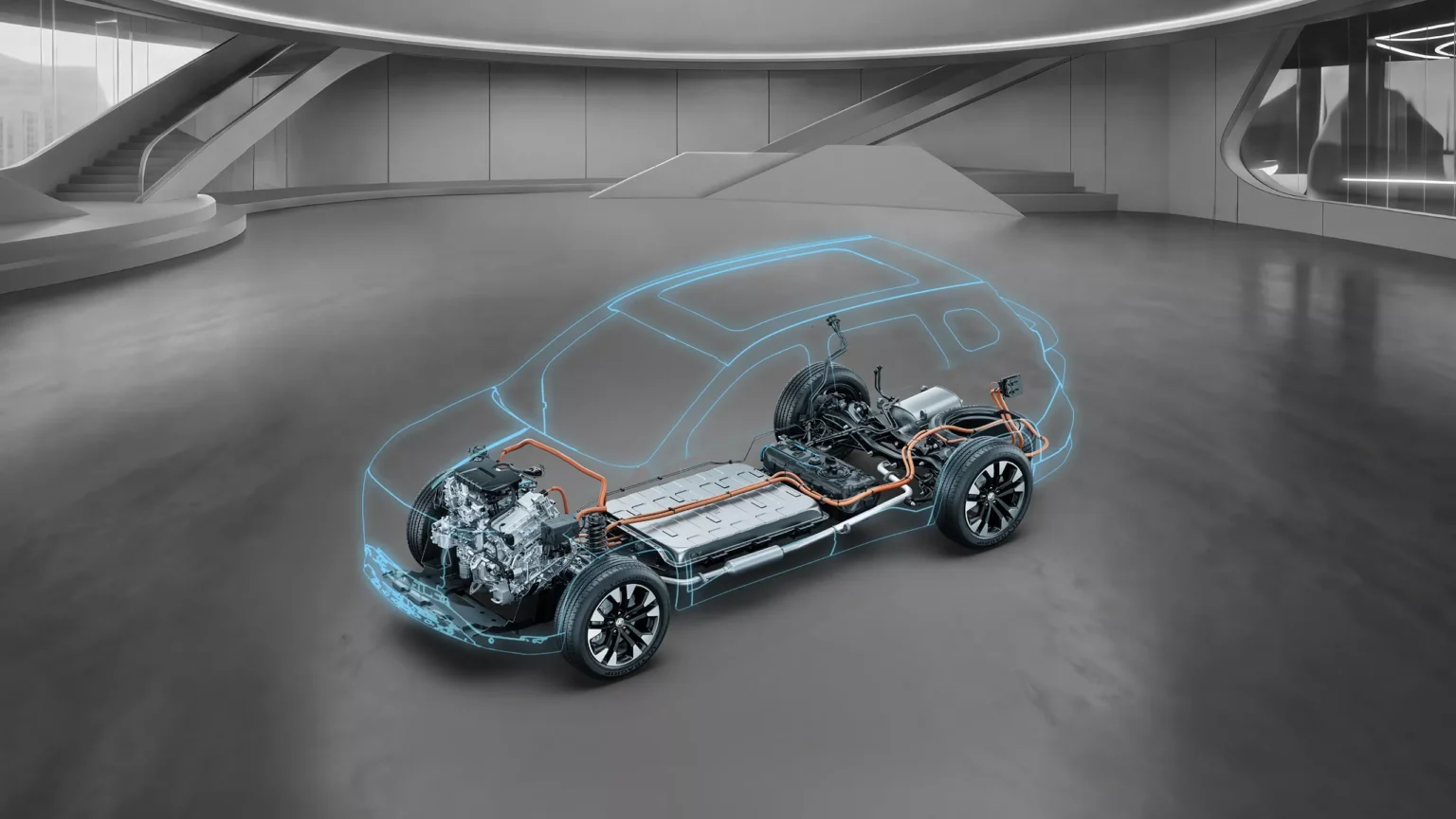
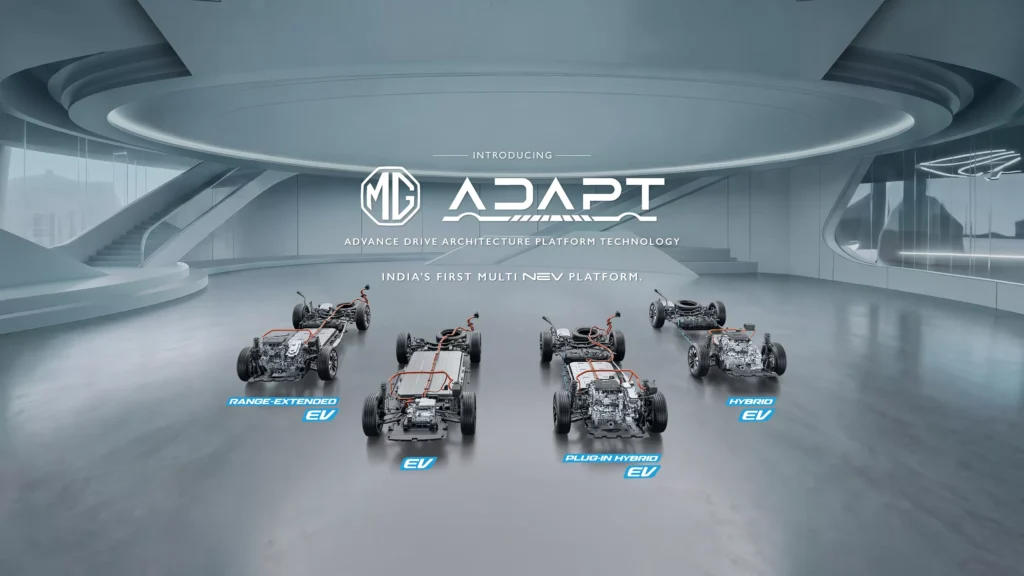
MG just gave India a peek at how it plans to build its next generation of electrified cars — and it’s not putting all its eggs in one basket. The company has pulled the wraps off MG ADAPT, a new multi-powertrain platform that can underpin hybrids, plug-in hybrids, range-extender EVs, and full electric vehicles, all from the same basic architecture. Two products built on this platform — one EV and one PHEV — are confirmed for this financial year, though MG hasn’t said yet whether they’ll wear the regular MG badge or sit under the newer MG Select sub-brand.
If that sounds like a lot of jargon, don’t worry. Here’s what it actually means for anyone shopping for a new car in the next couple of years.
So What Exactly Is MG ADAPT?
Think of ADAPT less as a single car and more as a shared skeleton that different vehicles can be built on. Instead of engineering a separate platform for every fuel type, MG has built one flexible base that can be configured as a hybrid, a plug-in hybrid, a range-extender EV, or a pure electric car depending on what the final product needs.
To make that work, MG has packed in a few genuinely new bits of hardware:
- A dedicated hybrid engine — built specifically for hybrid duty rather than being a regular petrol engine adapted for the job, aimed at better thermal efficiency and lower fuel use.
- A dedicated battery system — tuned for quick electric response along with a strong focus on safety and efficiency.
- A 10-in-1 intelligent electric drive unit — India’s first, according to MG, which bundles multiple components into one compact unit to cut down on complexity while boosting performance.
- An electromagnetic dedicated hybrid transmission — which MG calls a world-first, designed to make power delivery feel smoother and more responsive.
All of this is tied together by an intelligent energy management system that constantly reads the driving situation and decides how the engine, battery, and motor should work together at any given moment.
Four Drive Modes, One Smart Brain
The energy management system doesn’t just sit in the background — it actively switches between four distinct ways of driving, picking whichever suits the moment best:
- Pure Electric Drive – silent, motor-only running, ideal for stop-start city traffic.
- Series Hybrid Drive – the engine acts purely as a generator, charging the battery while the electric motor does the actual work of moving the car.
- Parallel Hybrid Drive – engine and motor team up together, useful when you need maximum performance.
- Engine Direct Drive – the engine takes over directly, tuned for efficient highway cruising.
On top of this, the platform’s modular design also allows for Range Extender EV (REEV) setups. In this configuration, the electric motor is always the one powering the wheels — the petrol engine never actually drives the car; it just runs as an onboard generator to top up the battery when needed.
Why This Matters for India
MG isn’t the only one betting big on hybrids and multi-powertrain flexibility right now. Hyundai, Kia, Honda, Tata, Mahindra, Maruti, and Toyota have all either launched or announced hybrid plans of their own, and BYD has shown a similar setup, though it’s approaching the Indian market top-down rather than starting with mass-market models.
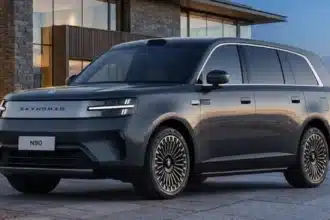
It’s part of a broader shift happening across the industry — carmakers realising that Indian buyers aren’t ready to commit fully to EVs just yet, but also want something more efficient than a plain petrol engine. If you’re curious how rivals are tackling the same problem, Toyota’s Innova Hycross facelift is already being tested with updated hybrid hardware, Honda has brought its Prelude back for 2026 as a hybrid, and even a smartphone brand has jumped in with the Xiaomi SkyNomad N90 hybrid SUV. On the electric side, battery tech is evolving fast too — see how Ather has upgraded the Rizta’s battery pack for more real-world range.
What MG Had to Say
Speaking at the unveiling, Anurag Mehrotra, Managing Director of JSW MG Motor India, said the idea is to give customers the “freedom to choose the energy solution that best suits their lifestyle,” without giving up performance or efficiency. He described ADAPT as a major step in MG’s New Energy Vehicle journey and a sign of the company’s push to bring globally-developed technology to Indian buyers.
The Bottom Line
MG ADAPT is essentially MG’s way of hedging its bets — rather than guessing which powertrain Indian buyers will want in two years, it’s built one platform flexible enough to offer all of them. The real test will be how the first EV and PHEV built on this architecture actually drive, and how they’re priced against the competition. For now, keep an eye on MG’s EV and Four Wheelers sections on Revvmates — we’ll have full details the moment MG confirms names, specs, and launch dates for these two upcoming models.
For more on the official reveal, you can also check Autocar India’s coverage of the MG ADAPT platform.