




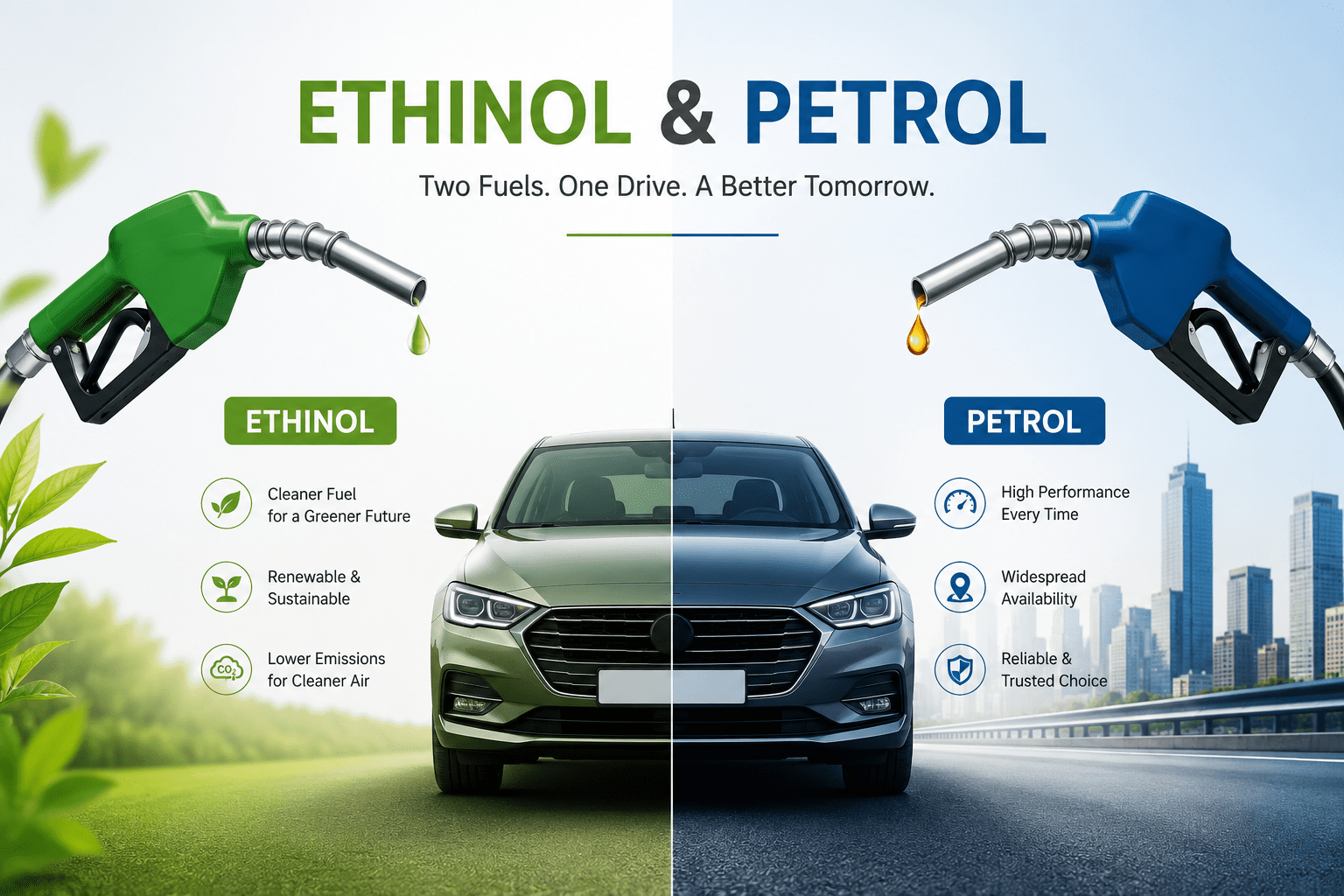
Ever notice that little sticker at the pump that says “ethanol blended petrol” or “E20” and wondered what it actually means for your car? We did too, so we dug into it.
Turns out it’s a bigger deal than the sticker suggests. Quietly, over the last few years, India has completely changed what’s in a “regular” tank of petrol — and most drivers barely noticed it happening.
Why bother blending ethanol into petrol at all?
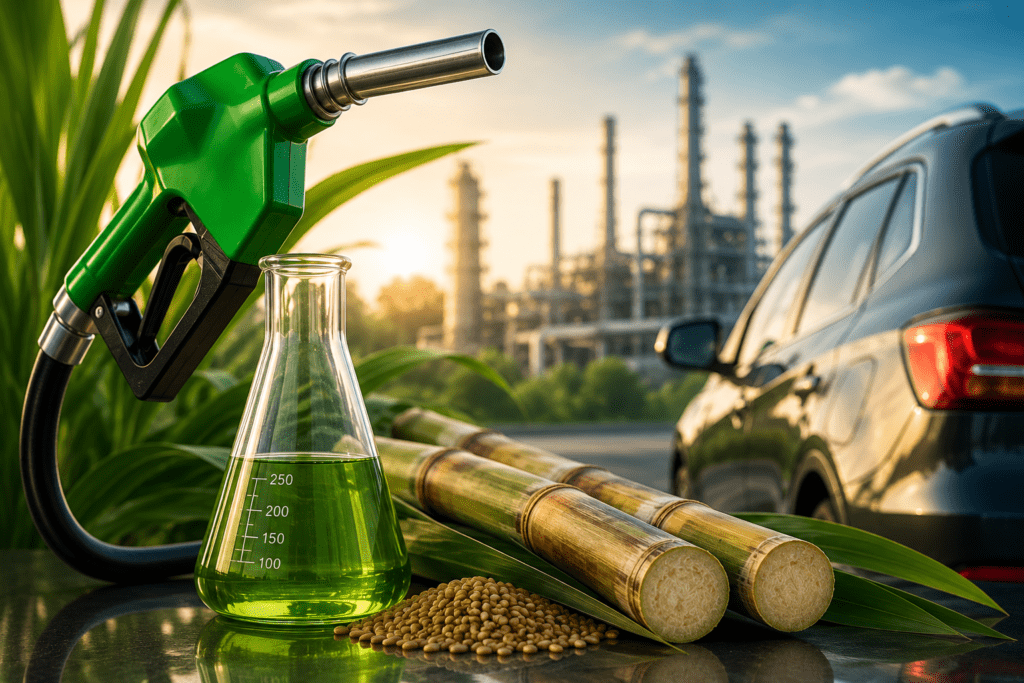
The short version: ethanol is made from sugarcane and grain, it’s renewable, and mixing it into petrol does two useful things at once. First, it means we import less crude oil, which saves the country a lot of foreign exchange. Second, it burns a bit cleaner than straight petrol, so it helps with pollution too.
There’s also a less-talked-about upside — the ethanol comes from crops Indian farmers grow, so a chunk of the money that used to go toward buying foreign oil is now going into farmers’ pockets instead. That’s not nothing.
None of this is a new idea, by the way. Brazil and the US have been doing ethanol blending for decades. India just did it faster than anyone expected — the original goal was 20% blending by 2030, and we got there five years ahead of schedule, in 2025.
Okay, but how much ethanol is actually in our fuel?
“E20” just means the fuel is up to 20% ethanol, 80% petrol. Simple enough. But here’s the part that surprised us — it’s not the same number across every fuel and every brand. Your everyday regular petrol and a premium high-octane fuel from the same company can have very different ethanol content, mostly because premium fuels are built around hitting a high octane number, not around ethanol blending. Here’s how it actually breaks down:
| Fuel Type | Company | Ethanol Blending | Octane Level |
|---|---|---|---|
| Regular Petrol | All Pumps | Up to 20% | 91 |
| XP95 | Indian Oil | Up to 20% | 95 |
| XP100 | Indian Oil | 0% | 100 |
| Speed97 | Bharat Petroleum | Up to 10% | 97 |
| Power95 | HPCL | Up to 15% | 95 |
| Power99 | HPCL | Up to 11% | 99 |
| Power100 | HPCL | Up to 4.5% | 100 |
| Shell V-Power | Shell India | Up to 15% | 91 |
A couple of things jumped out at us. Regular petrol — what most cars in the country actually run on — carries the full 20% blend now, nationwide. But once you go up to the premium stuff, like XP100 or Power100, the ethanol content drops off sharply, sometimes all the way to zero. Makes sense once you think about it: hitting a really high octane number is just easier to control with pure hydrocarbons than with ethanol thrown into the mix.
Does more ethanol mean worse mileage?
This is the question everyone actually cares about, so let’s get to it. Ethanol does carry a bit less energy per litre than petrol, so yes, there’s some mileage loss — but it’s smaller than people assume. For a car doing around 20 km/l, we’re talking roughly 0.6 km/l less, not some dramatic drop. Honestly, under-inflated tyres or a skipped service will cost you more mileage than the ethanol will. Maruti Suzuki and Toyota have both said their E20-certified cars have gone through extensive testing and haven’t shown any unusual wear from the higher blend.

Is your car even okay with E20?
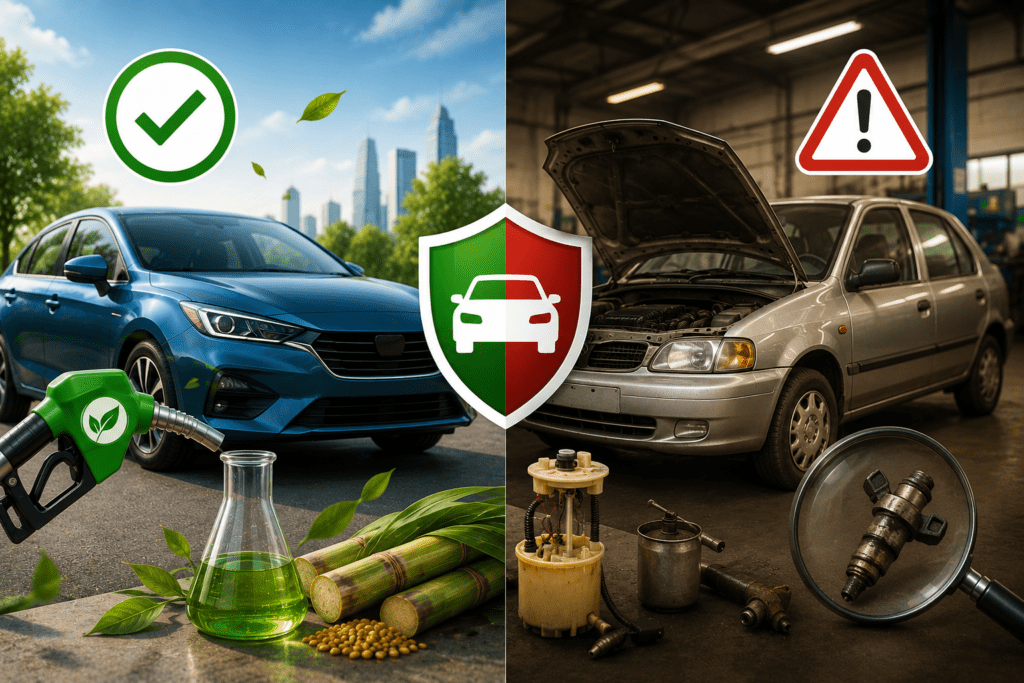
If your car’s a few years old or newer, it’s almost certainly fine — most recent models are built and certified for E20 already. Got an older car? Worth a quick check with your manufacturer’s service centre, since some older fuel systems weren’t designed with this much ethanol in mind.
And it’s not stopping at E20
India’s already looking past this. The Bureau of Indian Standards has notified specs for E22, E25, E27, and even E30, and there’s a real push toward flex-fuel vehicles that can handle anything from E20 to E100. So this table is probably going to look different again in a couple of years.
Bottom line
This isn’t some one-off scheme that’ll quietly disappear — ethanol blending is just part of how petrol works in India now, and it’s headed higher, not lower. Regular petrol everywhere already carries 20% ethanol; the premium and performance fuels sit lower because of their octane needs. For most of us filling up day to day, the real-world difference is small: a touch less mileage, genuinely cleaner-burning fuel, and a little less money leaving the country for imported crude.