



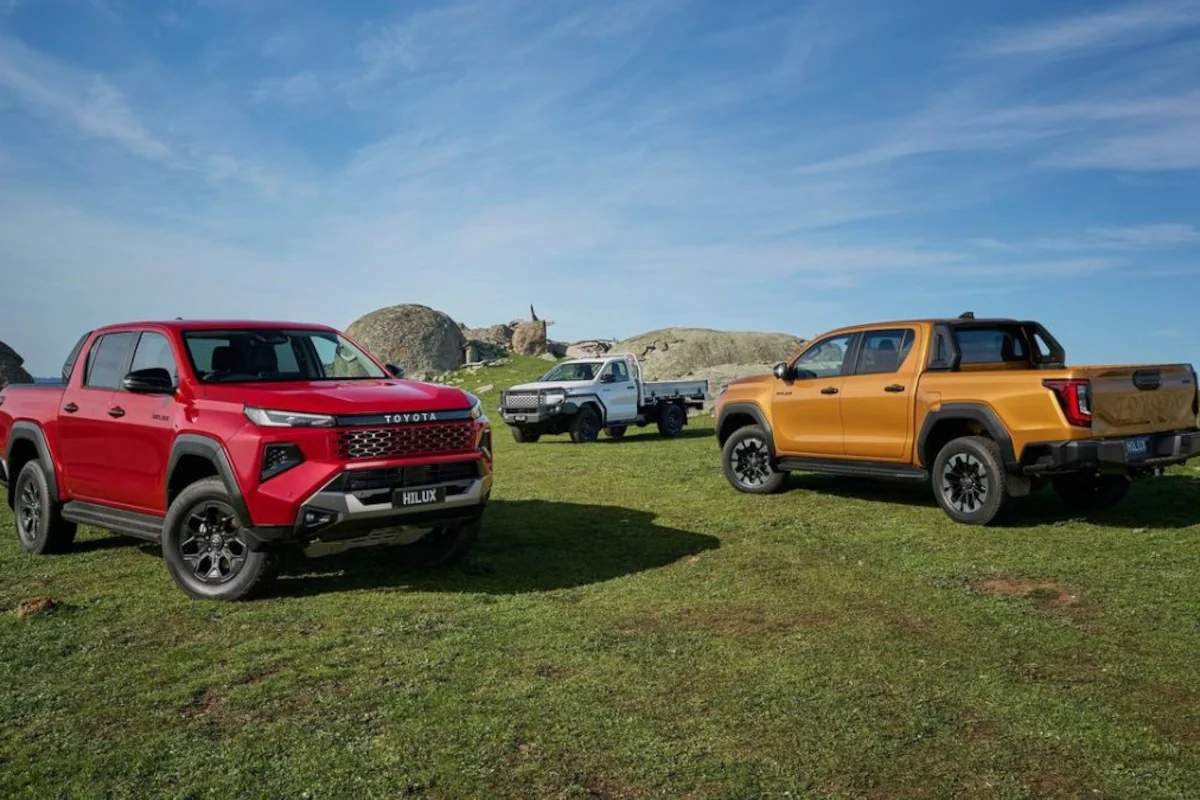
So Toyota’s finally brought out the ninth-gen Hilux in India, and honestly, it’s a bit more than the usual mid-life “new bumper, new headlights” refresh we’re used to seeing. Prices start at Rs 31.99 lakh (ex-showroom), and for that money you’re getting a properly redesigned exterior, a much nicer cabin, and a couple of mechanical changes that long-time Hilux fans will probably have opinions about (more on that in a bit). The body-on-frame platform is still there though, so if you liked the old truck for being, well, an actual truck — that part hasn’t changed.
First Up — When Can You Actually Get One?
Bookings have opened already, and Toyota’s saying deliveries kick off in the second week of August. Not a bad wait at all if you’re the type who books the day a car launches. If you want to check variant availability or book one yourself, Toyota’s official Hilux configurator is up and running too.
Let’s Talk Price
Three variants this time around:
| Variant | Price (Ex-showroom) |
|---|---|
| GX 4×2 AT | Rs 31.99 lakh |
| GX 4×4 AT | Rs 33.69 lakh |
| VX 4×4 AT | Rs 36.69 lakh |
Now here’s the thing — the outgoing Hilux started at Rs 28.52 lakh, so the entry price has jumped up by Rs 3.47 lakh. That’s not a small hike. But oddly enough, the top-spec VX has only gone up by Rs 69,000 compared to before. So if you were always going to buy the fully-loaded version anyway, you’re barely paying more for what is technically a whole new generation. Entry-level buyers are the ones who’ll feel this price hike more.
Its main rival stays the same too — the Isuzu V-Cross, which has had this segment pretty much to itself alongside the Hilux for years now. If you’re into Toyota’s truck lineup in general, we recently covered the 2027 Toyota Tundra Trailhunter as well, which is worth a look if you enjoy comparing what Toyota’s doing with pickups globally.
What Changed on the Outside
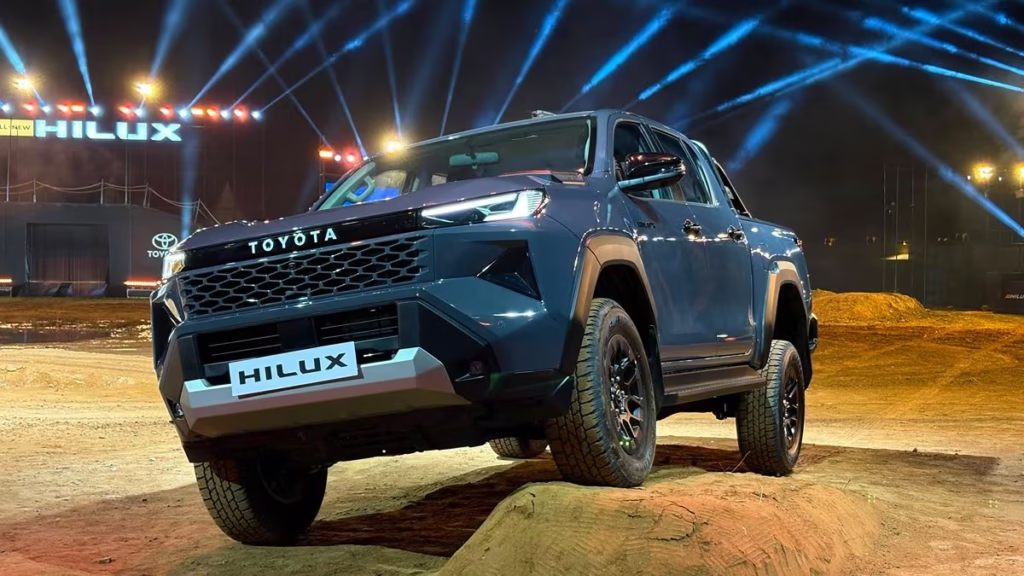
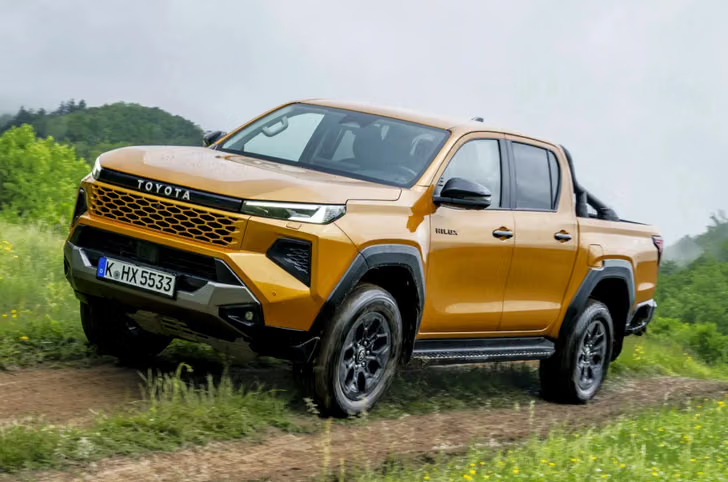
The front end is the first thing you’ll notice — it looks a lot more upright and, dare I say, aggressive than before. Slim LED headlamps, a honeycomb grille, and big block “TOYOTA” lettering where the badge used to sit. Yeah, that lettering-over-badge thing is everywhere these days, but it works on a truck like this. Down below, there are these chunky black air intakes on the bumper and a silver skid plate that actually looks like it means business.
Walk around to the side and you’ll spot black cladding on the wheel arches, roll bars, a footboard (genuinely useful if you’re not 6 feet tall), and a fresh set of alloys. There’s also a small but nice touch — the side mirrors now fold in electrically, which sounds minor until you’re trying to squeeze this thing through a narrow lane.
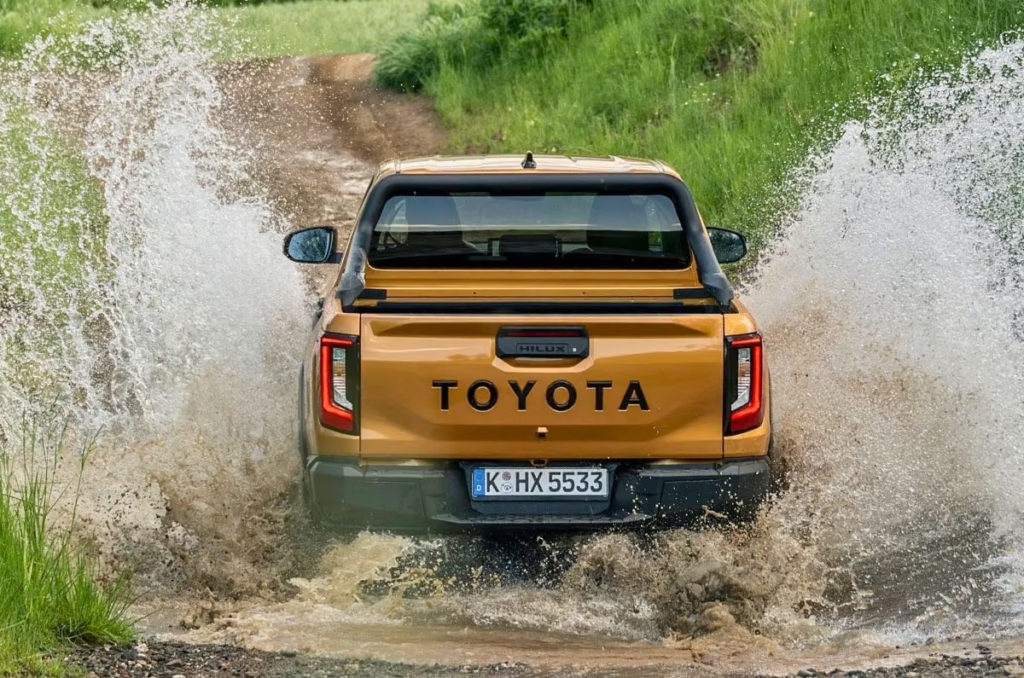
Round back, it’s vertically stacked LED tail lamps with a C-shaped light signature, “TOYOTA” spelled out across the tailgate, and a bumper that now has a built-in step. Small thing, but if you’ve ever had to climb into a pickup bed without one, you’ll get why it matters.
Colour-wise, there are six choices — Sulphur Metallic, Platinum Pearl White Metallic, Attitude Black, Ash, Emotional Red, and Super White. Nothing too wild, but a decent enough spread.
Step Inside, and Things Get a Lot More Interesting
Honestly, this is where the Hilux has improved the most. The whole dashboard’s been redone, and now you get a 7-inch digital instrument cluster plus a 12.3-inch touchscreen — a proper jump from the old unit. New three-spoke steering wheel too, with the updated Toyota logo on it.
And here’s what I actually like about it — Toyota hasn’t gone and buried everything behind touch controls the way a lot of brands are doing now. You’ve still got physical buttons for the climate control and the 4WD settings, which, if you’ve ever tried adjusting AC temperature through a touchscreen on a bumpy road, you’ll know is a genuinely good call.
On the features front, you’re looking at:
- Wireless Apple CarPlay and Android Auto
- Wireless charging
- Cruise control
- Connected car tech
- Ventilated, powered front seats
- Rear armrest with cupholders
- PM 2.5 air filter
- 8-speaker audio setup
- 360-degree camera
Not a bad list at all for what’s essentially a work-truck-turned-lifestyle-vehicle. Safety-wise, you get seven airbags, vehicle stability control, ABS with brake assist, parking sensors front and back, tyre pressure monitoring, and ISOFIX mounts. Should tick most boxes for anyone worried about taking this on family trips.
Engine and Gearbox — Here’s Where It Gets a Bit Divisive
Mechanically, it’s the same 2.8-litre diesel we already know, still making 204hp and 500Nm. But — and this is the bit some buyers won’t love — it’s now automatic-only. The 6-speed torque converter gearbox is your only option; the manual’s been dropped completely. If you were one of those people who specifically wanted a manual Hilux for that old-school truck feel, that choice is gone now.
On the flip side, Toyota’s opened things up a bit by adding a 4×2 (rear-wheel-drive) variant for the first time, so it’s not strictly 4×4-only anymore like before. Worth mentioning too — this doesn’t get the 48V mild-hybrid setup that the Fortuner has. So no “Neo Drive” here.
If you do go for the 4×4 versions, though, you’re getting proper off-road gear — low-range transfer case, electronic diff lock, several terrain modes, downhill assist, traction control, and an auto limited-slip differential. So it’s not just for show.
On a side note, if engine-and-gearbox decisions like this one tend to confuse you when car shopping, we broke down a similar dilemma in our Renault Duster engine and gearbox guide — worth a read if you’re the type who likes weighing these things out before signing on the dotted line.
Worth Buying?
Look, if you actually need a truck that can handle rough terrain and don’t mind losing the manual gearbox, this update makes a lot of sense — better tech, more safety kit, and a slightly more usable lineup with both 4×2 and 4×4 options now. The price jump at the entry level is a bit steep, no doubt about that, but Toyota’s clearly tried to soften the blow at the top end, where the increase is barely noticeable.
Bookings are open, deliveries start in a couple of weeks, and it’ll be interesting to see how buyers react to the automatic-only decision once the V-Cross comparisons start rolling in.
If pickups and commercial vehicles are your thing, it’s also worth keeping an eye on the broader trend — we recently looked at Ashok Leyland’s growth outlook for FY27, which gives a decent sense of where demand in this space is headed. And for more launches like this one, our Four Wheelers section has all the latest updates on new cars and SUVs hitting the Indian market.