

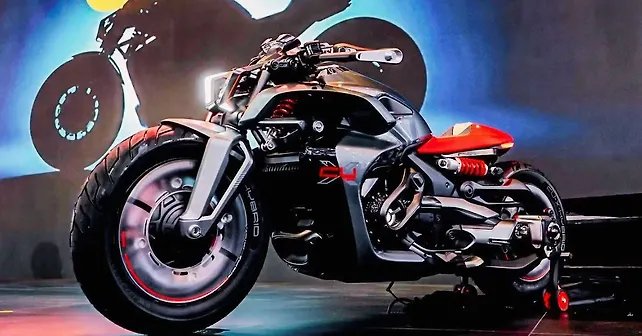
- CU-X previews Voge’s move towards hybrid and intelligent motorcycle platforms
- Plug-in architecture could combine electric low-speed response with petrol touring range
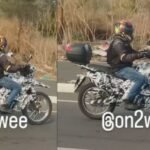
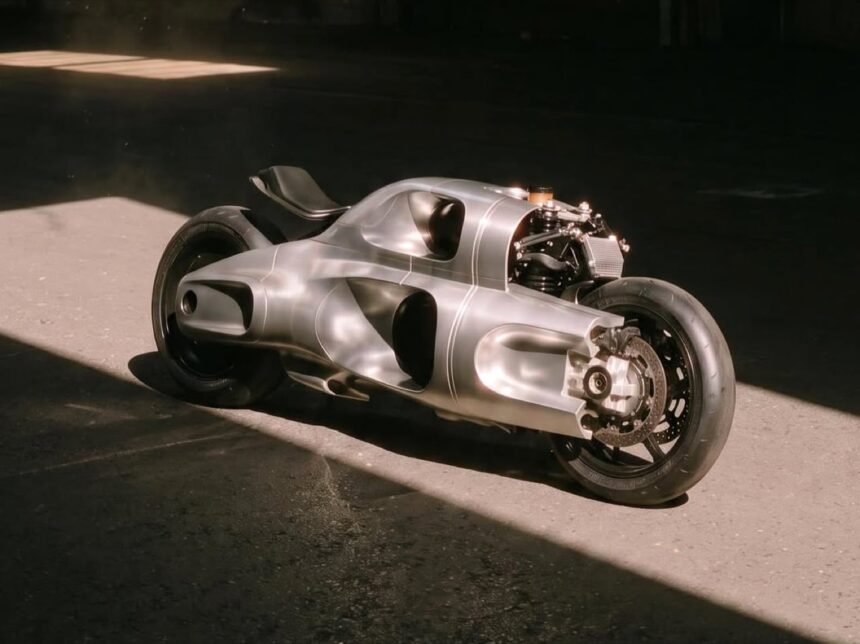
Voge has revealed the CU-X Hybrid Concept at CIMA 2026 in Chongqing as a technology demonstrator rather than a production motorcycle. The awesome looking power-cruiser design naturally grabs attention, but the tech underneath is far more crucial. Voge is using the CU-X to explore a plug-in-hybrid motorcycle architecture.
A plug-in hybrid sits between a combustion petrol motorcycle and a full battery electric. There is an internal-combustion engine which works alongside an electric motor and a traction battery large enough to be charged externally. A properly developed motorcycle PHEV therefore helps you start a journey with useful energy already stored in the battery. Voge has yet to explain which hybrid topology the CU-X uses, so we don’t know precisely how the engine and electric drive are connected. Also Voge works with BMW Motorrad as a supplier, possibilities are endless.
There are several possibilities. The electric motor could assist the combustion engine through the transmission. It could independently drive the motorcycle for short distances. The combustion engine could sometimes recharge the battery. Alternatively, the two sources could operate together when maximum performance is requested.
Internal-combustion motorcycle engines and electric motors have almost opposite strengths. A petrol engine generally needs revs before it reaches its strongest output. An electric motor can provide substantial torque from very low speed. Put the two together properly and the electric side can potentially fill the area where the petrol engine is weakest.
Cruisers rely heavily on effortless low-speed and mid-range response. Riders do not necessarily want to keep an engine close to its redline. They expect the motorcycle to pull cleanly from low speeds and respond without requiring repeated downshifts. An electric motor assisting during those first few metres of acceleration could make a relatively modest combustion engine feel much larger.
Instead of sizing the engine around the absolute peak performance required from the motorcycle, engineers could potentially use a smaller combustion unit and ask the electrical system to provide additional output during brief periods of heavy acceleration. The result, at least theoretically, is a motorcycle with the highway range of petrol propulsion but some of the immediate response associated with an EV.
A rider might commute 15km or 20km during the week but cover several hundred kilometres on a Sunday. Designing one battery-electric motorcycle to perform both jobs creates a difficult compromise. Hybridisation is the middle ground. Short commutes can be done only on the batteries. While you have the dependability and availability of petrol combustion when required.