



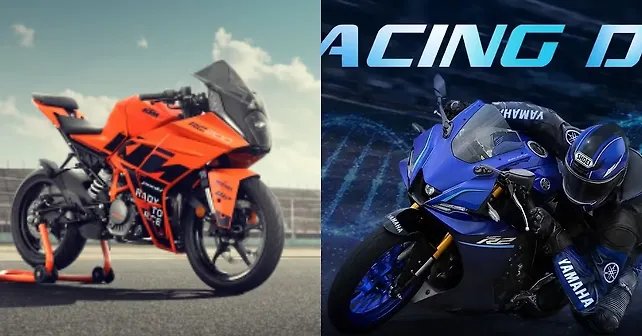
Yamaha has launched the R2 in India, and it is the brand’s first sports bike in the 200cc segment, going up against the KTM RC 200. But does it have what it takes to challenge the KTM RC 200? In this article, we compare both models in detail.
The Looks
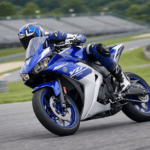
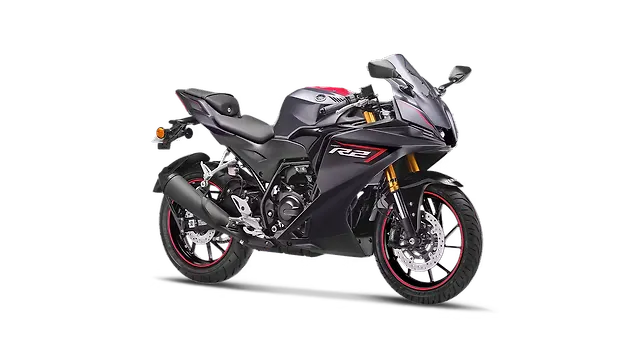
The Yamaha R2 has an aggressive look that is inspired by the Yamaha R7, giving it that ‘big bike’ look. The fuel tank profile and the raised tail section add to the sporty nature of the design, but the taillight is the same as the one on the R15.
The KTM RC 200, on the other hand, draws design inspiration from the higher-capacity RC 390 and does not stand out much in comparison.
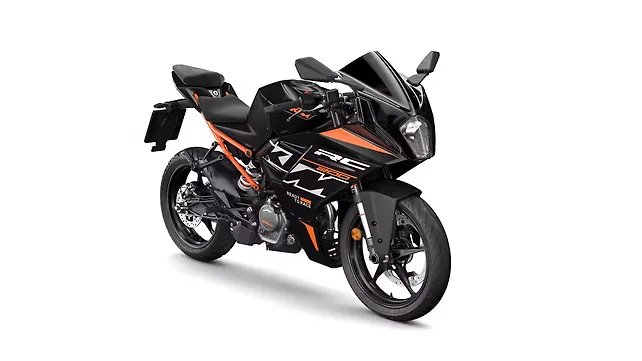
The design doesn’t offer the same ‘big bike’ feel compared to the Yamaha R2, which is more in line with the sport bike design trends of today. The KTM RC 200 feels a bit dated compared to the R2, and is in need of an update.
Performance
Powering the Yamaha R2 is a 204cc, liquid-cooled, single-cylinder, DOHC engine producing 26.1bhp at 10,000rpm and 19.1Nm at 8,000rpm.
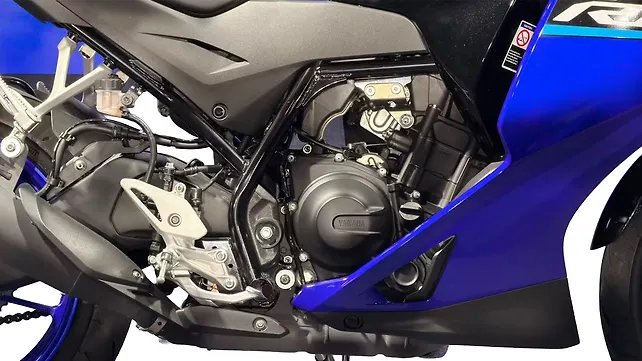
The KTM RC 200 features a 199.5cc, liquid-cooled, single-cylinder DOHC motor producing 24.6bhp at 10,000rpm and 19.2Nm at 8,000rpm.
![KTM RC 200 [2021] Exhaust Headers](https://revvmates.com/wp-content/uploads/2026/09/rc-200-2021-exhaust-headers.jpeg "KTM RC 200 [2021] Exhaust Headers")
On paper, the Yamaha R2 has the edge in power, with its motor producing 1.5bhp more, while the KTM RC 200 has 0.1Nm more torque.
Underpinnings
The Yamaha R2 is built on a steel tube diamond frame and is suspended on a 37mm inverted fork and monoshock. It rolls on 17-inch alloy wheels at both ends, with a 100-section front and 140-section rear tyre.
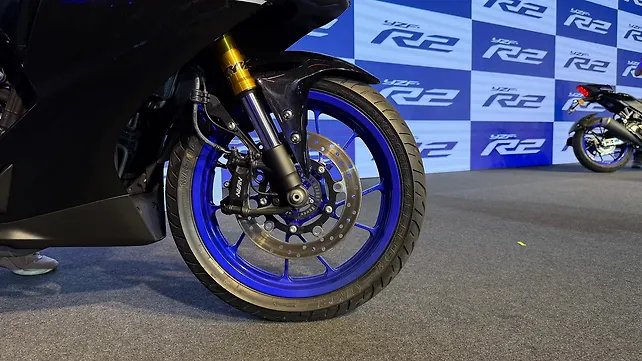
The braking setup consists of a 282mm front and 220mm rear disc setup, with dual-channel ABS as standard.
KTM RC 200, on the other hand, features a steel trellis frame and is suspended on a 43mm WP Apex inverted fork and monoshock, with 10-step preload adjustability.
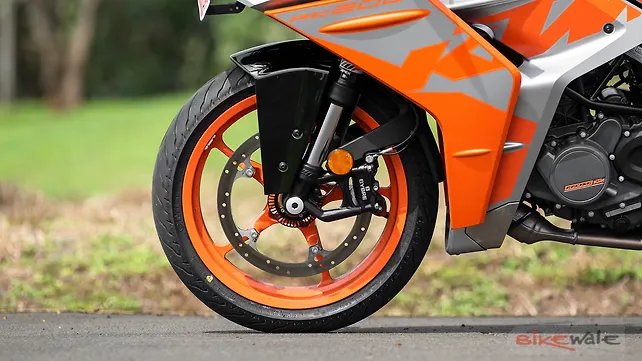
It rolls on 17-inch alloy wheels at both ends, wrapped in 110-section front and 150-section rear tyres. Braking duties are taken care of by a 320mm front and 230mm rear disc brake setup with dual-channel ABS.
In terms of hardware, the KTM RC 200 has a slight edge with the larger inverted fork, wider tyres, and most importantly, larger disc brakes. But the Yamaha R2 has one advantage over the RC 200, which is the kerb weight of 149kg that makes it 11kg lighter than the RC 200.
Features
The Yamaha R2 features a 5-inch TFT console for essential readouts. The console also offers smartphone connectivity for call/SMS alerts and turn-by-turn navigation via the Yamaha Y-connect application. There are also riding aids on offer, such as a traction control system and three riding modes: Rain, Sport and Street.
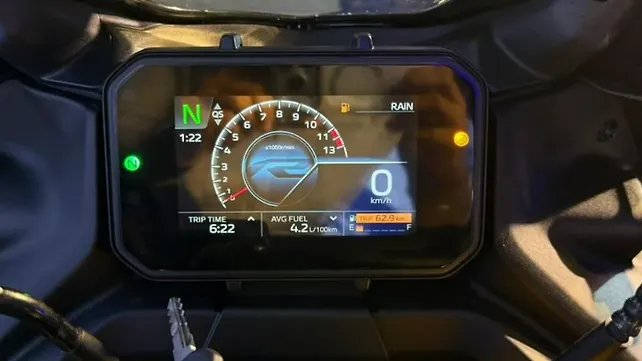
The KTM RC 200 gets a 5-inch TFT console and has smartphone connectivity for connected features such as call/SMS alerts and turn-by-turn navigation. It gets a Supermoto mode, allowing riders to turn off ABS intervention at the rear, along with riding aids such as a traction control system and a quickshifter as standard.
The Yamaha R2’s base variant doesn’t get a quickshifter as standard, and for it you’ll need to go for the mid-spec or top-end M variant, both of which are significantly more expensive than the base variant.
Verdict
The Yamaha R2 has some significant advantages over the RC 200, including higher power output and lower kerb weight. The RC 200, meanwhile, offers more hardware and electronic equipment. The two base variants are priced similarly, with the Yamaha R2 costing Rs. 2,30,500 (ex-showroom), while the KTM RC 200 is priced at Rs. 2,31,678 (ex-showroom, Delhi).
If you’re someone looking for a motorcycle with more power and lower kerb weight, then the Yamaha R2 makes a lot of sense. But if you don’t want to compromise on hardware and features, then the KTM RC 200 would be a better choice.