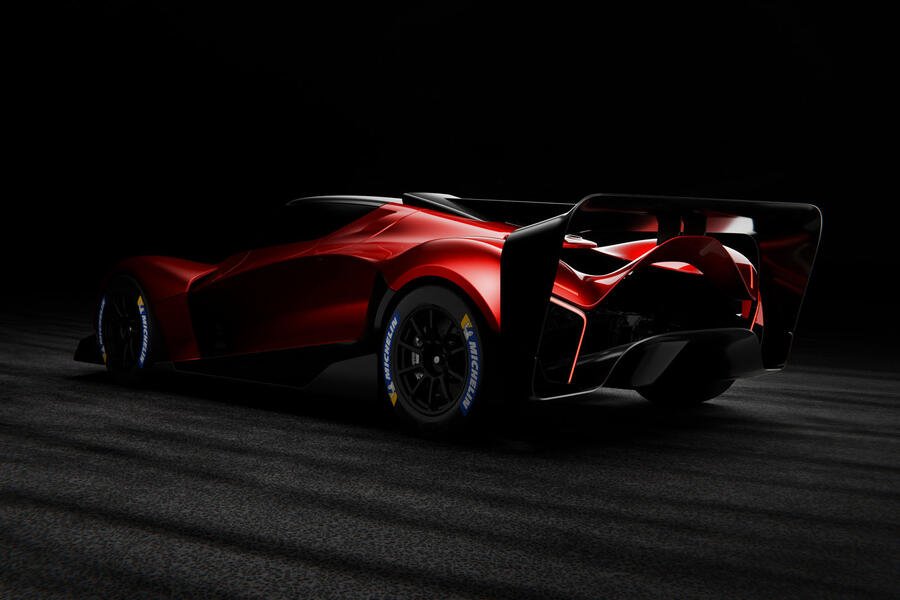





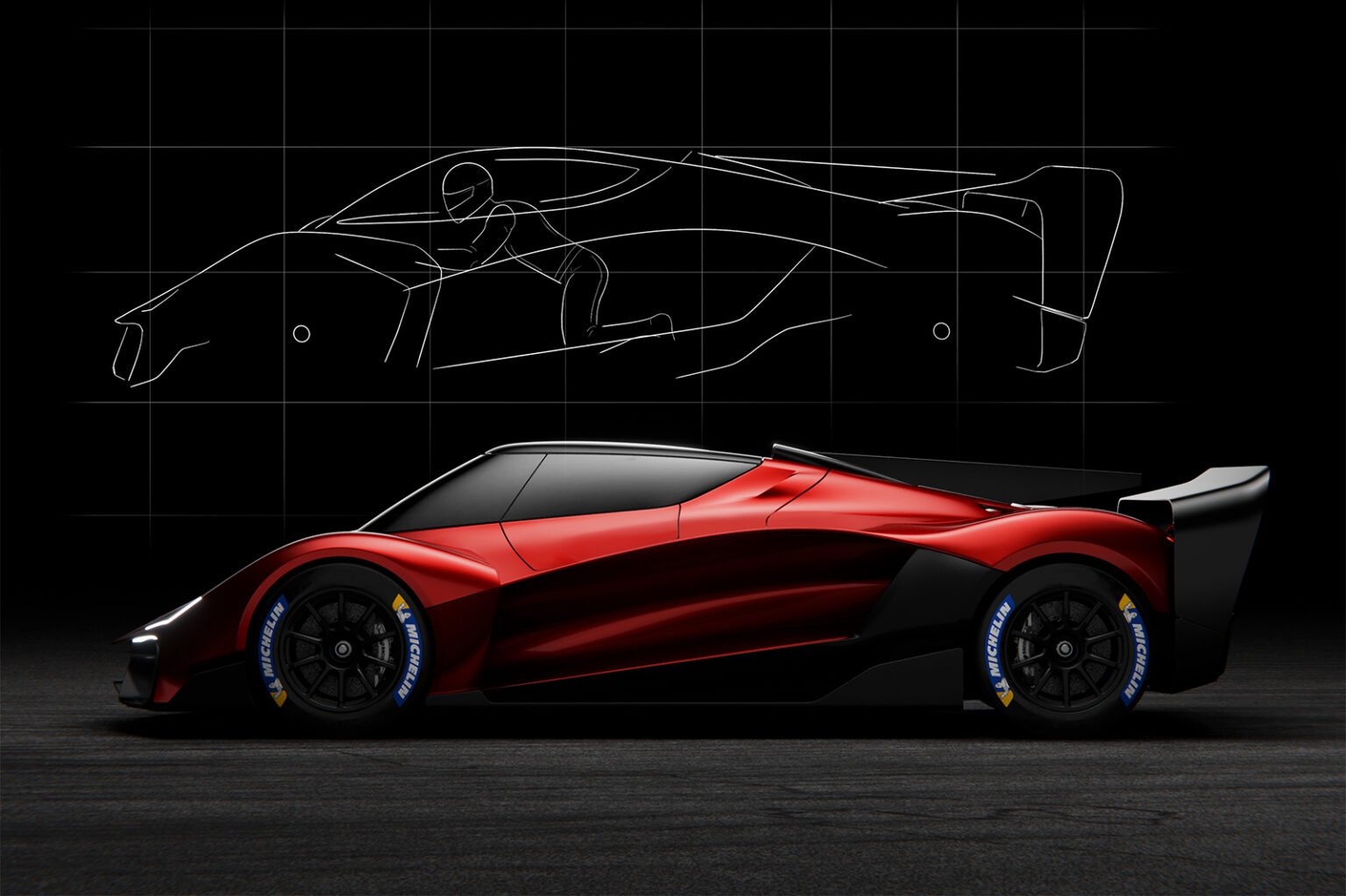
It uses a 789bhp naturally-aspirated Judd V10 – a choice inspired by “the most emotional-sounding F1 engine” – and is targeting an 1100kg dry weight and 205mph top speed. Sanchez said it had been built with Belgian circuit Spa-Francorchamps in mind, but that “it’s not about numbers”, rather “the connection that you feel with the car”.
Work is ongoing to finesse the car’s dynamic characteristics, with significant thought put into the impact of the driver’s weight; in most supercars, the 60-100kg of ballast provided by the person at the wheel is usually situated as low and long as possible, but here it is set high and short. “That changes your steering geometry, your suspension geometry and how the car has to behave in such a position”, said Sanchez. The proposed GNS system, allowing that weight to shift within the car while moving, will further complicate matters.
Asked about crash safety, Sanchez said this was “the first question we asked ourselves” and affirmed that it would not be compromised by the head-first positioning.
Sanrivatti also plans to run its own driver development programme to help buyers acclimatise to the new way of interacting with the car, particularly at high speeds. “We will be teaching our clients in a staged way – not, obviously, just saying ‘here are the keys’,” said Sanchez.