

Renault unveiled the E-Space concept at the 2026 Paris Motor Show, hinting at a potential electric MPV comeback for the iconic nameplate. Explicitly pitched as a “real alternative to SUVs and saloons”, the E-Space concept goes back to Renault’s ‘voitures à vivre’ philosophy, which puts the human experience, comfort, and everyday lifestyle at the centre of vehicle design.
Introduced in 1984, the Renault Espace was Europe’s first MPV and retained this body style till its fourth generation. In 2023, it was transformed into a stretched version of the Austral SUV.
Renault E-Space Concept exterior details
Retro-modern MPV concept has some elements that link it to the previous Espace models
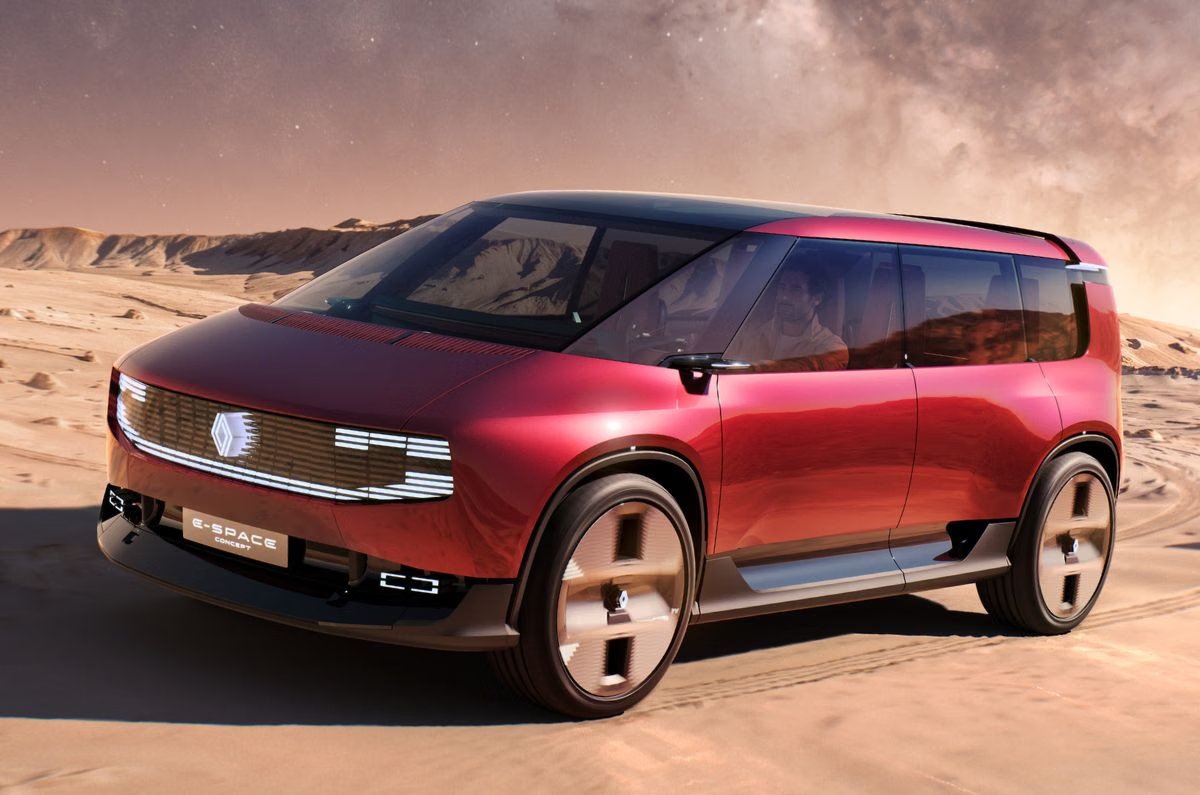
The Renault E-Space concept has an overall clean design, which Renault’s brand design director Alexandre Malval says is “stripped of anything that might distract the eye.”
At the front, it gets U-shaped LED lighting elements on the blanked-off grille. The grille itself features an illuminated Renault logo that appears to float over it. One design cue that links to the original Espace is the heavily raked windscreen, which appears to extend to the bonnet like the French TGV train.
In profile, the E-Space Concept sports huge 24-inch alloy wheels and a large glasshouse that places “natural light at the heart of the concept”. It is 4.70 metres long, 2.02 metres wide and 1.67 metres tall, and Renault says its height- and length-to-width ratios are similar to the original Espace, albeit with shorter overhangs.
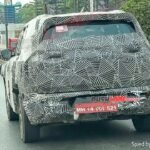
At the rear, the rear spoiler appears similar to the roof bars prominent on the 3rd- and 4th-generation Espace. The U-shaped lighting elements mimic the front LED design, and their placement on a gloss-black panel makes the windscreen appear larger.
Renault E-Space Concept interior details
3-row, 6-seater electric MPV aims to maximise interior space and comfort
The E-Space Concept revives Renault’s voitures à vivre philosophy. This approach focuses on the human experience and everyday family life rather than raw performance or luxury, all of which are clearly visible in the electric MPV concept’s cabin. It also brings back the vibrant pop interior colours Renault was known for back in the 70s.
The concept features an ‘OpenR Panorama’ screen which spans the entire width of the dashboard. Renault says this display will be in the next-generation Rafale and Scenic models. While this expansive display is not touch-enabled, there is a smaller infotainment touchscreen suspended from the dashboard that can be used to control functions such as music and navigation.
The E-Space concept uses a yoke-style steering wheel and a steer-by-wire system, which frees up space for the driver’s footwell due to a missing mechanical steering column. The steering wheel features touch-sensitive buttons to interact with the OpenR display.
It gets 6 seats spread across three rows. There are folding tables mounted on the front-row seatbacks which second-row passengers can use if they do not spin around to face the third row. The second-row seats can also be folded flat to form a table for those in the third row.
Renault has yet to reveal the E-Space Concept’s architecture or powertrain details. However, the carmaker is developing a new RGEV Medium 2.0 platform for its future vehicles. Featuring an 800-volt architecture, the platform is designed to accommodate a wide range of body styles “including saloons, SUVs and even an MPV”. If the E-Space Concept reaches production, it is likely to be based on this platform, which is expected to support a claimed WLTP range of up to 750km.
With the E-Space concept, Renault appears to be not only considering a return to the model’s MPV roots, but also hopes to replicate the success of its electric revivals of iconic nameplates such as the Twingo, Renault 4 and Renault 5.