



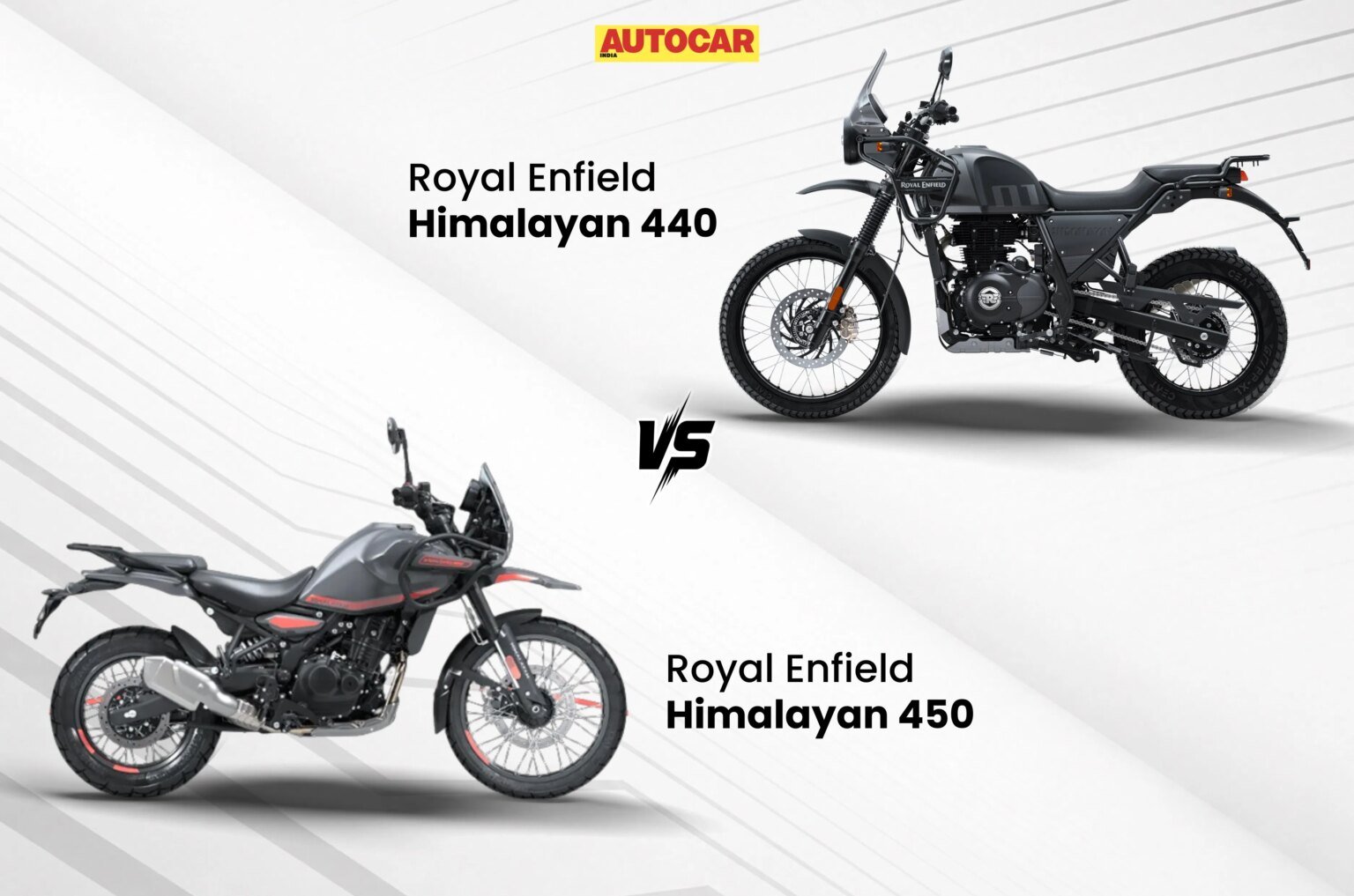
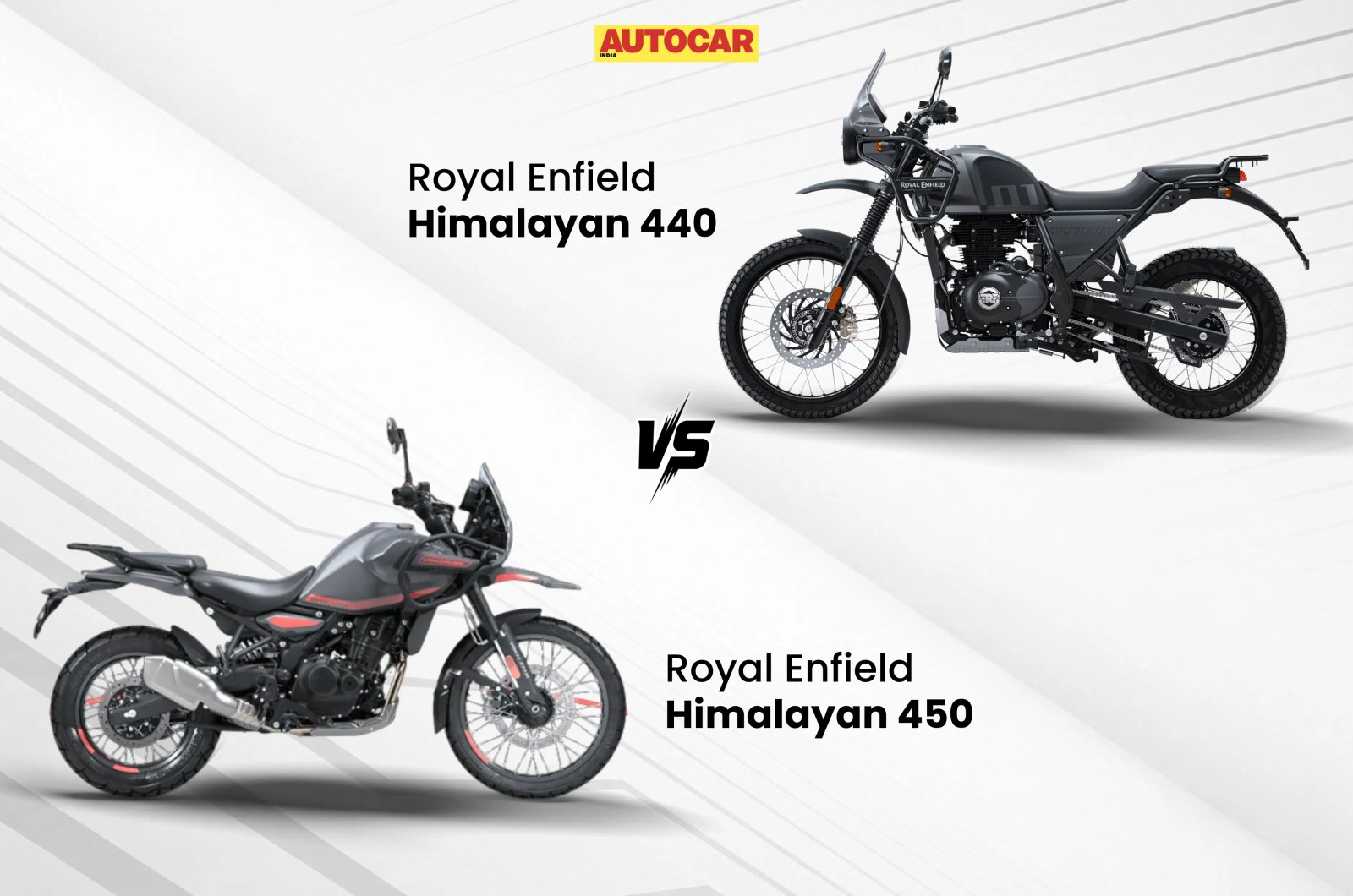
This may be a surprise for some, but Royal Enfield made sure the newer 450 is better on (almost) all fronts compared to its predecessor, the 411. Since the 440 shares the same dimensions, it has 10mm less ground clearance, 3kg extra kerb weight, and 50mm lesser wheelbase. It is, however, more accessible with a 25mm lower seat height than the 450, but Royal Enfield does offer a lower seat accessory to bring its seat height down to 805mm. Royal Enfield has also upgraded the chassis on the 450 to an advanced, performance-oriented twin-spar frame compared to the 440’s simpler split-cradle frame.
Since a Himalayan is all about the adventure (pun intended), the 450’s two litres larger fuel tank is sure to add at least 60km additional range over the 440. In most situations, this shouldn’t make a massive difference, but it is a marked advantage that the 450 lords over most of its rivals, which now includes the older-younger brother.
The ‘new advantage’ carries onto this section as well. The 450 gets a larger rear tyre that’s also radially constructed, compared to the 440’s traditional bias-ply constructed rear tyre. The 450 also boasts a larger front disc, although the ratio between the front and rear disc stays similar across both motorcycles. Both also get dual-channel ABS as standard, and both allow you to turn off the rear ABS at will. Lastly, the 450 gets the USD front fork and it’s a larger 43mm diameter unit, compared to the 440’s 41mm. The suspension travel on the rear has been increased by 20mm over the 440 as well, to 200mm. Both motorcycles do let you adjust the rear preload for further personalisation, and both lack the ability to adjust the front fork in any form or fashion.
Royal Enfield Himalayan 440 vs 450: Features
Himalayan 450 gets more features and better quality levels
To no one’s surprise, again, the 450 offers you more features for the extra price you pay for it. You get an assist and slipper clutch, a 4-inch TFT instrument cluster that offers Google Maps mirroring, two ride modes, and ride-by-wire technology. Besides the extras mentioned in the other sections, the 450 also gets the newer rotary switches for ignition and high beam controls, but we wouldn’t consider that to be an upgrade in experience. The 450 does get an upgraded design and quality levels, more in line with 2026. The 440 does get an updated instrument cluster with the tripper pod as standard, enabling Google Maps power turn-by-turn navigation. However, it can’t match the 450 on any of its other features. To be clear, the 440 by no means is a poorly made machine, but it consciously sticks to an older design and feature set, which is unmissable when you see the two side-by-side.
One feature that’s afforded only to the 450, quite literally, are the tubeless spoke rims. The top three variants of it get those rims as standard fitment. Royal Enfield charges Rs 16,000 at the moment for upgrading the wire-spoked rims to cross-spoked, tubeless rims on the lower two variants. On the 440, however, they aren’t offered at all and Royal Enfield didn’t confirm if the 450’s rims can be retrofitted to the 440 either.
Royal Enfield Himalayan 440 vs 450: Price
Himalayan 450’s upgrades come at a significant cost
This will likely be how you decide which Himalayan to buy, assuming you’re okay with either bike otherwise and that’s of course an advantage to the 440. It starts a full Rs 78,000 lower than the 450 for the single variant with three colours. The 450 has effectively two variants (with or without tubeless spoke rims) in six colours; Royal Enfield does charge different prices for five of those variants so it’s best to pay a visit to the website or your nearest dealer for the specifics.
Even though the 450 offers much more, the 440’s competitive pricing helps it compete with smaller capacity adventure models like the KTM 250 Adventure and the TVS RTX 300. It’s also priced very similarly to the road-biased Scram 440; in fact, the Himalayan 440 costs Rs 3,000 less than the Scram 440’s top variant with alloy wheels.
We’d like to acknowledge that this isn’t a comparison we’d usually do, but these two motorcycles could mislead the uninformed buyer into misjudging the Himalayan 450 and we hope to have helped you see the differences run far deeper than that, just to make sure that you’re getting the right Himalayan for yourself.