




The Ride

As soon as you get onto the saddle, you are greeted by a wide handlebar and a spacious seat. The bike gets marginally rear-set footpegs, which translates into a sporty riding posture. However, the rider’s triangle is comfortable for city commutes as well as intercity highway rides.
As you start riding the motorcycle, you’d immediately notice the motorcycle has a spring in its step over the X-47 Crossover. While the difference isn’t night and day, it is quite noticeable. The throttle response is alert, and there isn’t any jerkiness to it. The bike has three ride modes: Glide, Combat, and Ballistic, which significantly change the throttle response and acceleration depending on the mode selected.
At the Velocity International Circuit, I only rode the motorcycle in the Ballistic mode, as this is where the maximum power is available. The motorcycle shoots off the line with ferocity, and triple-digit speeds come in no time. On the narrow B-roads, using the Combat mode, the throttle response and power delivery felt noticeably mellower than the Ballistic mode, making it ideal for quick city commutes. That said, the Glide mode is ideal for short commutes or when you want to eke out the maximum range.
The X-47 Venom gets 10 levels of regenerative braking, and the maximum regen can now be used down to one per cent battery charge. At max regen, you can practically slow down the bike with minimal brake use, but you need to get used to regenerative braking. Up to level five, you can coast the motorcycle more progressively, after which, regen starts getting too intrusive.
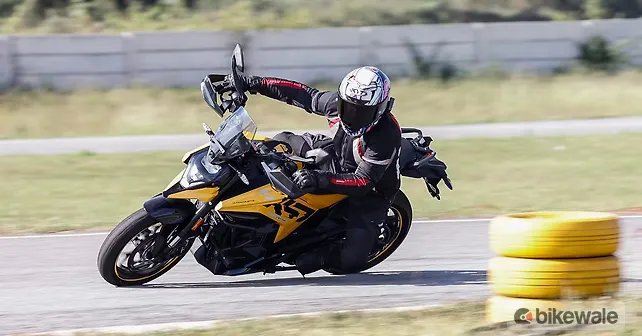
Although the X-47 Venom impressed us with its performance, what really surprised us was its ride and handling dynamics. The tight and technical Velocity track was an ideal setting to test the Venom, especially given its 20kg lighter kerb weight. The bike tips into corners with the slightest of a dab on the handlebars, and it switches directions almost telepathically.
The chassis offers good feedback, and there’s enough feel from the front end. Even on the road, the bike feels agile and nimble, and it doesn’t feel too heavy or unwieldy. What also impressed us were the tyres. Despite their block-pattern construction, the MRF tyres offer good grip, and they feel quite predictable when leaning into corners.
Ultraviolette has worked on the X-47 Venom’s braking and ABS calibration, and the motorcycle doesn’t disappoint in the braking department. The front disc offers tremendous bite, which instils a lot of confidence and allows you to brake late into the corners. There’s a good feel and progression, as well, from the lever. The rear brake, meanwhile, complements the front, while offering good stopping power. Ultraviolette has calibrated the ABS well, and it doesn’t feel too intrusive.
The ride quality is arguably the best we’ve experienced on an Ultraviolette yet. The lower kerb weight has allowed the company to revise the spring rates, resulting in a softer suspension setup. There’s enough compliance to absorb most of the bumps and potholes you encounter on Indian roads, without making the bike feel unsettled through corners. However, the softer setup does have its limitations. It tends to bottom out over sharp-edged potholes or sudden dips, while the front suspension also dives noticeably under hard braking.