



‘When Royal Enfield turned 100, we were struggling for survival.’
IMAGE: Royal Enfield logo. All photographs: Kind courtesy royalenfield.com
Invented by the British, mastered by the Indians.
This is a phrase often associated with cricket — a game that originated in Britain but was later transformed into a religion in India.
There is something that resonates with the same sentiment in the automobile sector — Royal Enfield, the iconic motorcycle.
It was born in 1901 in Britain, found a home in Chennai (erstwhile Madras) around 70 years back, and is now a torchbearer of ‘Made in India’ globally.
The ‘thump’ of a Royal Enfield, with its deep, slow, rhythmic beat from the exhaust, has now become an emotion for many Indians.
As the brand completes 125 years this year, its journey has seen several ups and downs in India too, including a possible shutdown in the early 2000s.
Key Points
- Royal Enfield marks 125 years after transforming from a struggling British motorcycle brand into a global Made in India success story.
- Siddhartha Lal’s leadership helped revive the company by fixing quality issues while preserving its classic identity.
- Exports jumped 18-fold between FY15 and FY26, while annual sales crossed 1.23 million motorcycles.
- Brazil has emerged as Royal Enfield’s second-largest market, with over 35,000 motorcycles sold in FY26.
- The company now operates in over 80 countries and is exploring further manufacturing expansion, including Indonesia.
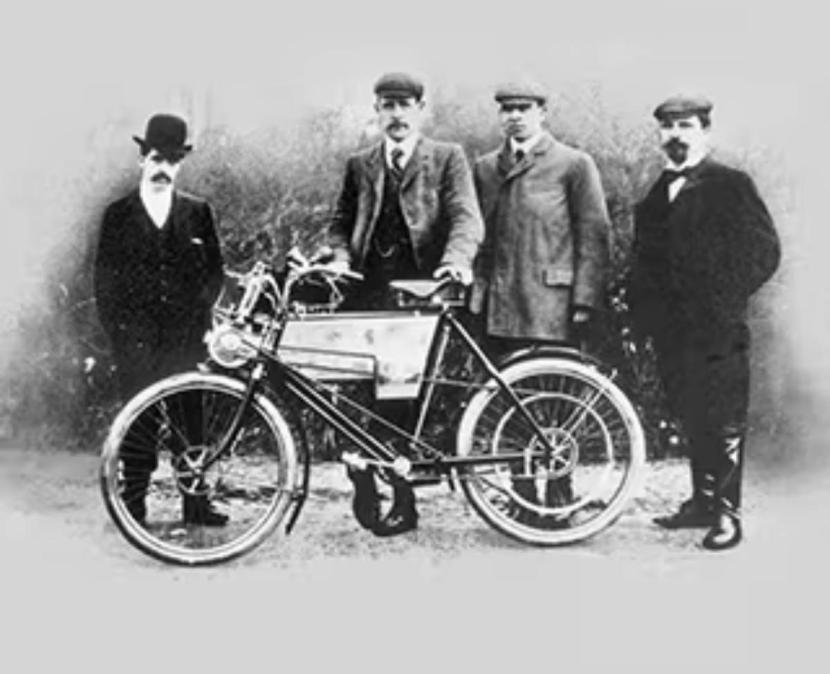
IMAGE: 1901: The ride that started it all. Royal Enfield unveils its first motorcycle in London, powered by a 1.5hp Walker, Smith & Gobiet engine with a front-mounted motor and rawhide belt drive — marking the beginning of an iconic legacy.
From Britain To Chennai
The Eicher Group bought a 26 per cent stake in Enfield India in February 1990, and acquired it in 1993, renaming it Royal Enfield.
In fact, it was almost on the verge of a shutdown in the early 2000s due to poor quality, oil leaks, and fierce Japanese competition.
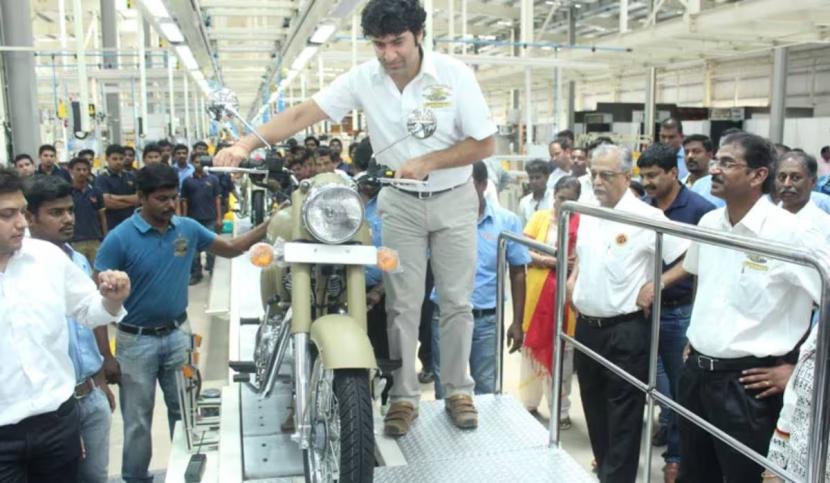
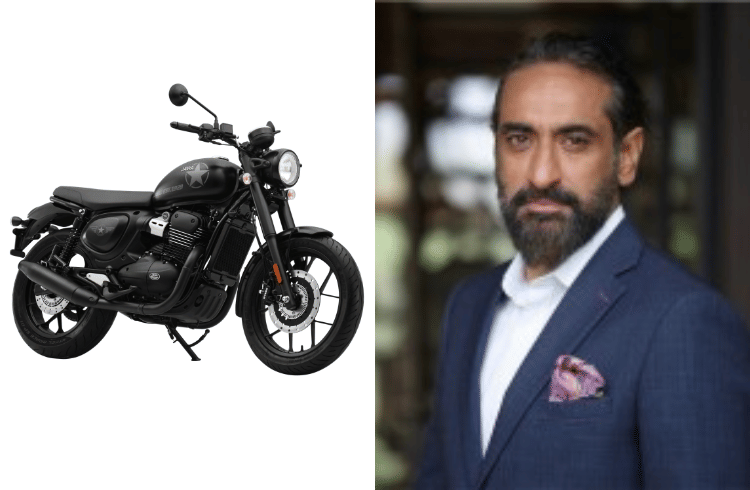
IMAGE: Siddhartha Lal, who took over as managing director in 2006-07, at the Royal Enfield factory at Oragadam, Tamil Nadu.
Siddhartha Lal’s Turnaround
Many credit the leadership of Siddhartha Lal for its later revival.
That involved cutting non-core losses, fixing mechanical flaws, and modernising engines while retaining the vintage appeal.
He is credited with launching the reliable Classic 350, and creating a cult around the brand, widely seen as Royal Enfield’s turnaround man since taking charge as managing director in 2006-07.
“When Royal Enfield turned 100, we were struggling for survival.
“Twenty-five years later, we are the oldest motorcycle manufacturer in continuous production — and at our all-time peak.
“That did not happen by chasing every trend.
“It happened by staying close to riders, making clear choices, and following our own path even when it looked unfashionable.
“Today, Royal Enfield is the number one mid-size motorcycle brand in the world,” Lal, who is now the executive chairman of Eicher Motors Ltd, said in his message to shareholders.
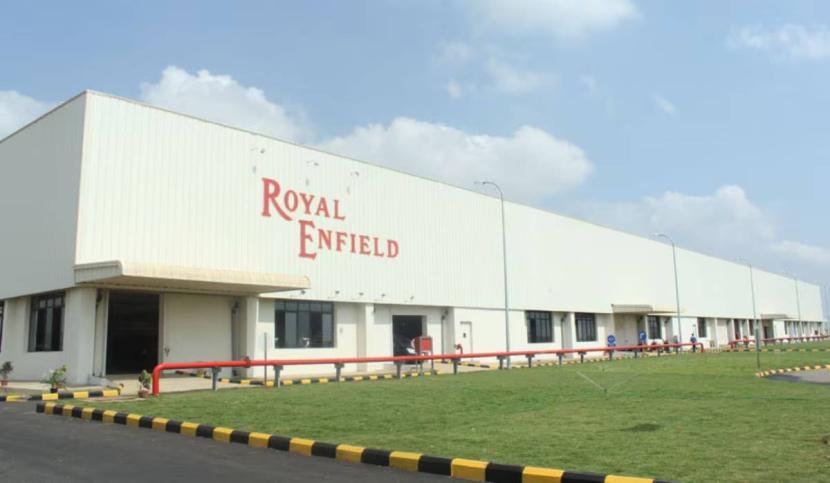
IMAGE: The Royal Enfield factory at Oragadam.
Global Expansion Bet
Amid all the success highlights, there is an even more exciting side-story — the creation of a global brand, transforming Royal Enfield as the number one mid-size (350cc-650cc) motorcycle in the world.
In August 2015, Lal raised many eyebrows when he decided to relocate from Delhi to London to oversee the bike’s global expansion.
He had already taken sales from around 28,361 units to 302,592 between 2004 and 2014.
Lal’s move was also an attempt to understand international market nuances, and stay close to the brand’s technical and research and development centre in Leicestershire.
He wanted to change the approach by shifting base to markets dominated by Harley-Davidson and Triumph.
Looking back from 2026, the gamble appears to have paid off.
Export volumes zoomed from around 6,221 units in FY15 to 120,634 units in FY26, an 18-fold rise.
More importantly, sales grew three-fold to scale a new peak of 1.23 million during the same period, clocking in only one year what the brand sold in its entire first century of existence.
Now, Royal Enfield commands a dominant market share of over 87 per cent in mid-size bikes in India, while already having a 9 per cent share of the global mid-size segment.
The overseas basket is much wider than the industry expected a decade back, touching 1,212 stores in over 80 countries, and having seven completely knocked down (CKD) manufacturing facilities in Bangladesh, Nepal, Brazil, Thailand, Argentina and Colombia.
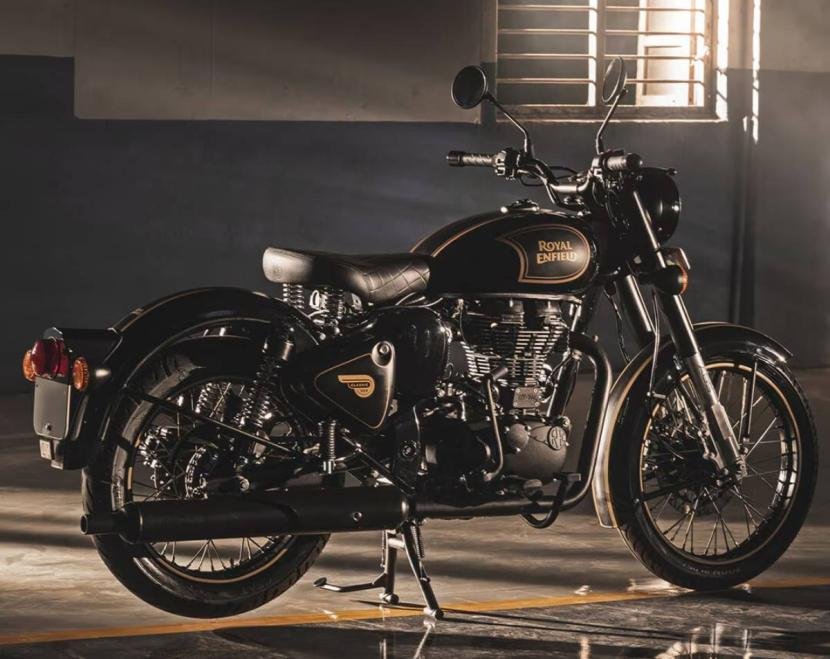
IMAGE: The Royal Enfield Classic 350.
Brazil Becomes New Home
Though it enjoys the top slot in South Asia, and is number two in Brazil, Argentina, the UK, Australia, Thailand and Korea in the mid-size category, many see Brazil as the real success story.
The company sold more than 35,000 motorcycles in the South American country in FY26, registering a growth of around 71 per cent year-on-year (Y-o-Y) over the previous fiscal.
Royal Enfield’s retail volume in the Brazilian market has tripled over three years.
According to Balakrishnan Govindarajan, managing director of Eicher Motors and chief executive officer (CEO) of Royal Enfield, every fourth motorcycle the company ships is targeted at Brazil.
“For the first time since 1955 — when India became our home — we are adding a new home market: Brazil.
“It is already our second-largest market, and we are committing to go deep: In our brand, our teams, local manufacturing and our network,” Lal said.
To back this success, it has doubled its dealership network in Brazil to 55 stores over the past two years, and a wholly-owned assembly facility will be operational in 2027.
The Next Global Push
The motorcycle maker is also reportedly considering manufacturing in Indonesia, to tap one of Asia’s largest two-wheeler markets.
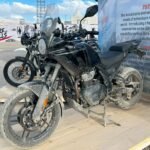
Govindarajan said the growth in global markets was supported by a diverse portfolio of motorcycles, including the Super Meteor 650, Himalayan 450, Hunter 350, Classic 350 and the Meteor 350.
“Few brands have remained relevant, loved, and aspirational for as long as we have.
“I believe the reason for that is simple.
“Across generations and geographies, we have stayed true to the philosophy that defines us — pure motorcycling,” Govindarajan said.
Feature Presentation: Ashish Narsale/Rediff