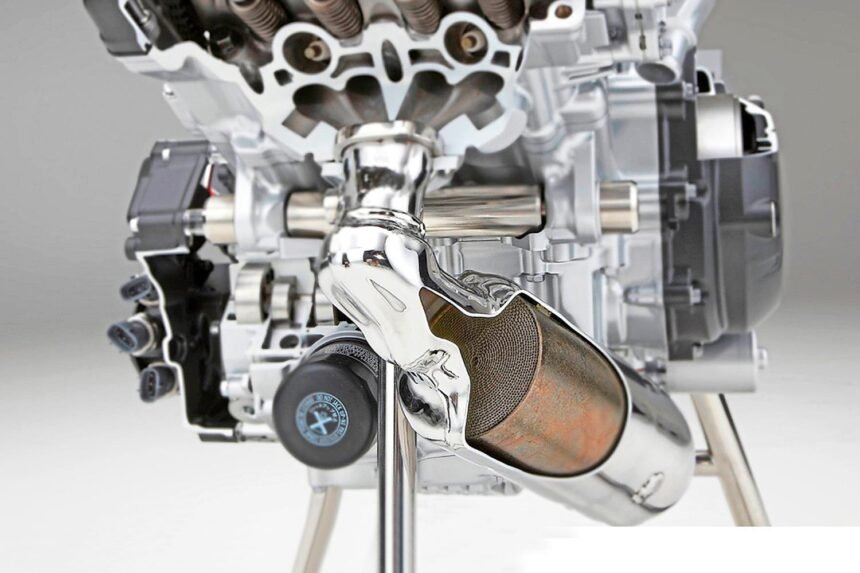



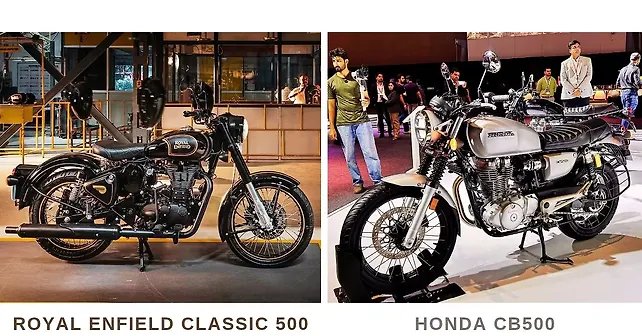
- Honda uses a 501cc single
- RE 500 built its following around a 499cc long-stroke single
- CB500 mixes old-school proportions with far more modern electronics
Honda CB500 has arrived in India at a starting price of Rs 2.75 lakh (ex-showroom Bengaluru). There is something unusually familiar about its basic recipe, isn’t it. A large-capacity single, upright roadster proportions and spoke wheels are ingredients Indian riders once strongly associated with the Royal Enfield 500 series. Honda is approaching the idea from a different direction, but the CB500 could revive some of the appeal that disappeared when Royal Enfield’s big single left the market.
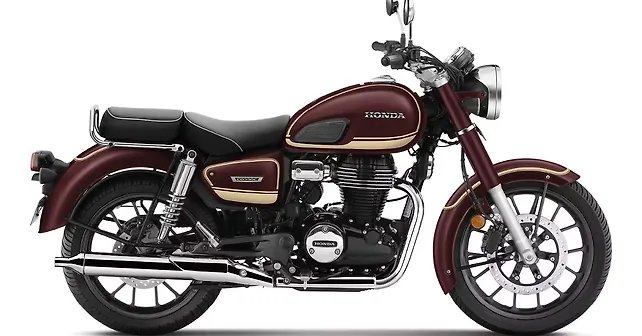
Honda calls the CB500 it’s “Heritage Roadster” and says the motorcycle takes inspiration from the CB750. The company has deliberately kept the appearance simple, with a round headlamp, conventional fuel tank, a long seat, twin rear shock absorbers and a clearly visible single-cylinder engine. The spoke-wheel versions add considerably more period character than the alloy-wheel model.
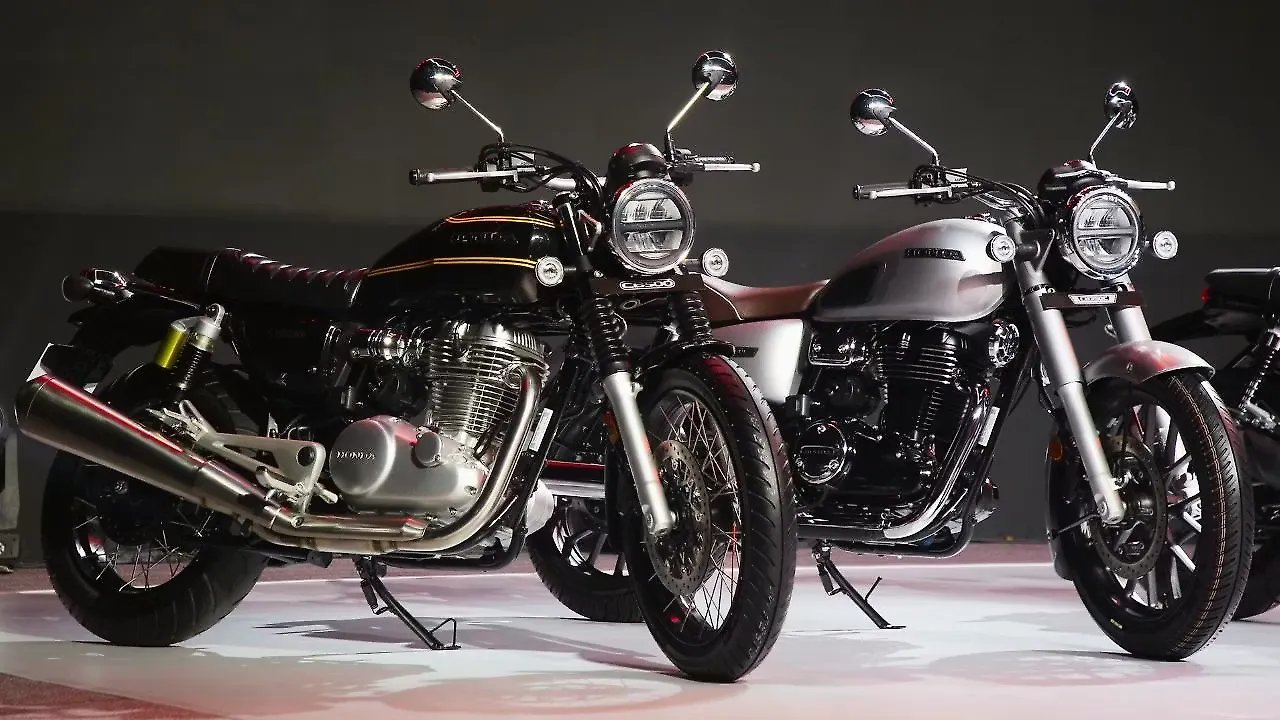
That immediately creates an interesting comparison with the Royal Enfield Classic 500. Honda looks back towards classic Japanese roadsters, particularly Honda’s own CB lineage. Royal Enfield, meanwhile, carried the appearance and mechanical character of the British-style single-cylinder motorcycles that had defined the brand for decades. Yet to an Indian buyer, both occupy a similar emotional space, a large single where the engine itself is a major part of the motorcycle’s personality.
Mechanical similarity starts with capacity. Honda has equipped the CB500 with a 501cc single air-cooled engine supported by an oil cooler. This engine is intended to provide a torque-led riding character rather than chasing high-rev performance.
The old Classic 500 followed a remarkably similar philosophy, although its engineering belonged to a different generation. Its 499cc air-cooled fuel-injected UCE 500 had strong low-end torque, and the company acknowledges that the Classic 500 quickly won over Indian buyers after its local introduction in 2009. Demand initially exceeded supply, and it eventually became Royal Enfield’s best-selling 500cc model. The Bullet 500 just didn’t have that style quotient that the Classic carried.
Classic 500 had a slow-revving engine that carried more gravitas at ordinary speeds. Its visible cooling fins and that unmistakable single-cylinder pulse gave it a sense of occasion even on a short ride.
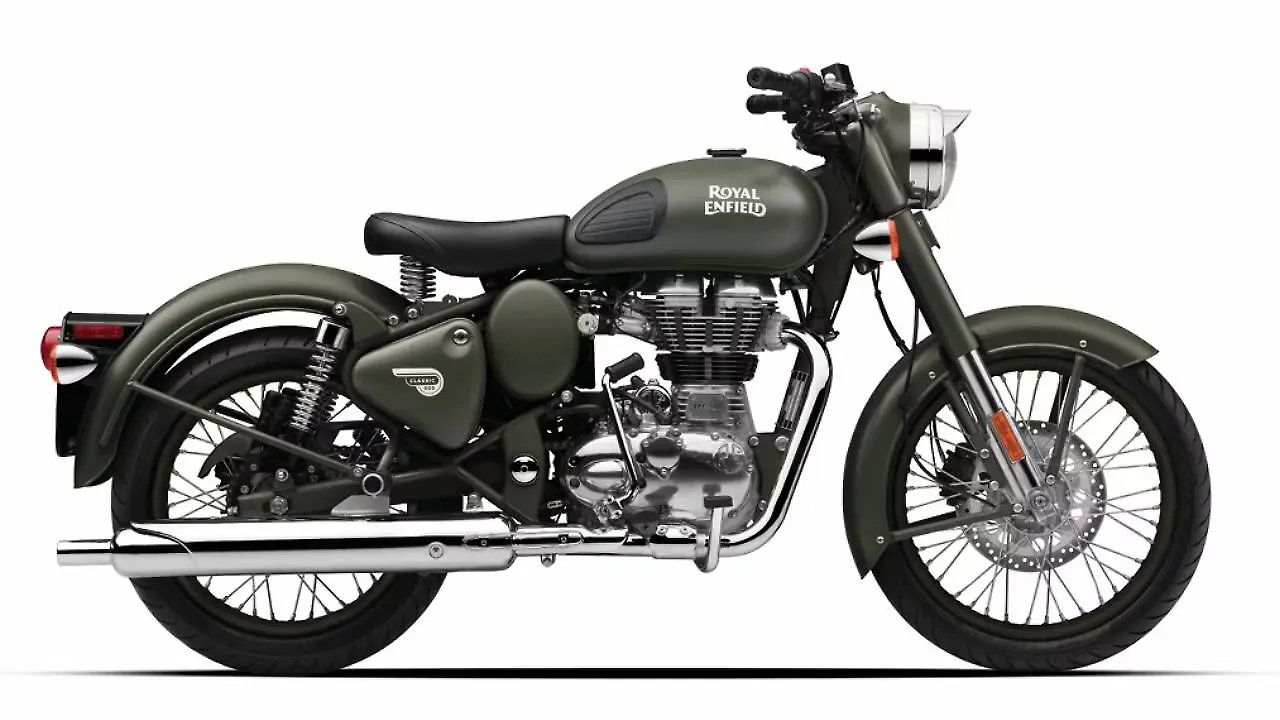
Visually, Classic 500’s round headlamp, deep mudguards, teardrop-shaped tank, traditional spoke wheels and exposed engine represented continuity with Royal Enfield’s own past. The company itself described the UCE Classic 500’s styling as deliberately traditional and later offered the motorcycle in colours such as Black, Desert Storm, Squadron Blue, Battle Green and several Chrome finishes.
Fast forward to the Honda where that company has chosen a cleaner and slightly sportier route. The CB500 still looks properly old-school on the wire-spoke versions, but there is less visual weight around it. Its tank and side panels have a straightforward seventies-roadster character while the long chrome-finished exhaust and twin shocks reinforce the period theme. The design is inspired by the CB750, so the intention is nostalgia, just not the same kind of nostalgia that defined the Classic 500 though.
The other major difference is technology. Royal Enfield was comparatively simple even towards the end of its life, although later versions did gain dual-channel ABS. CB500 starts from a much more modern baseline. Honda has all-LED lighting, an analogue-digital instrument console, Honda Selectable Torque Control, disc brakes at both ends and dual-channel ABS. Those features should make the Honda easier to live with without necessarily taking away from its old-school visual character.
This is where the Honda has a realistic opportunity. It does not need to copy the Classic 500’s vibrations, mechanical noise or old chassis behaviour to be nostalgic. What it needs to retain is the slower, more deliberate torquey nature of a large single-cylinder motorcycle with a strong mechanical pulse and a riding experience that is not based on just quick acceleration.
Royal Enfield’s story also explains why this formula can work in India. Its 500cc single survived because owners connected with the engine character as much as the styling. Classic 500’s combination of retro design, low-down torque and improved reliability helped make it the most successful version of its 500cc single before BS6 regulations finally ended production.
Whether the CB500 can recreate the Classic 500’s emotional hold on Indian riders will ultimately depend on something we can only tell once we’ve ridden it. Classic 500 became memorable because its 499cc single had a rhythm and personality that owners could identify immediately. Honda’s 501cc single has the right displacement, cooling layout and visual presence to enter that conversation, but its final power delivery, exhaust note and low-speed character will decide whether it develops the same kind of following.
So, can the CB500 bring that charm back? Umm possibly for some, but it is unlikely to recreate it exactly. Royal Enfield Classic 500 represented decades of continuity and became nostalgic almost naturally. Honda CB500 is consciously designed as a modern heritage motorcycle. Its appeal should therefore be more refined and technically easier to live with. We’re just happy that the segment is growing at a healthy pace.