



- India production capacity will rise from 6.25 million to around 8 million units by 2028
- Dedicated electric two-wheeler factory is planned alongside continued ICE investment
We were very happy when Honda India showcased its product offensive recently. But Honda CB500, XR300L, ADV160, QC3, etc only represent partial side of a much larger change taking place within Honda’s Indian two-wheeler business. In its Honda Report 2026, the Japanese giant no longer sees the country merely as its biggest volume market. India will now have a greater role as a production base, product-development centre, cost-competitive supply hub and eventually a major electric two-wheeler manufacturing location.
Globally, Honda sold 22.1 million motorcycles and scooters during the FY ending March 2026 giving it about 40 percent of the world market. Now the company expects global motorcycle market to expand from around 50 million units today to approx 60 million by 2030 with much of that growth coming from the Global South. India has been identified as the largest market within that opportunity.
And no, its response is not simply to build more Activas and commuter motorcycles. Honda’s strategy is increasingly split into three layers: protect and expand the mass ICE business, widen the range into aspirational motorcycles and scooters, and gradually scale electric products as demand develops.
Looking at production, Honda currently has annual Indian two-wheeler capacity of around 6.25 million units which it intends to expand to approximately eight million units by 2028. The report specifically describes India as an increasingly important supply hub for other regions with greater local sourcing and factory automation intended to improve both cost and quality. Honda also says it will use the development efficiency and cost competitiveness built in India to support products for other growth markets.
That expansion is already backed by substantial factory investment. A third production line is to be added to the Tapukara plant in Rajasthan. As it becomes operational by 2028, this new line will add a capacity for 6.7 lakh units annually while being flexible enough to manufacture 125cc and 160cc scooters and light motorcycles.
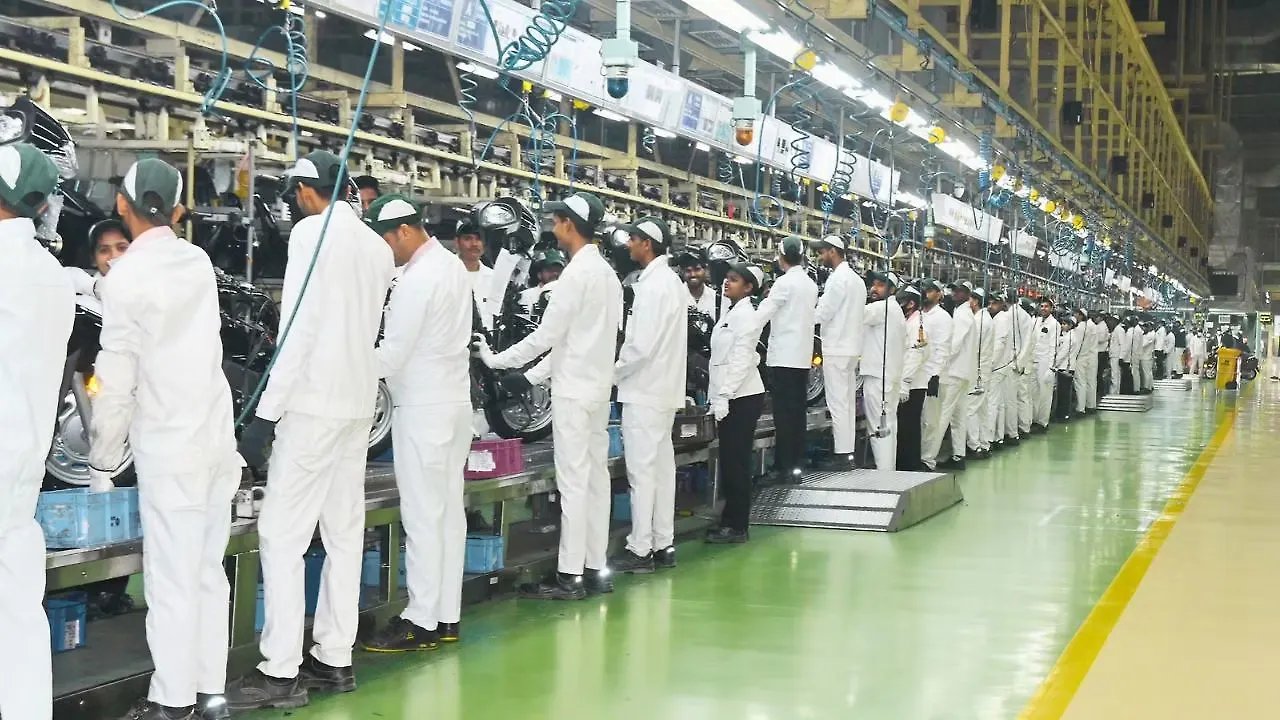
Another expansion is taking place at Vithalapur in Gujarat. A fourth production line scheduled for 2027 will add 6.5 lakh units of annual capacity, principally for 125cc motorcycles. Vithalapur is set to become one of Honda’s largest motorcycle assembly facilities worldwide when it becomes operational.
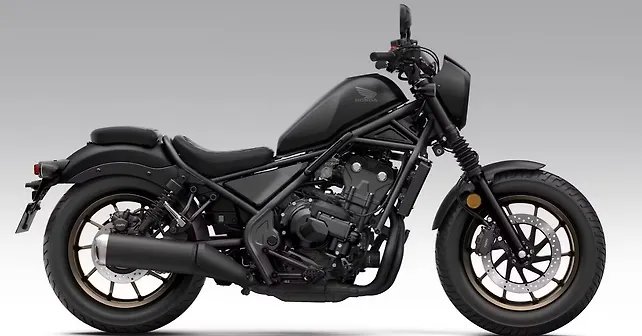
The company wants to develop production systems capable of creating a diverse range of motorcycles from common platforms, allowing individual products to be adapted to local usage, price requirements and customer preferences. This approach is already visible in the wave of new products announced for India recently. In July, Honda Motorcycle & Scooter India unveiled seven all-new models and three refreshed motorcycles with localised focus. These include the ADV160, Rebel 300, CB500, Rebel 500, XR300L, XR300 Rally and QC3, while the CB350, CB350C and CB350RS receive updates. Honda describes the portfolio as a multi-pathway strategy covering conventional petrol power, electric mobility and flex-fuel tech.
Note that this range also moves Honda India beyond its traditional dependence on practical commuter products. The CB500 enters the heritage roadster space with a 501cc air-cooled single-cylinder engine. XR300 twins take Honda in a completely different direction. The trail-focused XR300L and the more touring-oriented XR300 Rally both use Honda’s new 293.5cc platform extending beyond mainstream road motorcycles.
The Rebel models add yet another cruiser category. Then there is the ADV160 with its adventure-styled larger touring-oriented package. More significantly, Honda says it will support fuel blends containing up to 85 percent ethanol, making it another part of the company’s multi-powertrain approach rather than an ordinary premium scooter.
These products reflect that Honda sees India’s next growth phase coming from both ends of the market. The mass commuter segment will continue to generate scale, but lifestyle, touring, heritage, cruiser and off-road categories can produce additional value and attract customers who might previously have moved to another manufacturer as they upgraded.
Electric two-wheelers form the second major part of the strategy. Honda already sells the Activa e: and QC1 in India. Just launched QC3 is the more family-focused electric scooter built around a 3kWh battery and connected features. Honda Report 2026 confirms that additional products will be introduced according to regional demand. In other words, India will receive products designed around Indian usage and market conditions.
This is also a deliberate cautious approach. Electric adoption varies too widely around the world for a fixed global rollout. Honda will therefore monitor demand, regulation and infrastructure before deciding where to add products and production capacity.
India will ultimately become one of the manufacturing centres for that plan. Honda has confirmed that it intends to establish a dedicated electric two-wheeler factory in India with the production system scaled according to market demand. This dedicated facility is planned to begin operation in 2028. Intention is to utilise common modules across multiple electric models bringing down costs and allowing to build a wider variety of EVs efficiently. Building batteries, motors and modular electric architectures at sufficient scale should make it easier to price EVs competitively.
Similar philosophy applies to exports. Indian production will increasingly support markets in Central and South America as well as ASEAN. Honda identified Argentina as an example where road conditions and customer requirements share similarities with India. The company plans to improve Indian cost competitiveness through greater in-house parts production, chassis modularisation and accelerated local procurement before using that advantage overseas.