




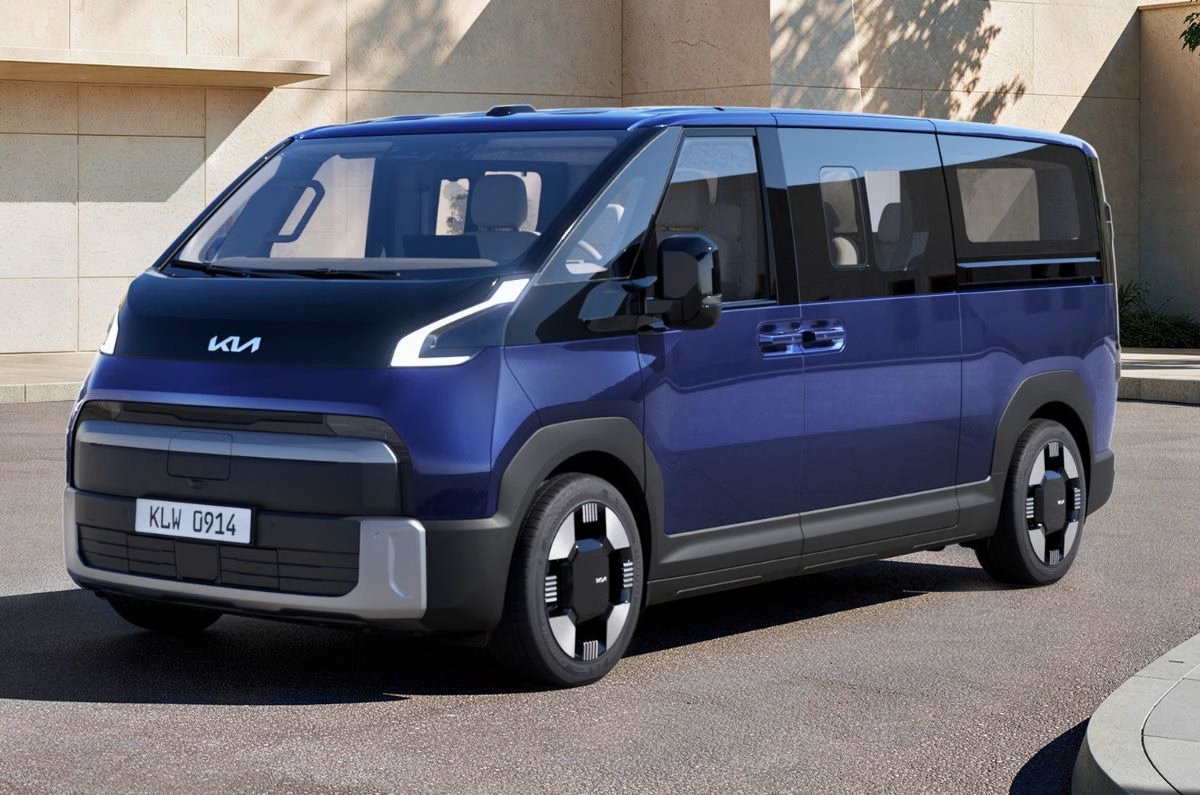
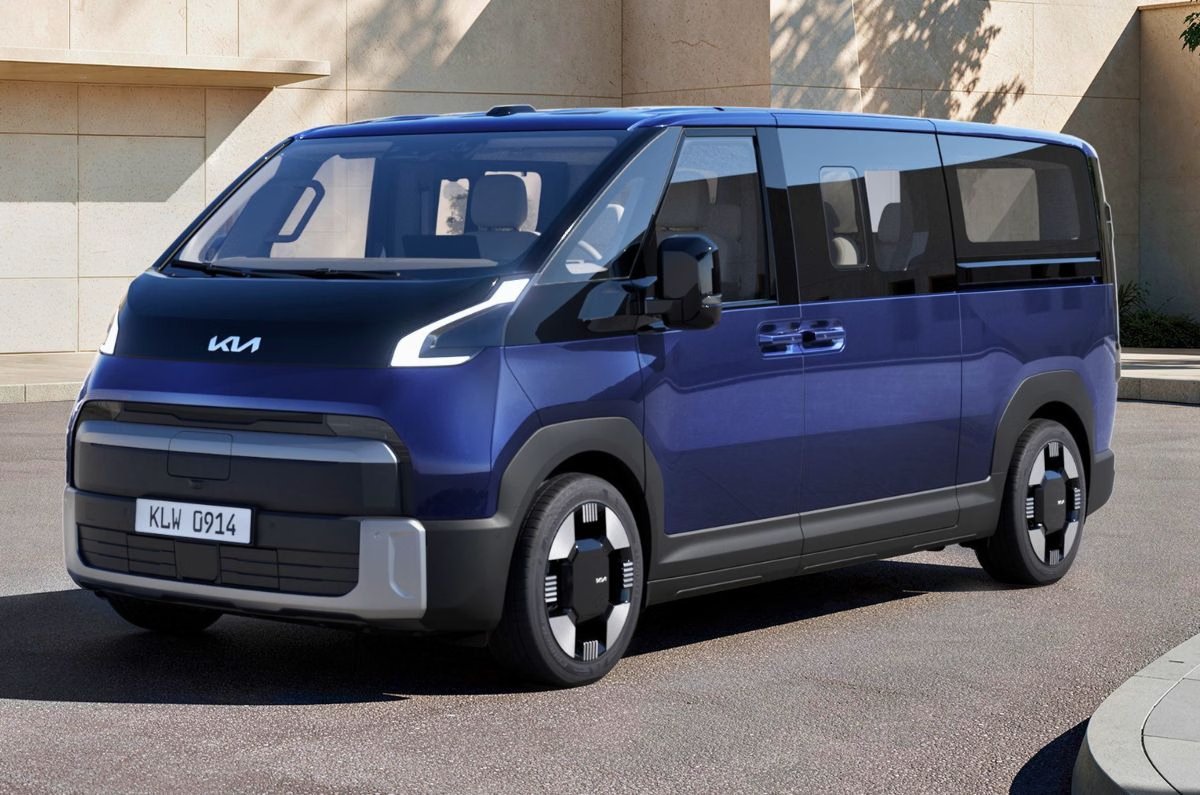
Kia has revealed the PV7 as its second electric van internationally, positioned above the PV5 that debuted in early 2025. It is being offered in two versions: Passenger and Cargo. The Passenger version can seat up to 11 or up to 9 occupants, depending on the market, while the Cargo iteration can haul up to 1,200kg of luggage. It is offered with two battery pack options and a claimed range of up to 460km, mated to a front-axle-mounted (FWD) electric motor.
- It will launch internationally in the second half of 2027
- An AWD version will be offered after its initial launch
Kia PV7 powertrain details
Gets two battery pack options, mated with a 268hp front-mounted motor
The Kia PV7 is available with either a 71.5kWh or a 96.2kWh battery pack, and up to 460km of WLTP-claimed range. It is offered with a front-axle-mounted (FWD) electric motor that produces 268hp and 400Nm. Kia says that it will be offered with a dual-motor all-wheel-drive (AWD) setup after its initial launch, which is planned for the Korean and European markets in the second half of 2027.
The Kia PV7 sits on the 800V E-GMP.S architecture that also underpins the smaller PV5. Using a 350kW DC fast charger, it can be charged from 10 to 80 percent “in the mid-20-minute range”. The PV7 also offers dual charging ports, including a front AC/DC charging port and an optional rear-side AC charging port.
Kia PV7 exterior design
Gets a PV5-like design with stretched dimensions to haul more passengers or cargo
The Kia PV7 gets a similar snub-nosed look as the PV5, but is stretched to suit buyers who haul more passengers or load. It gets C-shaped LED DRLs and slim LED headlights joined by a black trim. The grille and the bumper are black and feature some silver trim for added contrast.
In profile, both the Passenger and Cargo versions feature powered sliding doors, and the Cargo version also offers an option of manually operated sliding doors. The Passenger version also has a larger glass area, complemented by blacked-out pillars, whereas the Cargo version replaces these with metal-covered pillars. Both versions share the same wheel-arch cladding, which extends down to the lower edge of the PV7.
At the rear, the PV7 gets slim wraparound taillights. Kia is offering the Passenger version with a conventional lift-up tailgate and the Cargo version with an additional twin-swing tailgate choice.
The Kia PV7 is larger than the Carnival and measures similarly to the Mercedes-Benz V-Class LWB.
Kia PV7 interior design and features
11-seater version will be reserved for Korea; other markets will get up to 9 seats
The Kia PV7’s interior is similar to the PV5, with a squared-off steering wheel and a 14.6-inch infotainment system running the Pleos Connect system based on Android Automotive OS that “delivers a smartphone-like in-vehicle experience”. It also gets a slim digital driver’s display. The Passenger version gets ambient lighting on the dashboard, which is missing on the Cargo version.
Kia says that the PV7 Passenger can accommodate up to 9 occupants globally and up to 11 in Korea. It is also available in a 7-seater version with removable seats to create additional space for luggage. Except for the front row, all other rows have roof-mounted AC vents and 100W USB-C charging ports. The Cargo version gets a bench seat at the front that can accommodate up to 3 passengers. When not in use, the middle seat can be folded to form a centre armrest.
On the safety front, it gets 7 airbags, with a roof-mounted co-driver airbag that “enables additional dashboard storage”, and a Level 2 advanced driver assistance system (ADAS).
The Kia PV7 Passenger will be offered in Compact and Long variants. The Cargo version will be offered in Compact, Long, and High Roof variants, which will have similar dimensions but will differ in overall storage volume, roof height, and maximum payload capacity. A dedicated Chassis Cab for specialist applications will also be offered along with a wide range of conversion models. As mentioned earlier, it is planned to launch in the Korean and European markets in the second half of 2027, “with additional markets, derivatives and conversion models to follow”. However, an India launch is unlikely.