



Hyundai is slated to launch the Bayon midsize SUV on October 26, 2026. It will be one of two new nameplate additions for Hyundai India in FY2027, competing in the popular midsize SUV space but with a completely different positioning from the Creta. The Korean carmaker has unveiled the SUV ahead of its launch and commenced pre-bookings. Here’s everything you need to know about the upcoming Hyundai Bayon.
Why launch the Bayon if the Creta already exists?
The Bayon will not be a Creta alternative and will be positioned below it in Hyundai’s India portfolio, filling the gap between the Venue and Creta while competing with sub-4-metre SUVs. Hyundai’s strategy is to offer two models in the midsize SUV space, similar to what Maruti has with the Victoris and Grand Vitara.
The carmaker doesn’t want to dilute the Creta’s premium positioning by offering it with CNG, which is why the Bayon is likely to offer this fuel option. Meanwhile, the higher-positioned Creta will be available with a wider choice of engines, including a hybrid version in its next generation due in 2027.
What about Hyundai Bayon’s engine options?
At launch, the Hyundai Bayon will be powered by the same 1.5-litre naturally aspirated petrol powertrain as the Creta, like we had exclusively reported. This mill produces 115hp and 144Nm, and is mated to either a 6-speed manual or a CVT gearbox. This mill, in our experience, especially when paired with the CVT, is smooth and efficient, which will potentially make it a great daily commuter.
Hyundai is likely to follow up with a factory-fitted CNG kit that will be paired to this engine, marking the brand’s first CNG-powered model above 4 metres. CNG versions of the Bayon are expected to come with a Maruti-Victoris-like underbody-mounted tank that spares boot space.
On the other hand, the Creta’s turbo-petrol and diesel engines are unlikely to make it to the Bayon. This is because Hyundai wants to prioritise value and especially cater to buyers looking for a smooth and efficient urban driving experience with low running costs.
What will the Hyundai Bayon exterior look like?
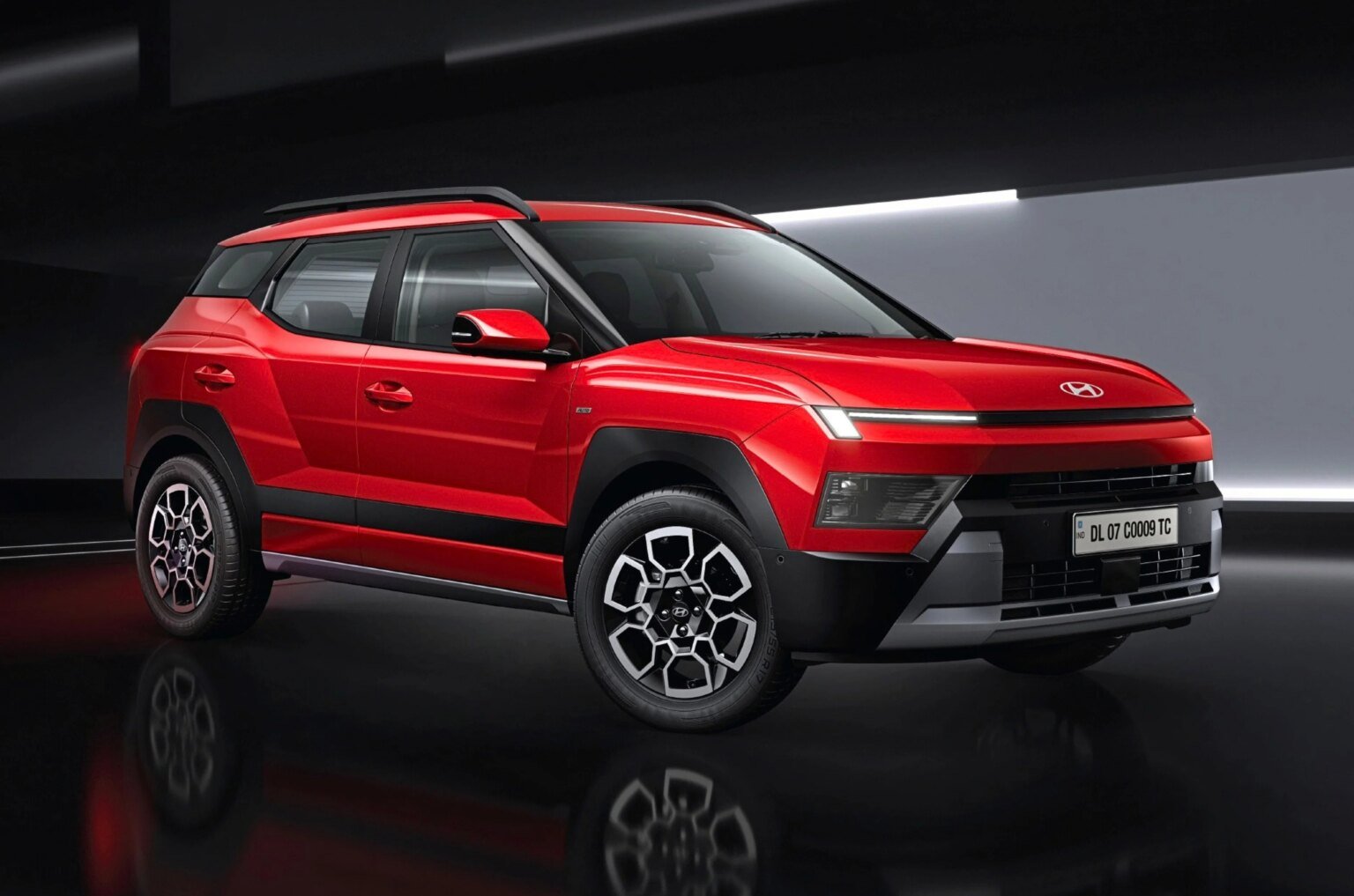
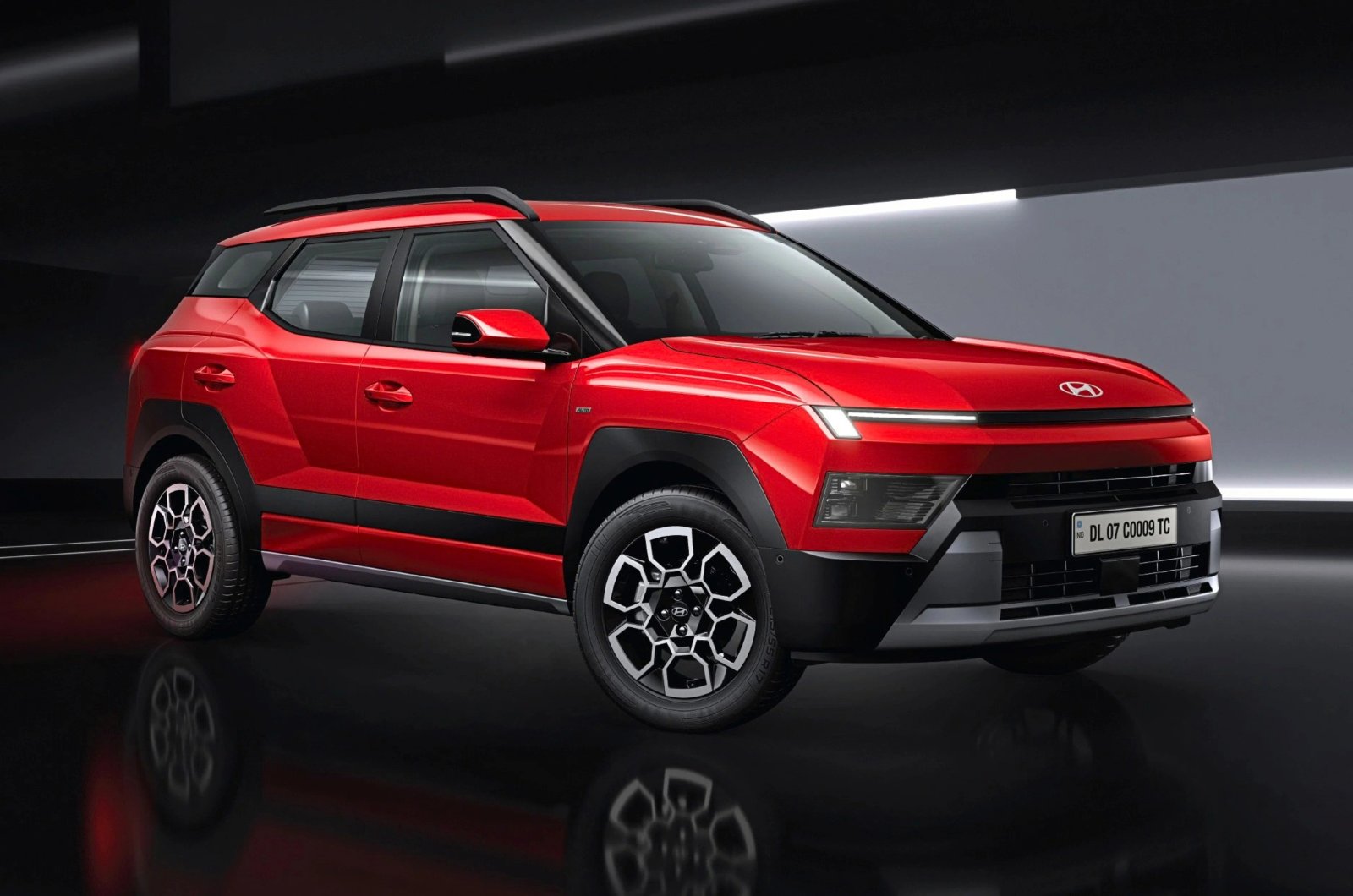
In-line with with models from its global lineup, the Bayon gets Hyundai’s ‘Art of Steel’ design language. Visually, the Bayon gets a crossover-esque look instead of boxy SUV proportions. You get split headlamp design at the front, with the LED DRLs resembling Hyundai’s ‘H’ motif that’s connected by a black strip. The main LED hedlamps are positioned lower, and there’s thick black and silver cladding for the bumper. A radar unit on the air intake suggests the prescence of an ADAS suite, while ridges on the bonnet give it a muscular appearance.
In profile, the Bayon gets a windowline with an upward king and the blacked-out pillars and quarter glass give it a ‘floating roof’ effect. There’s also flared wheel arches, sharp character lines and continuous black cladding for the wheel arches and lower side of the doors. The alloy wheels get a dual-tone design and are 17-inches in size. A roof mounted spoiler with a high-mounted stop lamp, LED tail-lamps with a similar ‘H’ motif as the front, Bayon branding on the tailgate and chunky black and silver cladding make up the rear of the Bayon. It’s roof sports black rails and a shark fin antenna.
What will the Hyundai Bayon’s interior look like, and what features will it get?
Inside, the Bayon looks very similar to the Brazil-spec i20. The cabin gets a black-and-white theme, a dual-tone three-spoke steering wheel that’s similar to the one in the Venue, and vertical air vents. There are plenty of physical buttons, including shortcut keys below the infotainment system, steering-mounted buttons, and haptic switches for HVAC controls.
In typical Hyundai fashion, the Bayon comes equipped with features to the brim. These include ventilated front seats, dual 12.3-inch displays for the digital instrument panel and infotainment screen, a panoramic sunroof, a generative AI assistant, on-board navigation, OTA updates, connected car tech, a wireless phone charger, and drive modes.
What is the expected price of the Hyundai Bayon?
Since the Bayon will be positioned below the Creta, it will be priced more affordably and is expected to range between Rs 9 lakh and Rs 14 lakh, ex-showroom.
Which cars will the Hyundai Bayon rival?
With the Bayon, Hyundai is targeting a piece of the CNG space as the more economical fuel option becomes an increasingly popular choice amongst cost-sensitive consumers. Other rivals that offer a CNG option are the Toyota Hyryder, Maruti Victoris and Grand Vitara. Apart from these SUVs, it will also take on the likes of the MG Astor, Volkswagen Taigun, and the Skoda Kushaq in pure petrol guise.
This feels like a good tactical move from Hyundai in the mid-size SUV space, where there aren’t many cars offering a CNG option. This also comes at a time when the preference for alternative-fuel cars is growing rapidly, with these cars collectively outselling petrol-powered cars in August 2026, led by CNG.