


- Power output has increased by 2bhp
- Gets tweaked riding aids
- Available in 11 colours and two liveries, plus 45 custom options
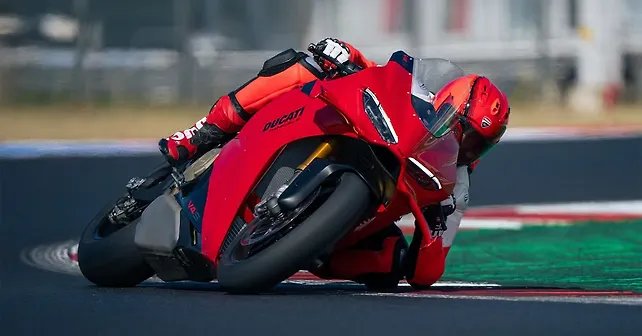
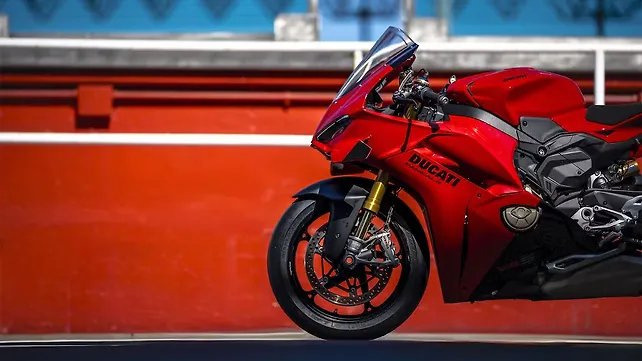
Ducati has unveiled the 2027 Panigale V4 internationally, and it now gets a lot of new features and changes to both its performance, chassis, and electronics. Here’s everything you need to know:
Ducati has been trying to improve the bike’s track performance, and for this, it has made some changes to the engine. The 1,103cc, liquid-cooled, V4 engine now produces 218bhp, which is a 2bhp increase in power. This is only on the standard EU configuration. The gearing has also been altered, with a longer final gearing (17/42 instead of 16/41). This has resulted in the rev limit on 2nd to 5th gear being pushed up by 500rpm to now 15,000rpm.
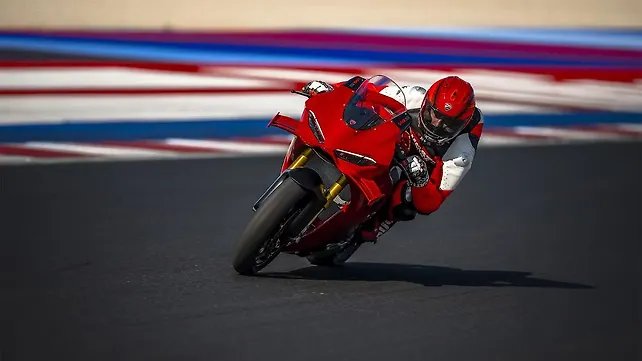
Although power has increased, torque has decreased slightly. The updated motorcycle now makes 120.6 Nm; earlier, the motorcycle made 120.9Nm. That said, for those who want more performance, you can opt for the Akrapovič Full Racing Exhaust PRO. This bumps up the power output by 11bhp and 7Nm, while also reducing the bike’s weight by 6.6kg.
Total power output is one part of the picture. To improve the handling, the bike’s chassis has seen some changes. For starters, the front frame has seen its lateral stiffness reduced by 12 percent for better front-end grip. The idea here is to improve the bike’s ability to maintain tyre contact with the asphalt at high lean angles.
The electronics package has been tweaked, with a different Dynamic Engine Brake system. The new system now replaces the older Engine Brake Control system, and it should offer more predictable behaviour on corner entry. There’s also a Race Brake Control, which increases the rear wheel contribution during decelerations.
Lastly, Ducati is offering the Panigale V4 S customers 11 different colour options, including five from Automobili Lamborghini’s Ad Personam program. There are also Corse and Performance liveries available as well. The changes to the motorcycle are not about improving outright power and are mostly aimed at making it more controllable at the higher limit of performance.