




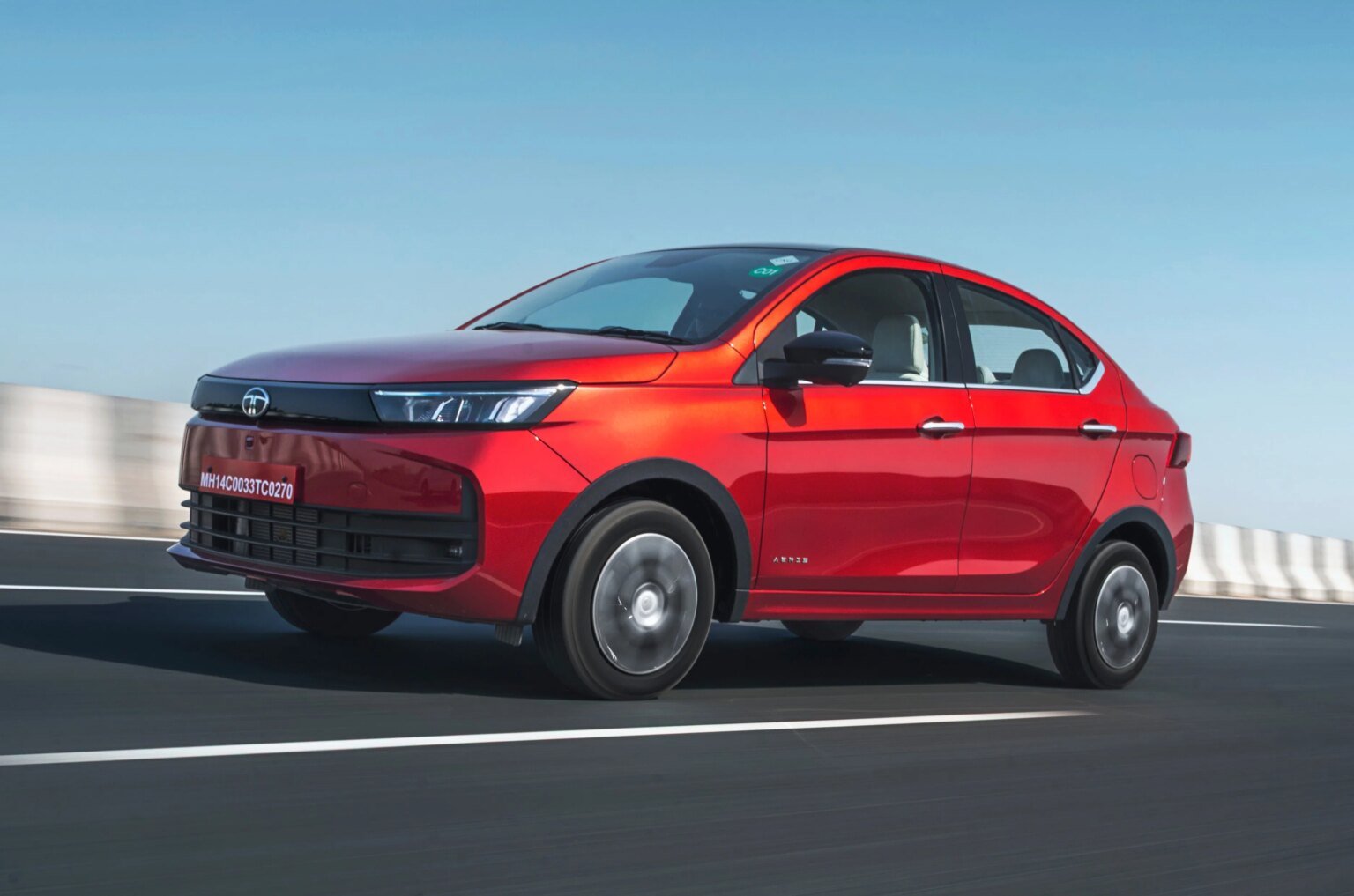
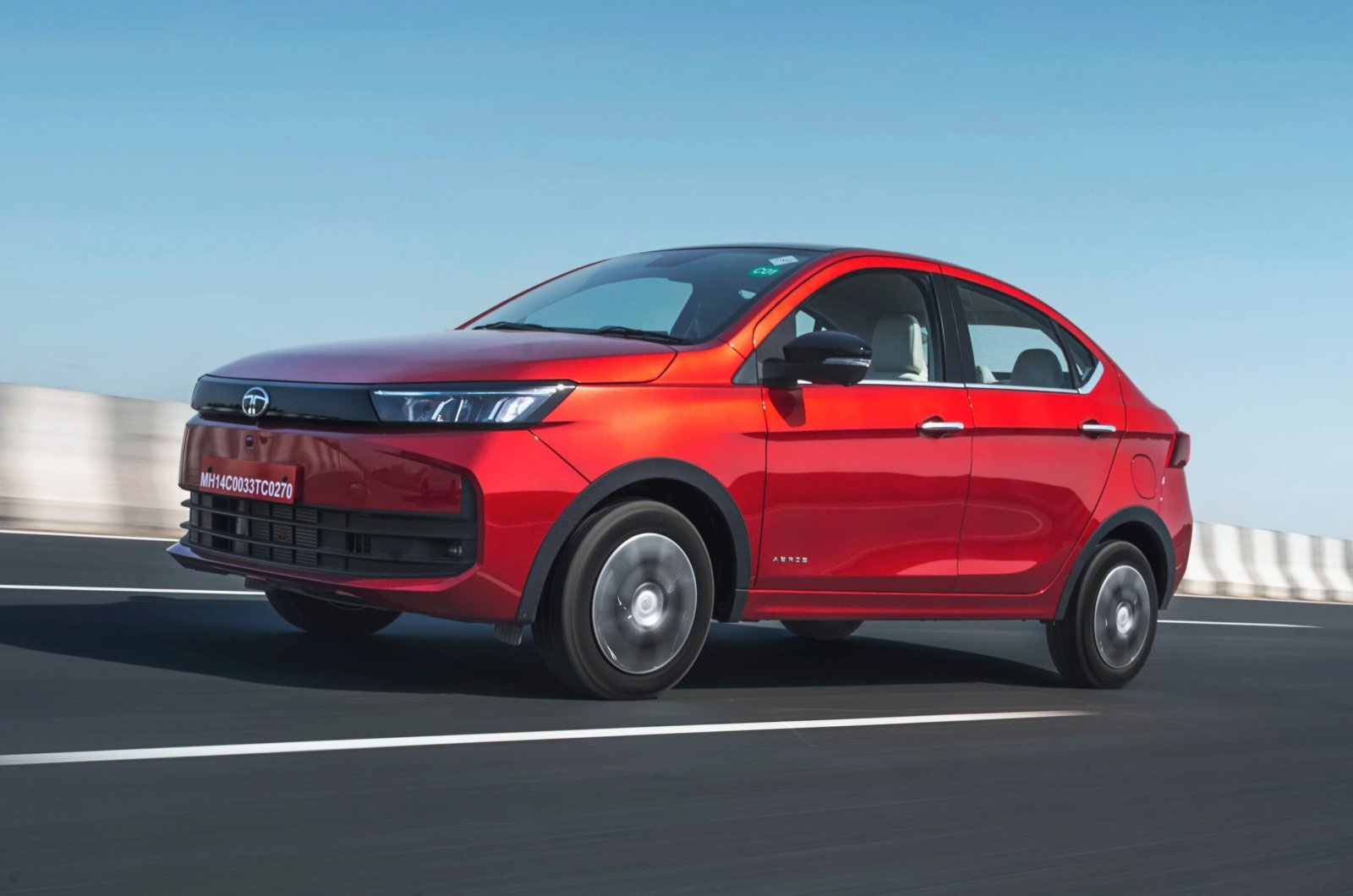
The Tata Aeris was launched recently as a facelifted and reworked version of the Tigor, with a fresh and modern exterior look and a minimalistic interior brimming with features. The powertrain options, however, are the same as those of the Tigor. We recently drove the Aeris iCNG, and here are three reasons why you should consider buying it and two reasons that could deter you.
Reasons to buy the Tata Aeris CNG
Modern exterior design and well-equipped interior
The Tata Aeris is clearly a step up from the Tigor and looks modern. It gets slim LED headlights with integrated LED daytime running lamps (DRLs) joined by a gloss-black trim, all of which give it a clean look. Some contrast is added via the front bumper, which features a black section around the wide air inlets. The new LED fog lamps and the clamshell bonnet also look good.
In profile, the CNG variants’ 14-inch stylised steel wheels look undersized, particularly against the prominent wheel-arch cladding. Chrome elements on the door handles and window line add contrast. The Aeris retains the Tigor’s distinct coupe-like roof that flows into the tail. The tail-lights wrapped within a red trim make the Aeris feel bigger and nicer.
Inside, the Aeris looks minimalistic and modern. It gets two free-standing screens – a 10.25-inch infotainment touchscreen and a semi-digital driver’s display. The infotainment screen particularly has a pleasant UI and crisp graphics. The Aeris also debuts premium-looking part-leatherette seat upholstery and ventilated front seats that add to the comfort. Other features include automatic climate control with rear vents, a 360-degree camera with a blind-spot monitor and a 6-speaker sound system.
Practical dual-cylinder CNG setup
Instead of a single CNG tank that eats up all the boot space in its rivals, the Aeris is offered with dual CNG cylinders, enabling space for a couple of backpacks and a cabin-sized trolley. While Tata has yet to reveal the official figure, with a similar dual-cylinder setup, the Tigor offers a 227-litre boot. Other than this, the Aeris offers bottle holders and cubby space on all doors, a storage space underneath the front centre armrest, cup holders in the centre console and rear centre armrest, and a large glove box, all adding to its practicality.
Excellent ride quality and handling manners
Like other Tata cars, the Aeris has a suspension that is well-tuned for Indian conditions, and it offers a commendable ride quality on both rough roads and highways. Over poor roads, the suspension comfortably absorbs broken surfaces without unsettling the car. The ground clearance figure is yet to be revealed, but in our test, we found it adequate for tackling rough roads and large speed breakers.
Out on the highway, the Aeris is equally composed. It stays planted at triple-digit speeds and does not feel floaty or nervous when driven quickly. The steering also offers decent feedback, weighing up nicely as speeds increase. However, there is some vagueness around the centre that hampers confidence a little.
Reasons not to buy the Tata Aeris CNG
Slow and jerky AMT responses
The CNG-AMT is easy to use in slow-moving traffic thanks to its smooth creep function, which makes crawling through traffic and manoeuvring in tight spaces fairly effortless. However, things get less polished once you press the accelerator. There is a noticeable pause before the powertrain responds, followed by a head-nod as the car picks up, making acceleration feel jerky. The delayed response is particularly noticeable when you need to accelerate quickly, and overtaking on the highway requires some planning as a result.
Poor NVH and cabin insulation
The Aeris is reasonably quiet when driven gently around town, but the engine gets noticeably louder and harsher once the revs climb beyond 2,500rpm. Vibrations also make their way into the cabin, while wind and road noise become increasingly noticeable as speeds rise. This takes away from the otherwise comfortable nature of the car, particularly on longer highway drives where the engine and tyre noise can become tiring.