




Pulsar and Chetak contributed 81% of Bajaj’s domestic two-wheeler sales, with Chetak’s sharp growth helping overall volumes rise 8.33%
Bajaj Auto recorded domestic two-wheeler sales of 1,85,302 units in August 2026, up 8.33% from 1,71,049 units in August 2025. This represented an increase of 14,253 units, despite lower sales across several motorcycle ranges. Pulsar remained Bajaj’s largest contributor, while Chetak electric scooter delivered the biggest volume gain. Together, both accounted for 1,50,087 units, or approximately 81% of domestic two-wheeler sales.
Bajaj Pulsar Sales Decline 9.33%
Pulsar sales stood at 97,839 units, down 9.33% from 1,07,909 units a year earlier. The decline amounted to 10,070 units, although Pulsar retained a dominant 52.80% share of Bajaj’s domestic portfolio.
Within the lineup, the 111cc–125cc category recorded 48,935 units, down 16.98% from 58,941 units. The 126cc–150cc category also declined, with sales falling 21.53% to 15,840 units from 20,187 units. These two categories accounted for the main reductions in Pulsar volumes.
Larger-capacity categories performed better. Pulsars in the 151cc–200cc bracket grew 5.99% to 24,173 units, while the 201cc–250cc category rose 20.15% to 7,179 units. The 251cc–350cc category added 1,712 units, against no recorded volume in the corresponding bracket last year.
Chetak Sales Rise 273%, Platina Declines
Chetak emerged as Bajaj’s strongest growth contributor, with sales increasing 272.83% to 52,248 units from 14,014 units in August 2025. Its gain of 38,234 units more than offset the combined declines across Pulsar, Platina, CT and Freedom.
The electric scooter accounted for 28.20% of Bajaj’s domestic two-wheeler sales, making it the company’s second-largest product range by volume. Its performance was central to Bajaj finishing the month with positive overall growth.
Platina retained third place with 26,997 units and a 14.57% share. However, sales fell 30.97% from 39,110 units, translating to a reduction of 12,113 units—the largest absolute decline among Bajaj’s listed product ranges.
Avenger Grows As Sales Shift To 220cc Model
CT sales declined 47.47% to 3,102 units from 5,905 units, reducing its contribution to 1.67% of domestic volumes. Avenger moved in the opposite direction, growing 30.65% to 2,127 units from 1,628 units. All August 2026 sales came from the 201cc–250cc category, which had recorded only 395 units a year earlier.
The 151cc–200cc Avenger category reported no sales, compared with 1,233 units in August 2025. Growth in the larger-capacity model therefore offset the absence of volumes in the smaller category.
Dominar Gains, Freedom CNG Sales Fall
Dominar recorded 1,894 units, up 203.04% from 625 units a year earlier. However, the increase came from the 251cc–350cc category, which contributed 1,353 units against no recorded volume in that bracket last year.
Dominar’s 201cc–250cc category declined 13.44% to 541 units from 625 units. This makes the overall growth a change in the range’s sales mix rather than an increase across both capacity categories. Freedom CNG recorded 1,095 units, down 41.07% from 1,858 units in August 2025. Its share stood at 0.59%.
Pulsar Updates And Festive Offers Could Support Recovery
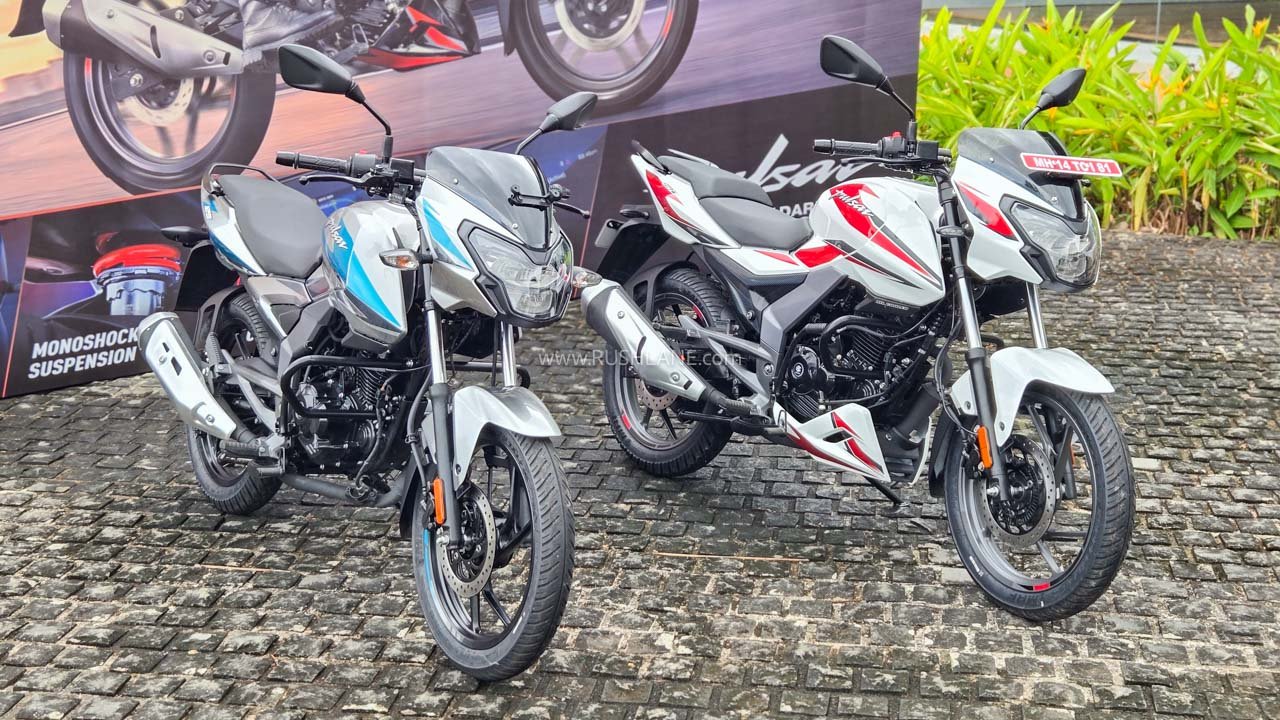
Bajaj is refreshing its Pulsar range across multiple price points, which could help recover some lost sales in the coming months. Following updated Pulsar 125 and Pulsar 150, NS400Z has gained a TFT-equipped variant. Updated NS125 has also surfaced with a revised LCD display, LED indicators, hazard lights and USB Type-C charging. Meanwhile, dealers have started accepting NS200 bookings, with promotional material listing a quickshifter, electronic throttle, traction control and four ride modes. RS200 has also been spotted testing with USD forks and a TFT console.
These upgrades could strengthen Pulsar’s appeal against increasingly well-equipped rivals, particularly as refreshed models reach more dealerships. Bajaj is supporting this rollout with festive benefits of up to Rs 12,000 on select Pulsar models. The package combines cash discounts, zero loan-processing fees and five free services, with benefits varying by model and applicable terms. Together, product updates and purchase incentives could support a recovery, although their impact will become clearer in subsequent monthly sales figures.