



- Rebel 300 Standard costs Rs. 2.22 lakh, putting it directly against the Goan Classic 350’s Rs. 2.27 lakh starting price
- Honda offers a liquid-cooled engine, TFT display and an optional E-Clutch. Goan relies on simpler mechanical charm
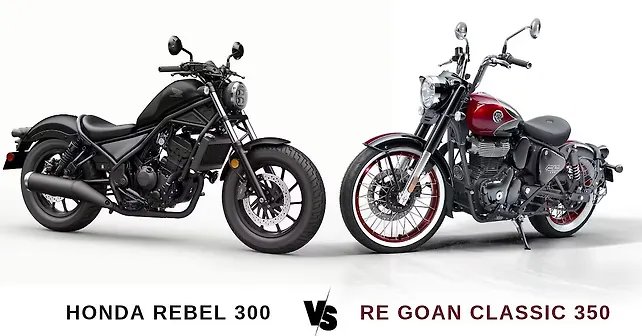
Cruisers are about style and long distance comfort. These are the sofas if you will of the motorcycling world. So it gets complicated when the new Honda Rebel 300 and Royal Enfield Goan Classic 350 occupy almost the same price bracket, whilst approaching the cruiser idea from different directions. The Rebel is low, compact, and deliberately minimal. The Goan is larger, more theatrical, and takes clear inspiration from custom bobbers. Your attitude will likely decide your pick of the two here.
Design and Road Presence
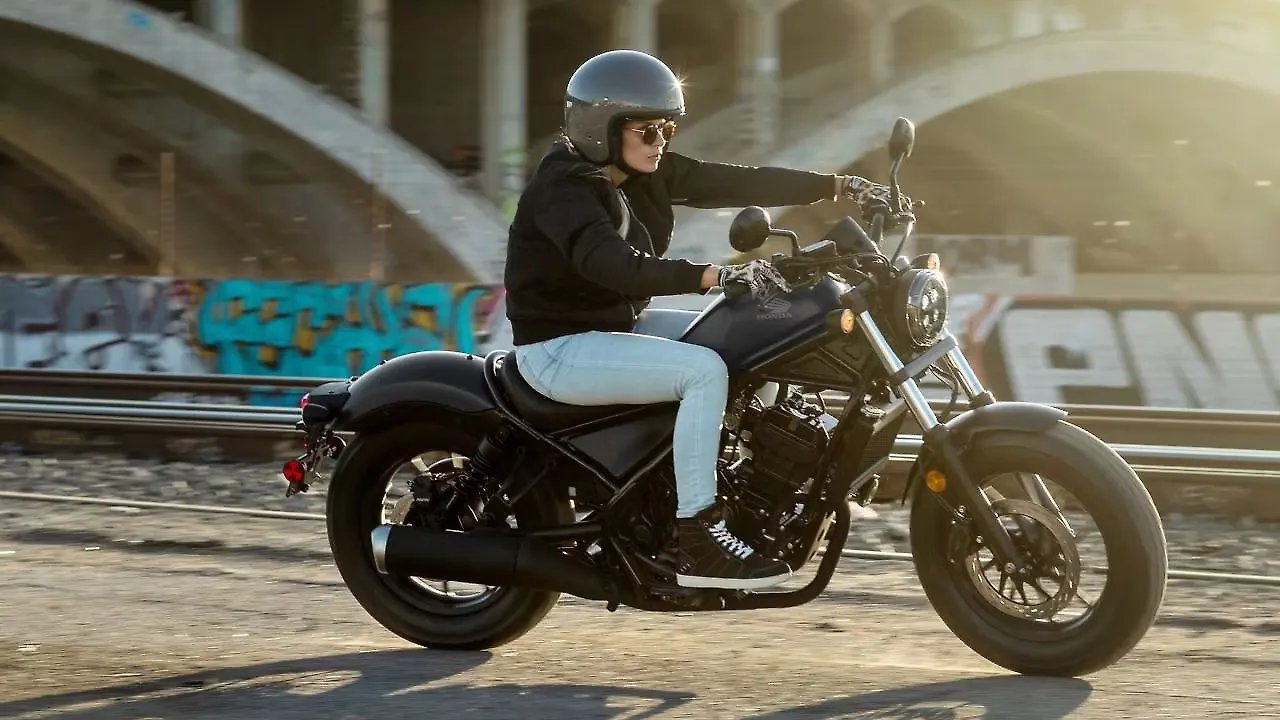
Rebel 300 follows the design language of Honda’s larger Rebel motorcycles obviously. The fuel tank sits low, frame and subframe remain visible, seat is deeply scooped and those chunky 16-inch tyres create a muscular stance despite a relatively compact engine. It 690mm seat height is exceptionally low and the long 1,506mm wheelbase lends it stretched proportions expected of a cruiser. The two colours choices of Pearl Smoky Gray and Matte Black Metallic both keep the overall appearance restrained.
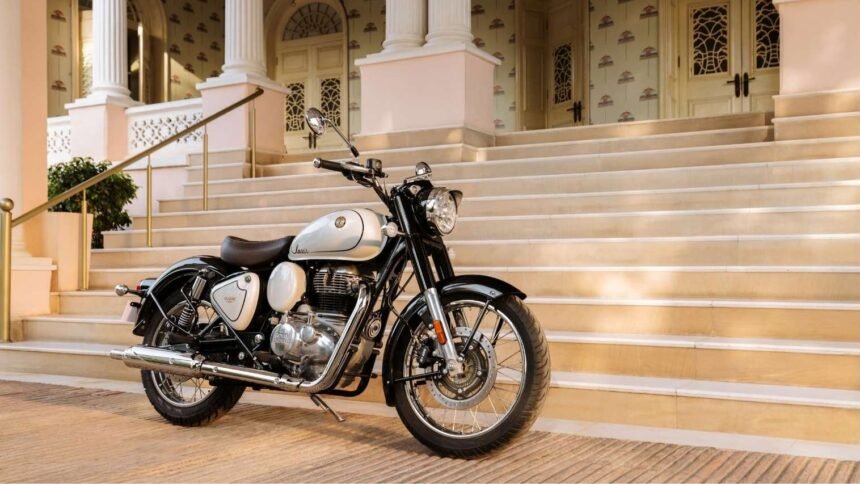
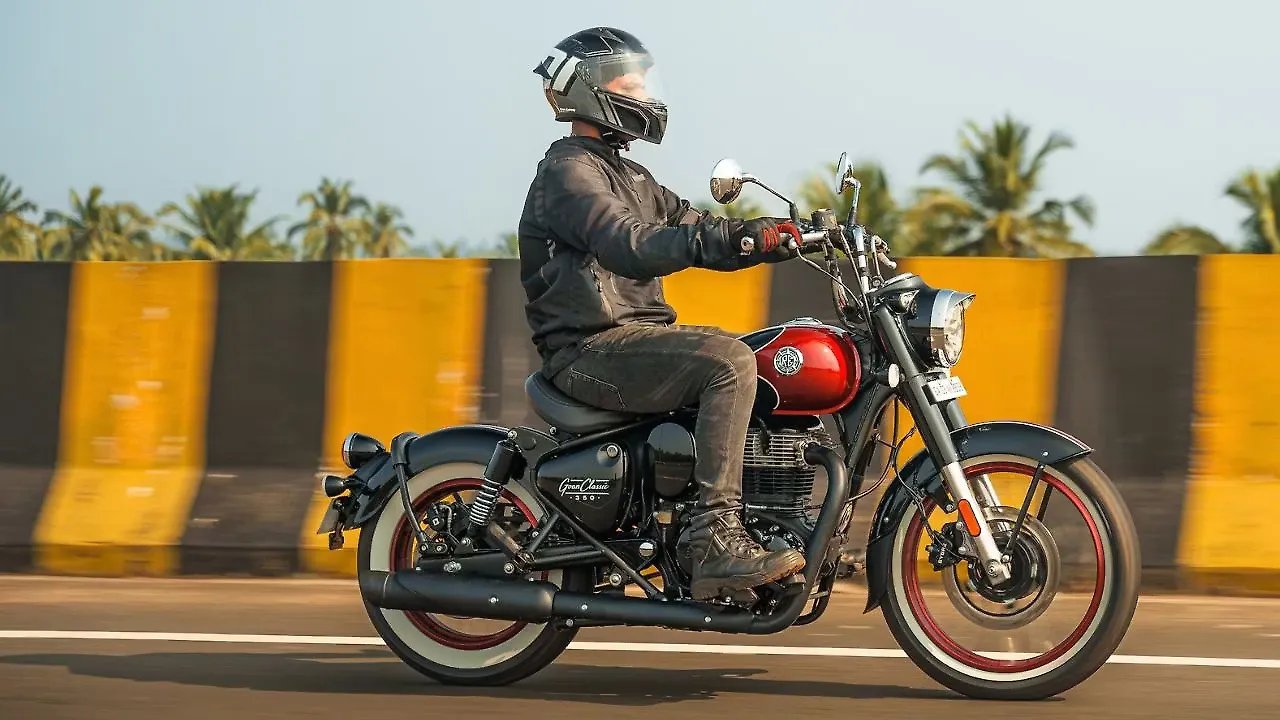
The Goan Classic 350 stands almost completely opposite. It starts with the already familiar Classic 350 shape and turns it into something far more expressive. The floating rider seat, tall mini-ape handlebar, shortened fenders, slash-cut exhaust, whitewall tyres, and edge-laced tubeless spoke wheels make it look like a factory custom.
We noticed a lot more on our test. The paint, small detailing, brushed finishes, coloured rims, and switchgear give the Goan a noticeably richer appearance than a regular Classic 350. It looks different from almost everything else around this price. Purple Haze, Shack Black, Trip Teal, and Rave Red further reinforce that lively character.
There is a substantial physical difference too. The Goan weighs 197kg compared with 173kg for the standard Rebel. Despite that weight, the Royal Enfield has a low 750mm seat and carries its mass relatively low. Our long-term experience found that U-turns, traffic and low-speed riding are surprisingly easy once the rider gets accustomed to its tall handlebar.
The Rebel should be easier still. It is 24kg lighter and its seat sits another 60mm lower. That combination will particularly appeal to shorter riders, newer riders and anyone who has avoided cruisers because they associate them with large dimensions and bulky at low-speed handling.
Road presence though is another matter. The compact Honda looks purposeful and modern, but the Goan has more visual theatre. Whitewall tyres, bright colour combinations, wire-spoke wheels and that tall handlebar give the Royal Enfield a stronger custom-bike flavour, period.
Modern Performance Meets Slow-Riding Character
The engines reveal just how differently Honda and Royal Enfield have approached these motorcycles. Honda’s latest spec Rebel 300 has a 286.01cc liquid-cooled single-cylinder engine producing 27bhp at 8,000rpm and 24.5Nm at 6,250rpm. It has a 6-speed gearbox and an assist/slipper clutch.
Goan comes with Royal Enfield’s ubiquitous 349cc air-oil-cooled J-series single. It pumps out 20.2bhp at 6,100rpm and 27Nm at only 4,000rpm. Its recent update this year gave it an assist and slipper clutch paired to a 5-speed gearbox.
As you can see the Honda has the clear advantage in peak performance despite having the smaller engine. It is also significantly lighter giving it a much stronger power-to-weight ratio. The 6-speed gearbox should provide a wider spread for city riding and highway use.
Royal Enfield counters by producing its peak torque much earlier. That is precisely the distinction that defines its personality. Our long-term test found the Goan’s engine to be forgiving and happiest when ridden without urgency pulling from low speeds without demanding constant downshifts. It feels the nicest at near 70kmph, where its engine note, riding position and easy-going response becomes very relaxed.
Push harder and the limitations appear. On the negative side we found that the Goan runs out of enthusiasm beyond roughly 100-105kmph and becomes noticeably more vibey. Rear suspension is also one of its weaknesses. The stiff springs and limited travel can send sharp bumps through the rider, while the braking response could be stronger.
The Rebel promises to offer a very different experience. With more power arriving higher up the rev range, liquid cooling, six ratios and lesser mass to move, it should feel more energetic when ridden hard or while overtaking on fast-highways. Until BikeWale conducts a proper production road test, its ride quality and real-world engine character cannot be judged with the same confidence as the Goan.
Honda also wins the technology contest. Both Rebel variants get a TFT display, Bluetooth connectivity through Honda RoadSync, turn-by-turn navigation, LED projector headlamp, USB Type-C charging and dual-channel ABS.
The Rs. 2.62 lakh (all mentioned prices are ex-showroom) Rebel 300 E-Clutch takes this further. Honda’s E-Clutch automatically controls clutch operation allowing the rider to start, stop and change gears without using the clutch lever. The lever remains in place, so manual control is still available whenever desired. The system adds only three kilograms, taking kerb weight to 176kg.
Goan is deliberately simpler. It gets LED lighting, a digi-analogue instrument console, gear-position indication, dual-channel ABS, upgraded Type-C charging and optional Tripper navigation. Its biggest practical advantage is its tubeless spoke-wheel setup combining traditional wire-wheel appearance with easier puncture repairs.
Which Rider Should Choose Which?
Pricing makes the standard Rebel particularly interesting. Honda asks Rs. 2.22 lakh ex-showroom for the Rebel 300 Standard, and the Goan Classic 350 Single Tone comes at an average Rs. 2,27,114, with the Dual Tone at Rs. 2,30,012. There is barely any meaningful purchase-price difference between the standard Honda and Royal Enfield.
The Honda E-Clutch at Rs. 2.62 lakh is harder to compare directly. Its Rs. 40,000 premium over the standard Rebel buys a genuinely unusual convenience feature rather than extra performance. Riders dealing with dense urban traffic or those simply wanting a manual motorcycle without regular clutch use may find value in it. For traditional cruiser buyers, the standard version looks like the stronger deal.
The Goan’s two variants are essentially separated by paint. Purple Haze and Shack Black sit at the lower price, while Trip Teal and Rave Red occupy the more expensive dual-tone category. The mechanical package remains unchanged. Royal Enfield’s accessories catalogue also provides considerable room to personalise the motorcycle further.
Availability may prove more important than the price difference. Royal Enfield says the updated Goan is available across its authorised Indian network, and the company states that it operates more than 2,074 stores across the country. This matters for touring riders and owners in smaller cities.
The Rebel 300 is sold through Honda’s premium BigWing network. Bookings have opened and deliveries are only now beginning. Now Honda does have BigWing outlets across major Indian cities, but its premium network is much smaller than Royal Enfield’s footprint.
For someone who values performance, lightness, easy accessibility, and modern electronics, the Rebel 300 Standard is arguably the stronger specification-for-money option. It is especially appealing to younger riders, shorter riders or someone who wants cruiser styling without the heavy feel normally associated with cruisers.
The Goan Classic 350 is the more emotional choice. It is slower and substantially heavier, but our experience with it shows why riders will incline towards it more. Its engine, exhaust note, ergonomics, colours and unusual styling encourage the rider to slow down and enjoy the magic of unadulterated motorcycling.