



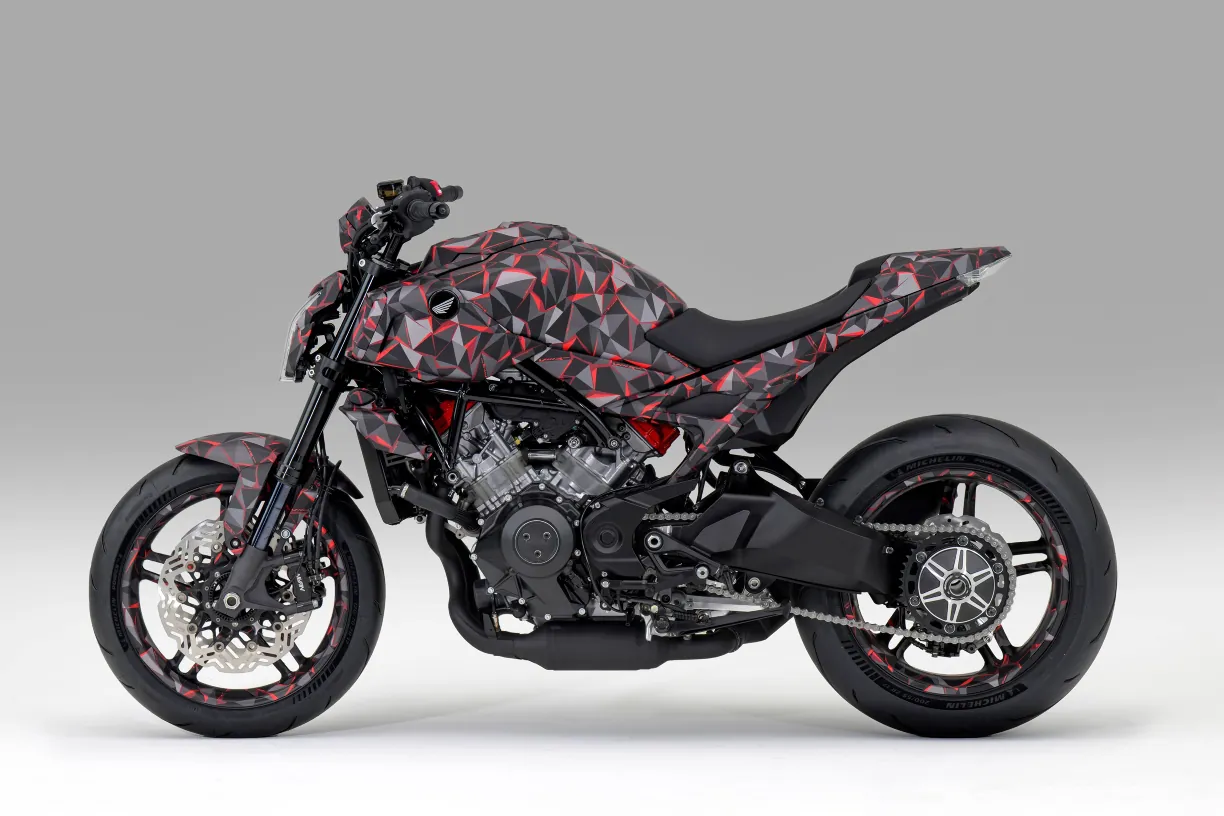
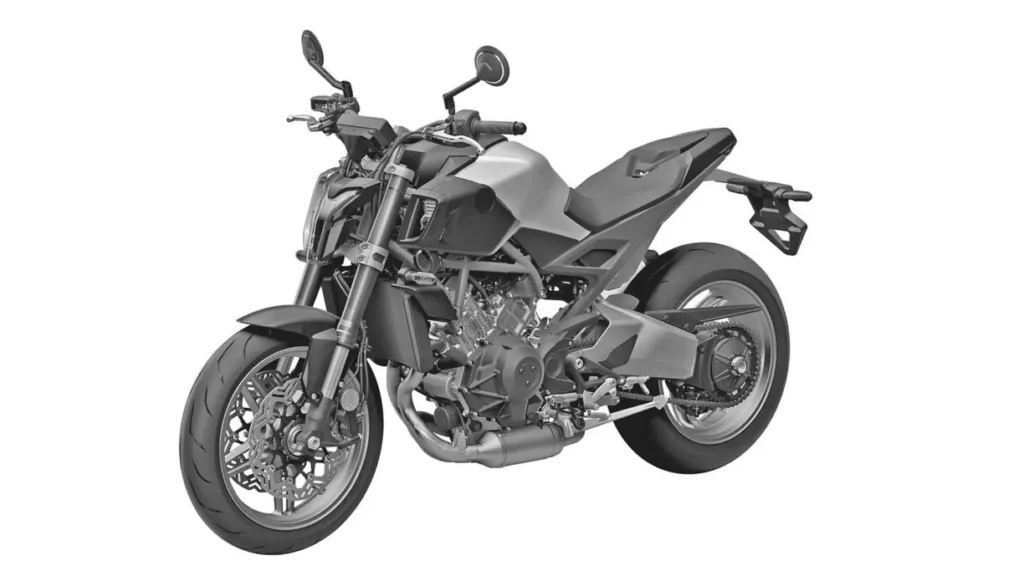
Every so often a concept bike shows up at a motor show looking genuinely wild, and you brace yourself for the inevitable letdown a year later when the “real” version arrives looking like every other bike in the showroom. Honda V3R 900 doesn’t seem to be heading that way. A design application filed with IP Australia — and only just made public — gives us the clearest look yet at the production version, and it’s remarkably close to the prototype that stole the show at EICMA 2025.
The filing itself was lodged back on March 26, and it references an earlier Japanese design filing from October 2, 2025, that’s still under embargo. Until Japan’s version becomes public, this Australian filing is effectively the first legitimate look the world has had at how the finished bike will actually look.
The Styling Has Barely Moved From the Concept
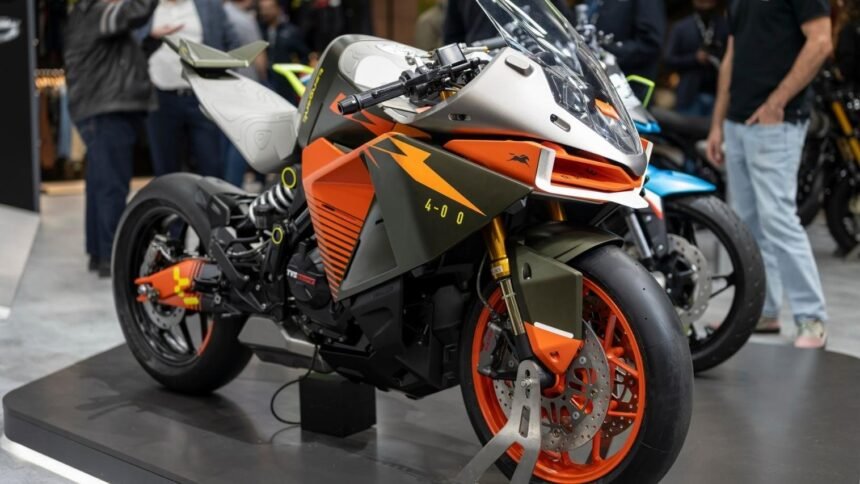
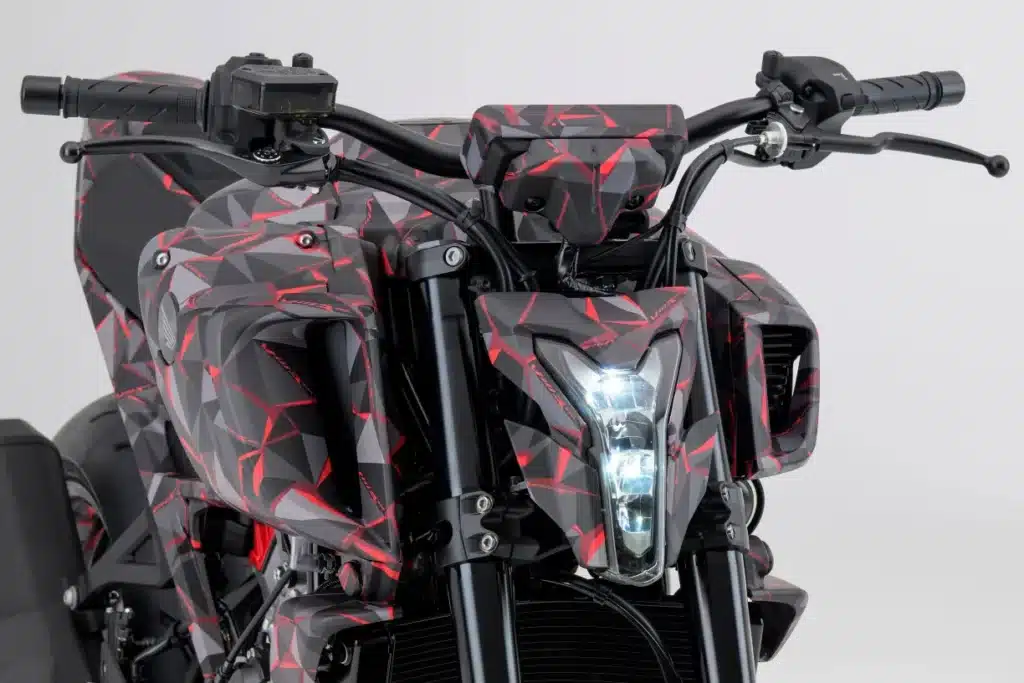
This is genuinely the headline here. The Honda V3R prototype unveiled at EICMA 2025 arrived wrapped in that busy geometric camouflage pattern manufacturers love to hide detail behind, so this is really the first time we’re seeing the shapes underneath properly. And they’ve barely shifted. The muscular streetfighter stance is intact, along with the sharp bodywork, the compact tail unit, the single-sided swingarm, and those unmistakably prominent radiator shrouds.
One detail that’s easy to miss but says a lot: the design drawings show the bike wearing full road-legal kit — mirrors, turn signals, a license plate bracket — none of which a pure concept needs to bother with. That’s about as strong a signal as you’ll get that this isn’t a fantasy sketch; it’s a bike being prepared for actual homologation.
Look closely and you’ll also spot the asymmetry that made the prototype so distinctive in the first place. The right-hand cowl is noticeably bulkier than the left, functioning as both an air intake and airbox housing, with a split-color treatment following the line of the trellis frame up to the headstock — and sitting right on that line is where Honda’s new flagship “Wing” tank badge will go.
What’s Actually Powering This Thing
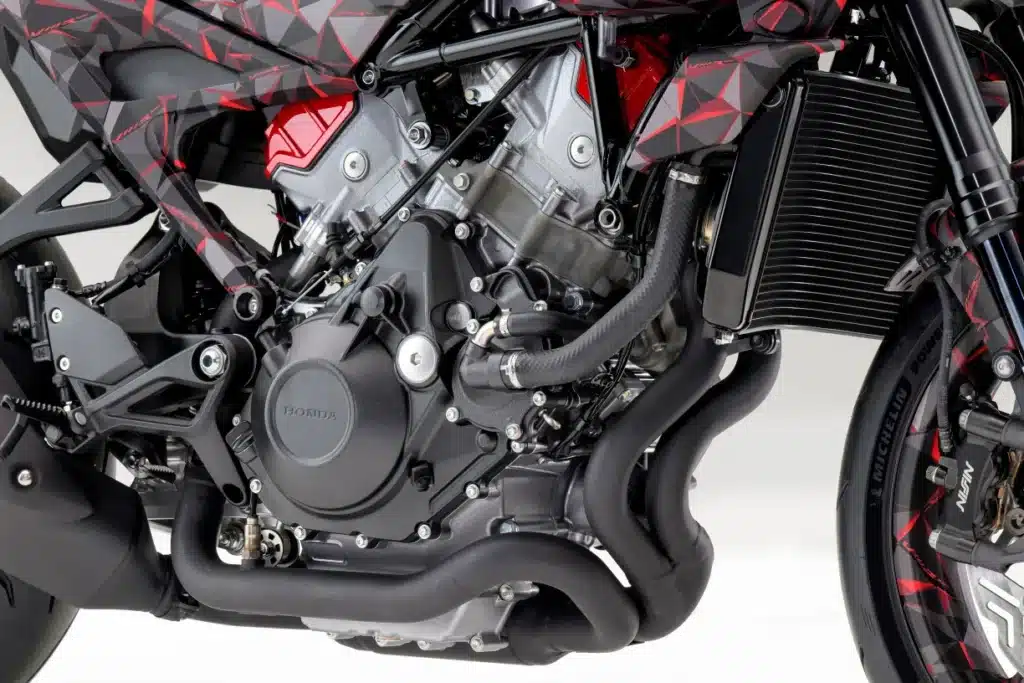
At the centre of it all is Honda’s 900cc, 75-degree V3 engine — two cylinders pointing forward, one pointing back — paired with what the company describes as the world’s first electrically driven compressor fitted to a motorcycle. It’s a genuinely different approach to forced induction than anything else on two wheels right now.
A conventional supercharger is mechanically tied to engine speed, and a turbocharger relies on exhaust gas, which is exactly why turbo bikes have historically suffered from lag. Honda’s e-compressor sidesteps both problems by running off its own electric motor, meaning boost can be delivered independently of how fast the engine happens to be spinning, right across the rev range. The pitch is straightforward: 900cc displacement, but performance that Honda says lines up with a 1,200cc naturally aspirated engine — without the bulk or the fuel penalty that usually comes with that kind of capacity.
If you want the full rundown of how the underlying tech works, Honda’s own prototype page is worth a look — it’s built around what Honda calls a “Non-Rail Roller Coaster” concept, which is a strange phrase, but it does capture the intent: power that arrives exactly when you ask for it, rather than in a sudden rush.
This Might Not Be a One-Off Bike
Here’s where it gets more interesting than a single new model launch. A run of recent patent filings tied to the same e-compressor technology shows Honda evaluating the system across a much wider spread of engine layouts and bike categories — touring, naked, and supersport machines all appear in the documentation.
Patents obviously don’t guarantee production, and plenty of manufacturer filings never go anywhere. But the pattern here is hard to ignore: some of the filings reportedly describe the same forced-induction layout being adapted for a V-twin, a V4, and even five- and six-cylinder configurations built on the same front-and-rear-bank architecture as the V3. Read together with Honda’s own comments that its “Flagship Wing” badge is destined for top-tier models across the range, it starts to look like the V3R isn’t a one-off experiment — it could be the opening model in a whole new powertrain family.
Honda Hasn’t Done This in Over 40 Years
It’s worth pausing on how big a moment this actually is for Honda specifically. The V3R marks the company’s return to forced induction on a motorcycle for the first time since the early 1980s, when it briefly sold the CX500 Turbo and CX650 Turbo — both running conventional, exhaust-driven turbochargers of the era. Those bikes are remembered more as ambitious oddities than genuine successes, largely because turbo lag was a real problem on a machine you control with a twist of the wrist rather than a foot pedal.
The electric compressor is Honda’s answer to exactly that complaint, decades later, with technology that simply didn’t exist back then.
When Will We Actually See It?
Honda still hasn’t confirmed a production timeline or released full specifications beyond what was shown on the prototype. That said, reading between the lines of the filing dates, most industry watchers reckon a full production reveal at EICMA this November is the likeliest scenario, given that’s exactly where Honda has staged every major V3R milestone so far — the bare engine in 2024, the styled prototype in 2025, and now this. Some reports have also pointed to a 2027 on-sale window for markets like Europe, though Honda hasn’t pinned that down officially either.
Whatever the exact date turns out to be, the direction of travel is clear: production-style design drawings, road-legal detailing, and a growing web of related patents all point the same way. The V3R looks like it’s genuinely coming, and — unusually for a concept this ambitious — looking almost exactly like it did the day it was unveiled.
Image credits: Motorcycle.com