



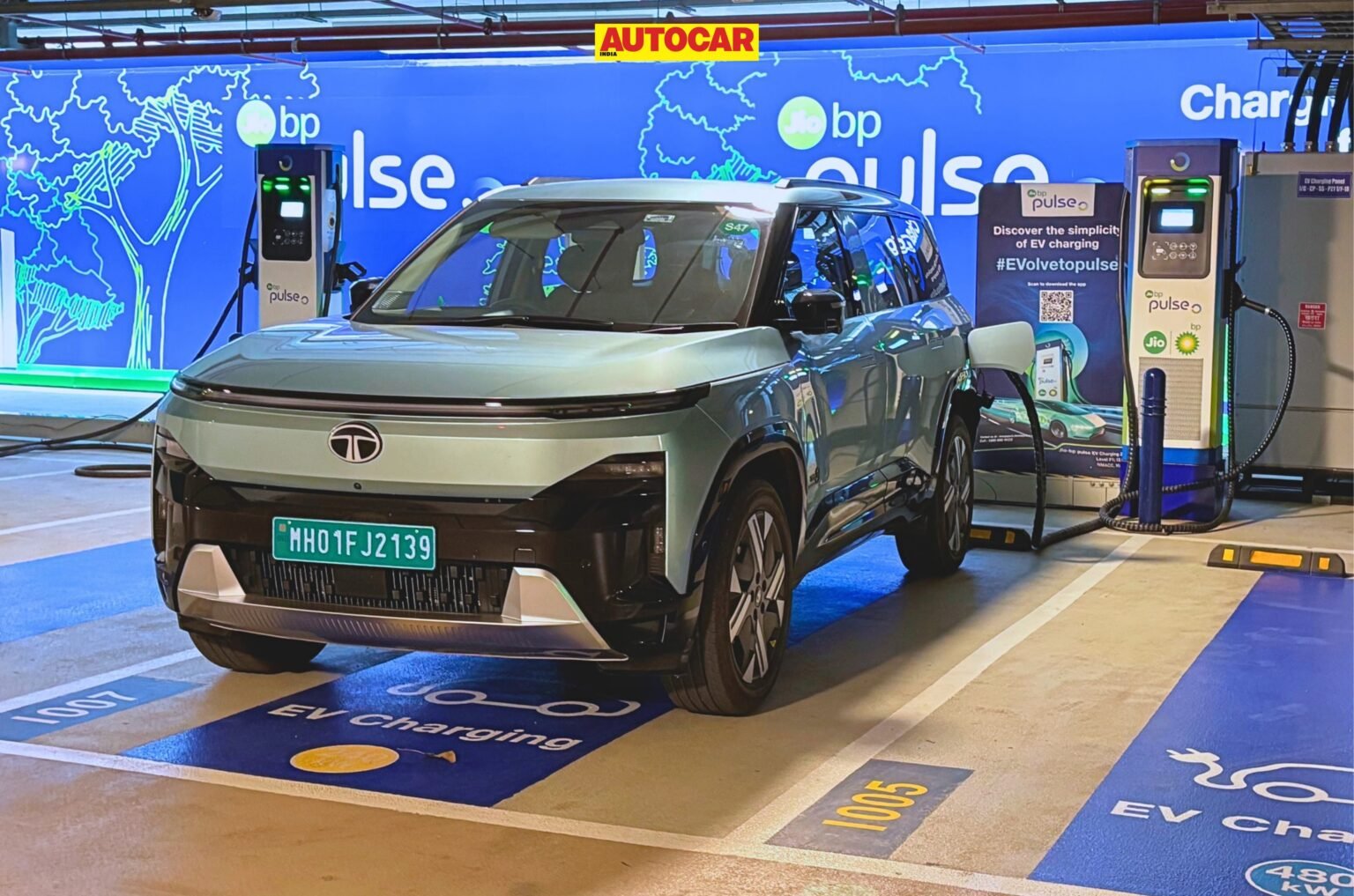
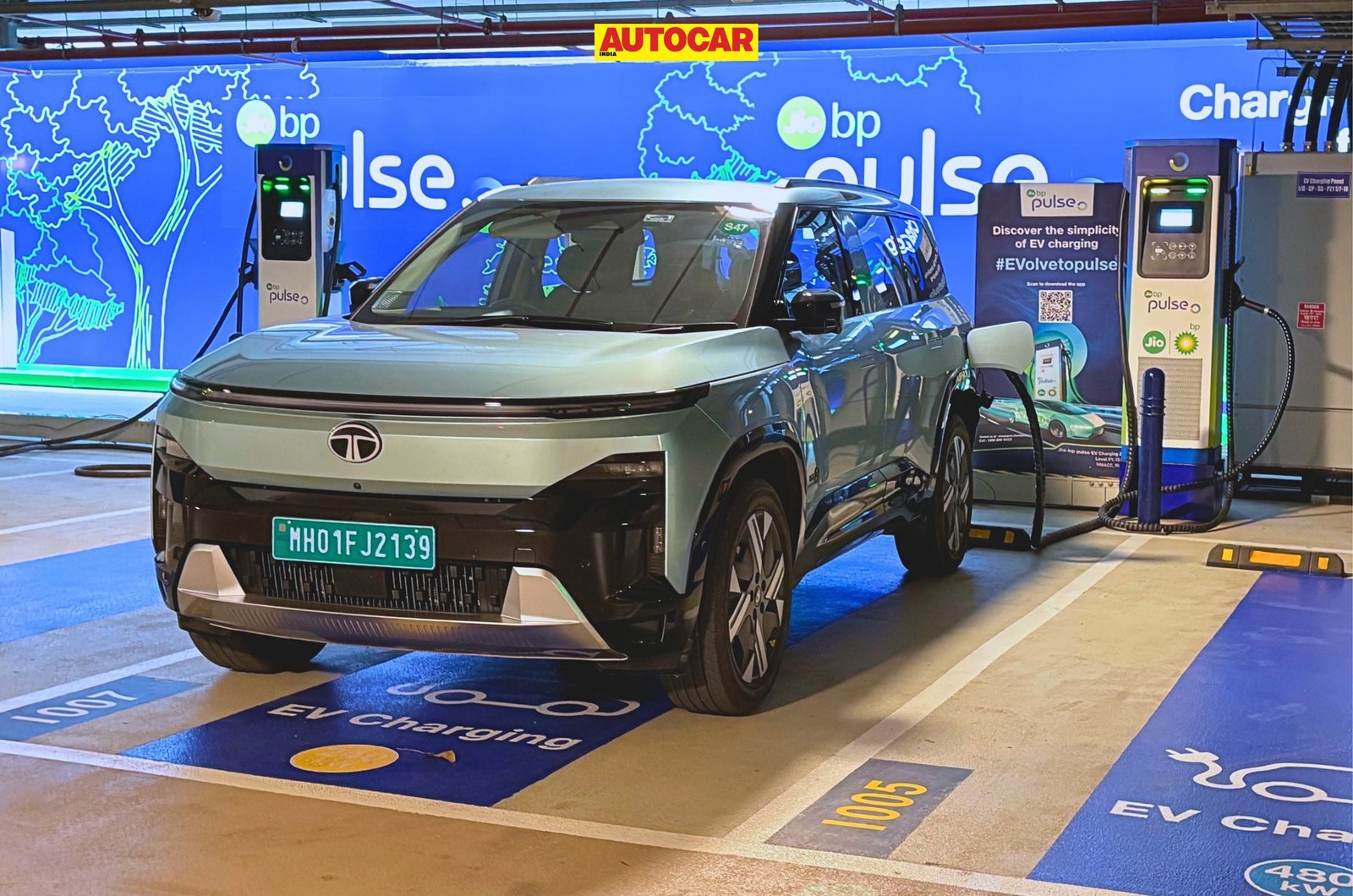
The Tata Sierra EV was launched in June 2026, and while it shares its tophat with the ICE Sierra, the EV is based on the Acti.ev+ architecture which is also used by the bigger Harrier EV. Priced between Rs. 18.79 lakh and Rs. 25.99 lakh (ex-showroom), the Sierra EV is available with two battery pack options – 63kWh and 75kWh, with the choice of a single motor RWD or a dual motor AWD setup.
We’ve now put the Tata Sierra EV AWD through our real-world range test to see how it fares.
- Weighs 2,130kg
- Driven in ‘Eco’ mode with regen set to L1 (highway) and L3 (city)
- MIDC range is 624km for the AWD variant
Tata Sierra EV real-world range tested
Powering the Sierra EV AWD are two electric motors: an Induction motor at the front rated at 140hp and a PMSM (Permanent Magnet Synchronous Motor) at the rear rated at 209hp, with a combined torque of 504Nm. It uses a 75kWh lithium ion battery pack that uses Lithium Iron Phosphate (LFP) cell chemistry. It comes with four driving modes – Eco, City, Sport and Boost, and four regen modes – L0, L1, L2 and L3. For our tests, we drove it entirely in ‘Eco’ mode with the regen set to L3 and L1 in the city and on the highway, respectively.
In terms of efficiency, the Sierra EV delivered very similar figures in the city and on the highway. In the city, the Sierra delivered 5.83km/kWh, whereas the highway efficiency is about 5.82km/kWh. When extrapolated, this translates to a range of 438km and 437km in the city and on the highway, respectively.
It has to be noted that during our city run, the temperatures were around 40 degrees C, meaning that the HVAC system had to work that much harder and the compressor never cut off, which had a big impact on its efficiency. It’s also worth noting that the L3 regen mode, although strong, felt a bit abrupt in its engagement and will take some time getting used to.
As for charging, using a 240kW DC fast charger, we topped up the Sierra EV’s battery from 20-80 percent in 35 minutes, whereas 80-100 percent took another 39 minutes. As per Tata, the Sierra EV’s battery should recharge from 20-80 percent in 26 minutes when connected to a 120kW DC fast charger. However, we only saw peak charging speeds of around 90.3kW during our charging test.
Autocar India’s range testing
Before our real-world range tests, the battery of our test car was fully charged, and we maintained tyre pressures in accordance with the manufacturer’s recommendations. The car was driven on a weekday in Mumbai city and on the adjoining state highway in a fixed loop, and we maintained the set average speeds. At the end of each cycle, we calculated the range based on the percentage charge consumed.
Throughout our tests, the climate control was set to 22deg C in a full-auto setting, and other electricals, such as the audio system, indicators and ventilated front seats, were used when required, just as a regular user would. We take pride in our testing data, which isn’t merely consistent but also gives users an accurate indication of what they can expect in the real world.