




- Recycled aluminium DiASil cylinders will first enter production in Indonesia
- Yamaha targets a global transition across all DiASil products by 2030
Yamaha Motor will progressively replace the virgin aluminium used for its proprietary DiASil engine cylinders with a specially developed recycled aluminium alloy. This transition starts with commuter models manufactured in Indonesia before being expanded globally with Yamaha targeting completion across all products using DiASil cylinders by 2030. For India, this is potentially important because DiASil technology already sits inside some of Yamaha’s locally manufactured, high-volume two-wheelers.
Once the global changeover is complete, Yamaha estimates that using recycled aluminium for DiASil cylinders will cut its CO2 emissions by about 47,000 tonnes every year. The company has not provided a country-wise split for that reduction.
Yamaha has managed to use recycled material in a component where material consistency is especially important. A DiASil cylinder is an all-aluminium design without a conventional iron cylinder sleeve or surface plating. The company developed the technology to provide good heat dissipation, wear resistance and seizure resistance while also reducing weight and improving recyclability.
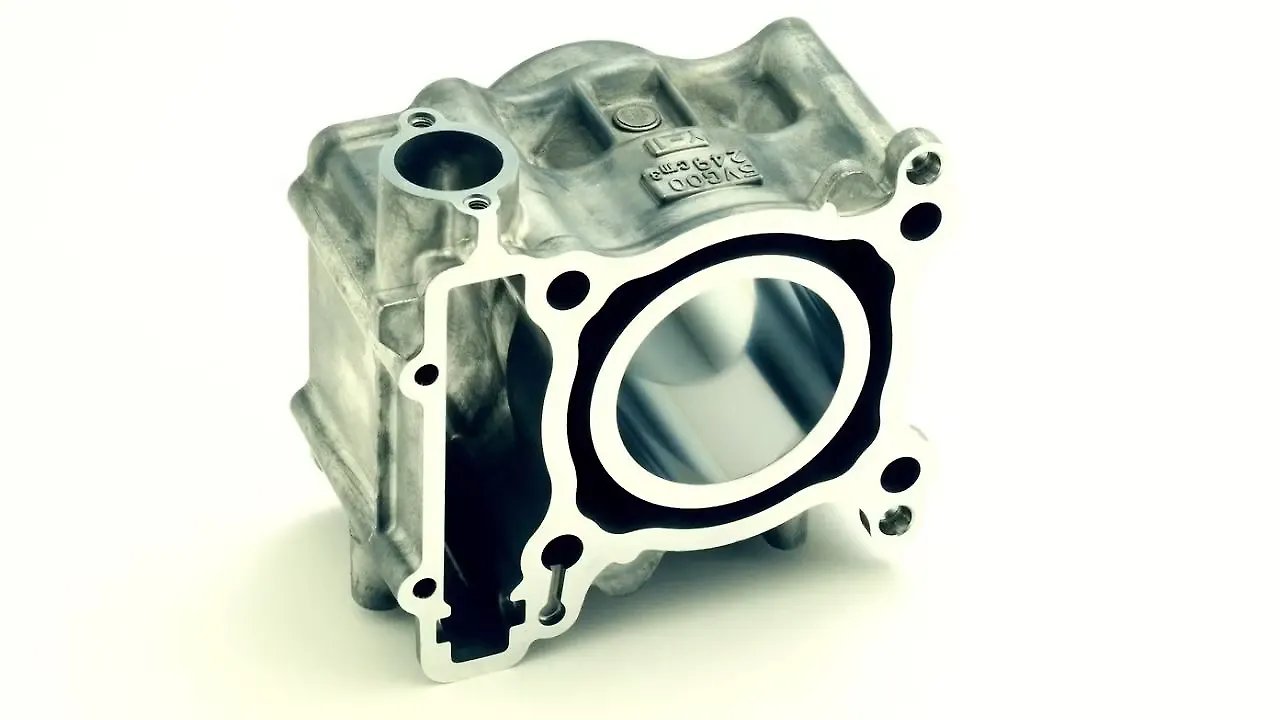
DiASil stands for Die-casting Aluminium-Silicon. Engineers uses a high-silicon aluminium alloy and its own die-casting process to create the cylinder’s running surface without needing an iron liner. Aluminium is considerably lighter than steel and conducts heat well and eliminating the separate sleeve also simplifies cylinder construction. Yamaha says its DiASil technology has been in production since the early 2000s and is now used across motorcycles and scooters.
Using recycled aluminium is not that straight and easy. Conventional recycled alloys can contain small amounts of impurities creating problems with the metal’s microstructure, surface quality and corrosion resistance. So, particularly serious concerns inside an engine cylinder where the piston continuously moves against the bore under high temperatures and loads.
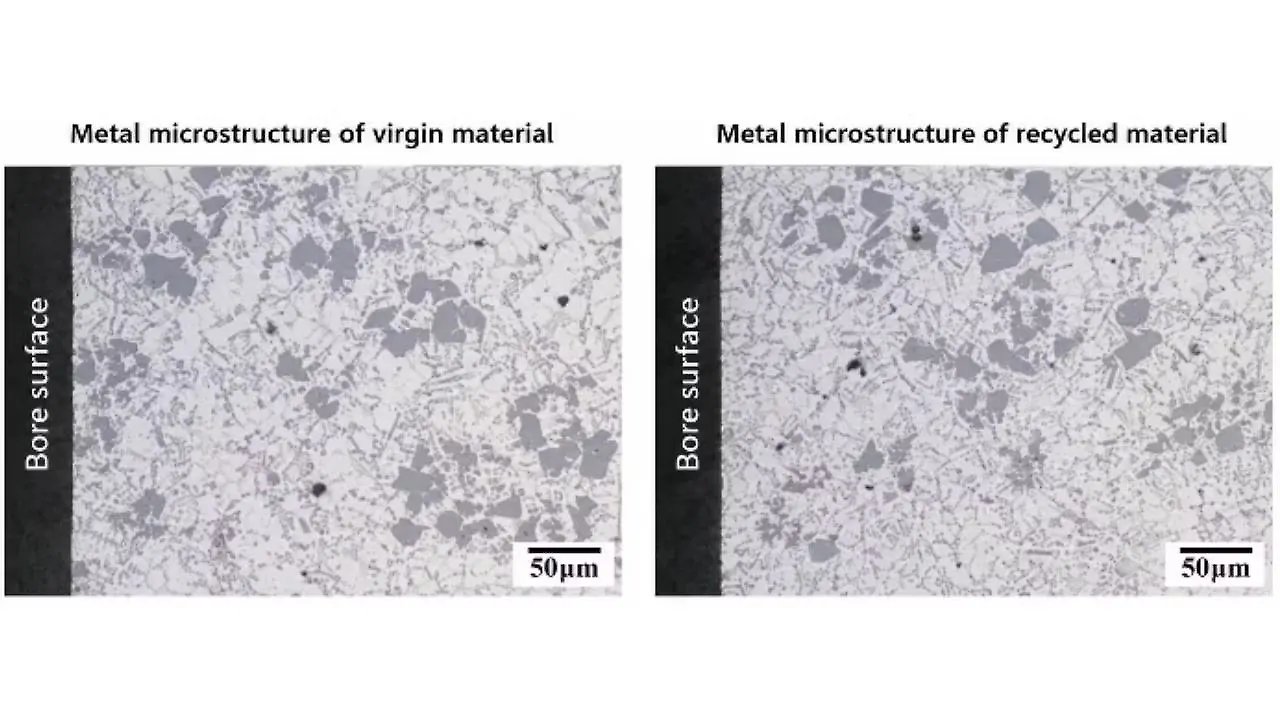
Yamaha therefore developed its own recycled alloy using thermodynamic material calculations before carrying out repeated bench and vehicle tests. The resulting material delivers functionality comparable to the existing virgin aluminium and can be used with the same manufacturing processes. It should allow factories to introduce the recycled alloy without fundamentally redesigning the DiASil production method.
The microscopic images show the existing virgin-aluminium material beside the new recycled alloy. Yamaha says comparable silicon particle size and distribution produce equivalent material homogeneity.
What Does It Mean for Yamaha India?
There is no confirmed Indian introduction date yet. Yamaha has specifically said that the transition will begin with commuter models manufactured in Indonesia and expand globally afterwards. India therefore forms part of the logical future rollout rather than the first phase.
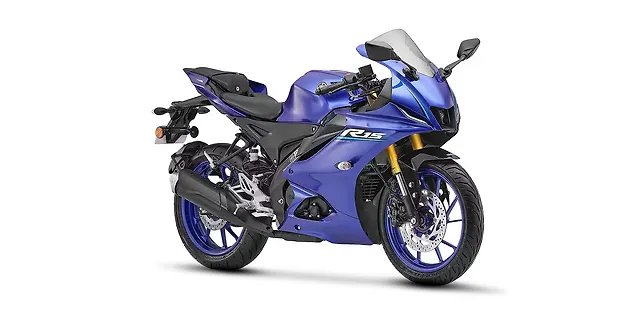
However, India is particularly relevant because Yamaha has a substantial local manufacturing operation. Surajpur and Chennai are Yamaha’s two principal motorcycle manufacturing bases with a combined production capacity previously stated at around 1.4 million units annually. Surajpur is used for motorcycles including the R15, MT-15 and FZ family, while Chennai for models including the Aerox 155, RayZR 125 and Fascino 125.
The announcement does not mean that every Yamaha motorcycle currently manufactured in India will suddenly receive a recycled cylinder, nor has Yamaha stated that the change will arrive with a particular model year. The current plan only confirms an Indonesian starting point followed by a global rollout.
India could nevertheless become an important part of the programme because it is both a manufacturing and export base for Yamaha. The company has said that it continually works to increase local sourcing and manufacture more components within India where economically viable. Its Chennai facility also has room for further expansion as production requirements grow.
Globally, Yamaha says 85 percent of the aluminium alloy used in its own production already comes from recycled material, while another five percent comes from what it describes as green materials. The difficult final portion includes components demanding particularly high levels of strength and functionality. DiASil cylinders were among those harder applications because recycled aluminium previously struggled to meet Yamaha’s requirements.
The new alloy therefore closes an important gap. Yamaha’s target is to move 100 percent of the aluminium raw material used in its own manufacturing to sustainable alternatives by 2030, covering its major production bases in Japan and overseas.
For Indian customers the practical effect should be uneventful. Yamaha has developed the recycled alloy specifically to match the functional requirements of virgin aluminium. There is no suggestion of reduced engine life, altered service requirements or lower performance, and Yamaha has confirmed that the material passed both bench and vehicle testing before approval.
Yamaha has not yet said when its Indian plants will make the switch. But with a global DiASil transition targeted for 2030 and India already manufacturing products that use the technology, recycled-aluminium cylinders reaching Indian production looks more like a question of when rather than whether. The encouraging part is that Yamaha is attempting to lower the environmental cost of its combustion engines without asking the rider to accept a compromise in the engine itself.