


Tesla has detailed three Roadster configurations, with cold-gas thrusters, active aerodynamics and a claimed range exceeding 300 miles. Production is targeted for 2028.
Tesla has unveiled a substantially redesigned Roadster, nearly nine years after showcasing its earlier concept in 2017. The latest version introduces a sharper design and three distinct configurations—Performance, Thrust and Rocket—with the most extreme version featuring thrusters intended to enable airborne manoeuvres.
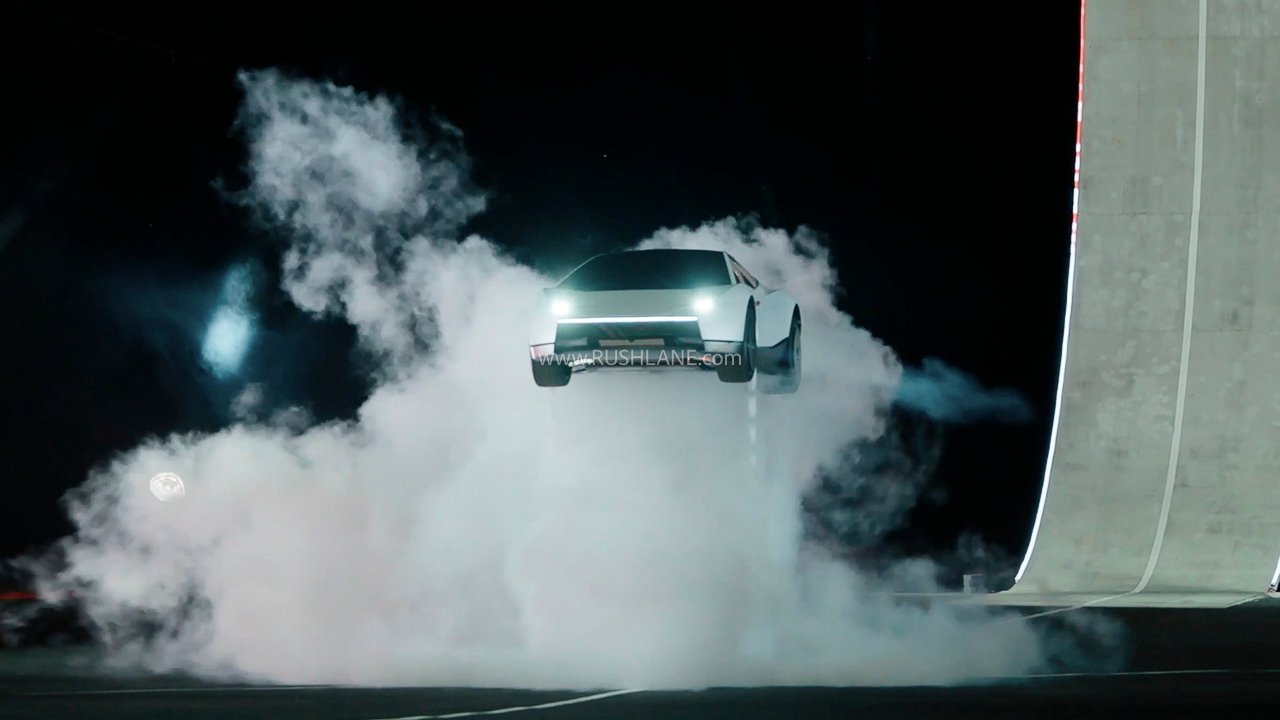
Tesla showed the demonstration in front of the world via LIVE webcast. It included inverted driving, a controlled airborne flip and a barrel roll, alongside a Tesla-claimed 0–60 mph run in 0.81 seconds. Subsequent posts from Tesla provide additional specifications, including even quicker acceleration claims for the single-seat Rocket version.
Tesla’s new Roadster takes performance into the air! ?
Three versions revealed: Performance, Thrust and a single-seat Rocket that Tesla says can fly using cold-gas thrusters. ?
? Claimed 0–60 mph (96.6 km/h):
Performance: under 1.6 sec
Thrust: under 0.9 sec
Rocket: under… pic.twitter.com/gSr3KSVGaH— RushLane (@rushlane) October 16, 2026
Three Versions With Different Capabilities
The entry configuration, called Performance, seats two and is described by Tesla as intended for road use. It combines active aerodynamics with a multi-mode suction system, with a claimed 0–60 mph time below 1.6 seconds.
The two-seat Thrust version adds rear-mounted cold-gas thrusters to the suction system. Tesla positions this configuration for track use and quotes a 0–60 mph time below 0.9 seconds.
At the top sits the single-seat Rocket. This version uses perimeter-mounted cold-gas thrusters, which Tesla says enable forward and upward acceleration as well as rotational movement. Its claimed 0–60 mph time is below 0.59 seconds.
New Tesla Roadster acceleration 0-100 kmph in under 1 second pic.twitter.com/8ZYvLaUi1P
— RushLane (@rushlane) October 16, 2026
These figures refer to acceleration to approximately 96.6 km/h, rather than 100 km/h. Tesla’s post also lists a range exceeding 300 miles (483 km), without specifying the applicable variant or test cycle. For the Rocket, it quotes a top speed exceeding 230 mph (370 km/h).
How The Thrusters And Suction System Work
Tesla’s approach combines additional tyre grip with propulsion that does not depend entirely on the tyres. The suction system helps pull the car towards the driving surface, while the cold-gas thrusters generate force by expelling compressed gas.
Tesla claims its thruster system can produce four to five times the force available through the tyres, although the supplied posts do not detail the conditions behind that comparison.
The company says adapting SpaceX thruster technology for the Roadster required new hardware and controls. Compressed gas is stored in carbon-fibre-overwrapped pressure vessels distributed throughout available spaces in the vehicle. Tesla notes that carrying more compressed gas increases the available flight time, but has not specified that duration in these posts.
Aircraft-Inspired Design And Active Aero
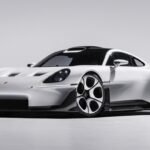
Tesla identifies the SR-71 and F-35 aircraft as design influences. The new Roadster features angular bodywork, concealed headlights, a full-width rear light and flush-mounted surfaces. Lightweight wheels with thin spokes further distinguish it from the earlier concept.
An Ano White finish is described as drawing on aerospace coatings, while gold-tinted glass and titanium accents continue the aircraft-inspired theme.
Track Mode changes the aerodynamic configuration, including deployment of the rear wing. Tesla says the wing mechanism uses actuator technology associated with its Optimus programme. It also claims aerodynamic downforce approaching Formula 1 levels, although comparable measurements and test conditions have not been provided in the shared posts.
Lightweight Cabin With Fixed Seating Position
Inside, Tesla describes an ultrawhite cabin with grey microsuede detailing and supportive seat bolsters. Manual controls and a fixed seat position are intended to reduce weight.
Magnesium, titanium and carbon fibre are also used to limit mass. However, the supplied Tesla posts do not disclose a confirmed kerb weight, battery capacity, motor output or detailed powertrain configuration.
Production Targeted For 2028
Tesla is targeting production in 2028, with the vehicle shown remaining a concept. Reservations have opened, but final production specifications and delivery arrangements remain important details to follow.